
 Afrịka
 Eshia
Eshia Yurop
Yurop Ndịda Amerika
 Ọstrelia na Oshenia
 Antaktika
 Oké Osimiri Pasifik
 Oké Osimiri Atlantik
 Oké Osimiri India
 Oké Osimiri Arktik
 Osimiri Mediterenian
 Osimiri Uhie
 Osimiri Karibịan
 Osimiri Coral
 Osimiri Ndịda China
 Osimiri Filipin
 Osimiri Andaman
 Osimiri Ugwu (North Sea)
 Osimiri Timor na Arafura
 Ọwara Bengal
 Ọwara California
Southern black widow
 Ịta
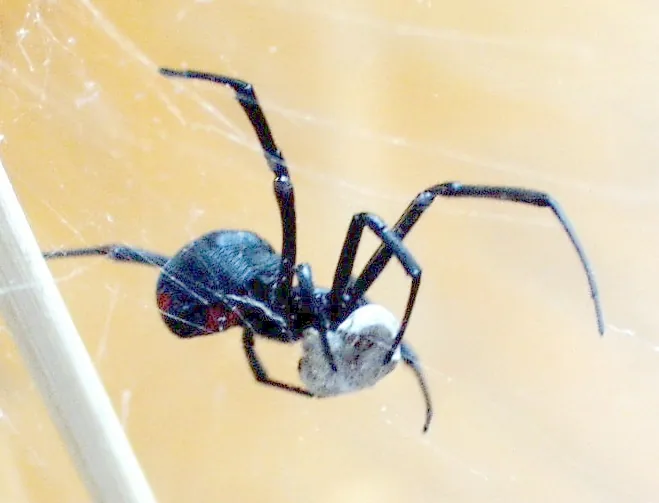
ỊtaThe southern black widow is a venomous spider that lives in North America. Mature females are shiny black with a red hourglass mark on their underside. Its bite can cause pain and other symptoms, but it is rarely fatal to healthy people.1


 Otú ị ga-esi mata ya
- Mature females are shiny black, with a red hourglass-shaped mark on the underside of a very rounded abdomen.1
- Many females have an orange or red patch on the top of the abdomen, just above the spinnerets.1
- Mature females have a body length of 8–13 mm, not counting the legs. Males are 3–6 mm.1
- Juveniles look very different. They have a grey to black abdomen with white stripes across it, spotted with yellow and orange.1
- Males are either purple, or look more like the juveniles.1
A na-agwakọkarị ya na: It is often confused with the false widows (genus Steatoda) and with the closely related northern (L. variolus) and western (L. hesperus) black widows.1
Ike nsị
Nsị na-esi n'eze nsị ya ma ọ bụ eze ya apụta mgbe ọ na-ata.
Gịnị ka nsị ọ na-agba na-eme?
The venom contains alpha-latrotoxin, a neurotoxic venom that attacks the nerves. It causes pain and other symptoms, which are collectively called latrodectism.1
Kedu otú o si dị egwu nye mmadụ?
Ihe ize ndụ nye mmadụ: Ọ dị njọỊta ya chọrọ dọkịta. Ọnwụ anaghị adịkarị ma ọlị.Deaths in healthy adults are exceedingly rare. No deaths were reported among 23,409 documented Latrodectus bites in the US from 2000 to 2008, though about 2,000 bites happen each year. Only mature females can bite people.1
 Ozi ọma: ndị dọkịta nwere ọgwụ (antivenom) ma ọ bụ ọgwụgwọ maka nke a.1
 Ọ bụrụ na ọ tara
- Saa ebe ọ tara, tinye akpa ice n'elu ya maka mgbu ahụ. Chọọ enyemaka ọgwụ ma ọ bụrụ na mgbu ahụ siri ike, gbasaa, ma ọ bụ na ahụ adịghị onye ahụ mma.
Na-ebu ụzọ kpọọ nọmba mberede gị mgbe niile (112, 000, 911). Nke a bụ ndụmọdụ enyemaka mbụ n'ozuzu, ọ bụghị ndụmọdụ ọgwụ. Isi ihe enyemaka mbụ
 Nọrọ na nchekwa
- Emetụla anụ ọhịa aka, ejidela ya, emekwala ya ihe ọjọọ, ọbụna obere, ọbụna ma ọ dị ka ọ na-ehi ụra ma ọ bụ nwụọ anwụ.
- Nye ya ohere. Ọ bụrụ na ị zutere otu, dị jụụ, laghachi azụ nwayọ, hapụ ya ka ọ gaa ụzọ ya.
- Ọ bụrụ na otu tara gị: dị jụụ, emegharịla ahụ, kpọọ nọmba mberede gị (112, 000, 911) ma ọ bụ gaa ụlọ ọgwụ ngwa ngwa. Cheta ka o si dị, foto na-enye aka.
Ọ naghị achụ gị. Ọ na-eji nsị ya ejide nri ma ọ bụ chebe onwe ya, ọ ga-akakwa mma n'anya ya ịzo onwe ya. Ihe ndị ọzọ gbasara ịnọ na nchekwa
Ọ hà aṅaa?
Kedu otú o si dị ogologo?
 dị obere nke na ọ nwere ike ịnọdụ n'elu mbọ aka gị
Kedu otú Southern black widow si hà ma e jiri ya tụnyere GỊ?
Naanị mgbakọ na mwepụ n'ime browser gị. Ọ dịghị ihe echekwara ma ọ bụ ezigara ebe ọ bụla.
Kedu otú o si agba ọsọ?


Eziokwu
In 1933, Allan Blair let himself be bitten by one of these spiders to study its venom in humans and to convince sceptics that it could be dangerous.1
Females will occasionally eat their mates after reproduction.1
Only mature females can bite people. Their hollow, needle-like mouthparts are about 1 mm long, which is long enough to inject venom into people.1
The brown widow (Latrodectus geometricus) competes with black widows for territory. In areas where they share space, it can displace them.1
Males live only about three to four months, while females can live for up to three years.1
Onye na-ekpughe akụkọ ụgha
Akụkọ ụgha: A black widow bite is usually fatal.
Eziokwu: Black widow bites are rarely fatal to healthy people. No deaths from the US species were reported among 23,409 documented bites from 2000 to 2008.1
Maka ndị ọkachamara nsị
- Aha sayensị
- Latrodectus mactans
- Otu
- Ududo
- Ezinụlọ
- Theridiidae2
- Usoro
- Araneae
- Kọntinent dị iche iche
- Ugwu Amerika
- Ụmụ ọhụrụ
- A female can produce four to nine egg sacs in one summer, each holding about 100–400 eggs, which she guards in a silken container.1
- Ogologo ndụ
- ihe dị ka afọ 31
- Ihe ize ndụ nye mmadụ
- 3 / 5: Ọ dị njọ3
Ebe eziokwu ndị a si
- Latrodectus mactans (Wikipedia (CC BY-SA 4.0))
- Latrodectus mactans (iNaturalist): aha na nhazi ọkwa.
- Venom Wiki: ọkwa ihe ize ndụ, nha nkịtị na nchepụta ọsọ bụ nke anyị. Lee otú anyị si achọpụta ha: Otú anyị si atụ ihe ize ndụ.
Eziokwu ọ bụla dị na peeji a nwere nọmba na-egosi ebe o si. Ọ bụrụ na anyị mehiere ihe, ndo, anyị bụ ndị hụrụ anụmanụ n'anya, ọ bụghị akwụkwọ akụkọ sayensị. Gwa anyị na [email protected], anyị ga-edozi ya.
 Akpị agụụ na-agụ! Venom Wiki bụ ọrụ otu onye: n'efu, na-enweghị mgbasa ozi na ndị na-esochi gị. Obere onyinye na-enyere aka idebe ya n'ịntanetị.Nye akpị nri
 Brown recluse
 Northern black widow
 Western black widow
 Bold jumping spider
 Golden silk orb-weaver
 Central American wandering spider
 Terciopelo
 Eastern coral snake
 Eastern diamondback rattlesnake
 Eyelash viper
 Timber rattlesnake
 Western diamondback rattlesnake