
 Afrịka
 Eshia
Eshia Yurop
Yurop Ndịda Amerika
 Ọstrelia na Oshenia
 Antaktika
 Oké Osimiri Pasifik
 Oké Osimiri Atlantik
 Oké Osimiri India
 Oké Osimiri Arktik
 Osimiri Mediterenian
 Osimiri Uhie
 Osimiri Karibịan
 Osimiri Coral
 Osimiri Ndịda China
 Osimiri Filipin
 Osimiri Andaman
 Osimiri Ugwu (North Sea)
 Osimiri Timor na Arafura
 Ọwara Bengal
 Ọwara California
Striped bark scorpion
 Ịgba
ỊgbaThe striped bark scorpion is a medium-sized, pale yellow scorpion with two dark stripes along its back. It lives across the middle of the United States and in northern Mexico, and it is perhaps the most often seen scorpion in the US. Its sting is painful, but it is very rarely deadly.1


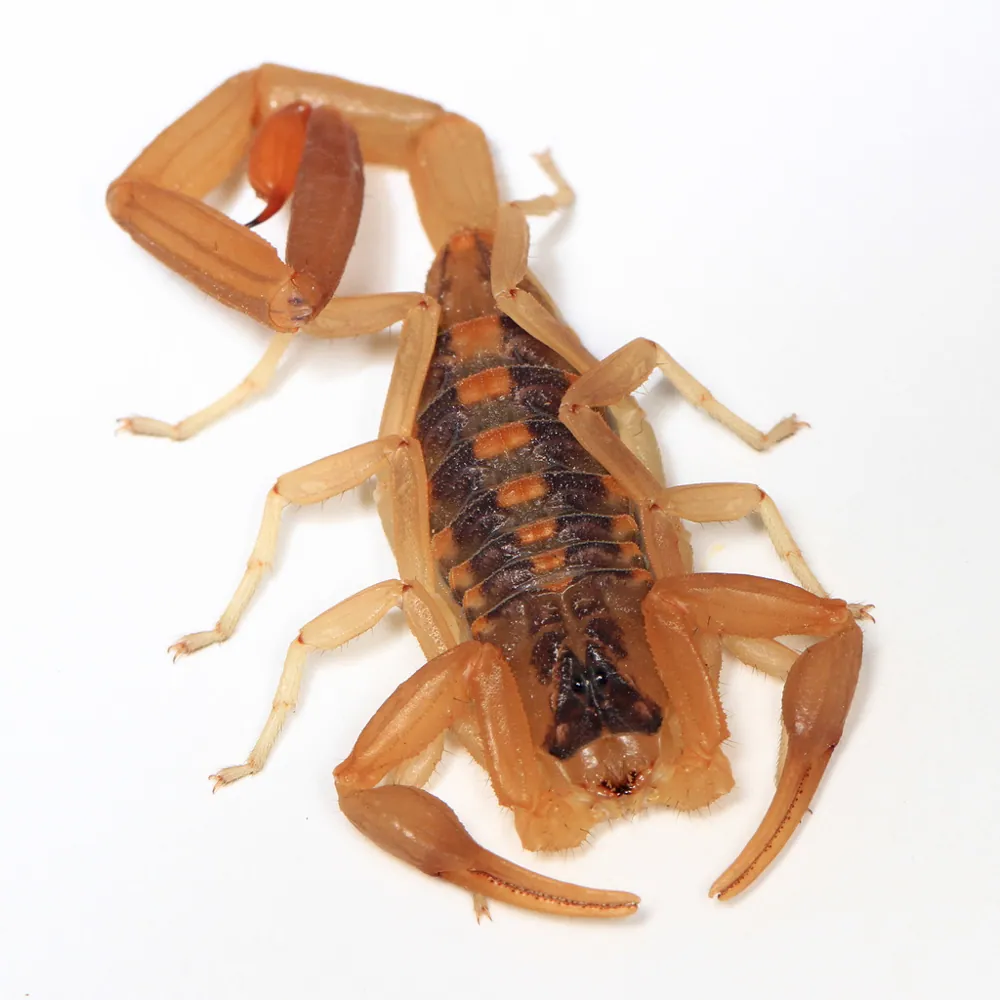
 Otú ị ga-esi mata ya
Ike nsị
Nsị na-esi na ndụdụ ya apụta.
Gịnị ka nsị ọ na-agba na-eme?
Its venom contains neurotoxins, which attack the nerves. These can cause tingling and numbness (paresthesia) and muscle spasms. One toxin keeps pain-sensing nerves firing for longer than normal, so the pain lasts. In rare severe cases, the venom can trigger a strong allergic-type reaction, with swelling, breathing trouble and, in the most severe cases, anaphylactic shock.1
Kedu otú o si dị egwu nye mmadụ?
Ihe ize ndụ nye mmadụ: Na-afụ ụfụỌ nwere ike ịfụ ụfụ nke ukwuu, mana ọ naghị adịkarị njọ.Thousands of people are stung every year. The sting is painful and causes localised swelling, and it is very rarely deadly. Severe allergic-type reactions have occurred in some cases.1
 Ọ bụrụ na ọ gbaa
- Swelling can be treated with an ice pack. Get medical help straight away if symptoms are strong, because stings from some related bark scorpions can be deadly.1
- Jiri akpa ice mee ka ebe ọ gbara jụọ oyi, mekwa ka onye ahụ nọrọ jụụ n'emegharịghị ahụ. Chọọ enyemaka ọgwụ ngwa ngwa, karịsịa maka ụmụaka: ụfọdụ akpị nwere ike igbu ụmụaka.
Na-ebu ụzọ kpọọ nọmba mberede gị mgbe niile (112, 000, 911). Nke a bụ ndụmọdụ enyemaka mbụ n'ozuzu, ọ bụghị ndụmọdụ ọgwụ. Isi ihe enyemaka mbụ
 Nọrọ na nchekwa
- Emetụla anụ ọhịa aka, ejidela ya, emekwala ya ihe ọjọọ, ọbụna obere, ọbụna ma ọ dị ka ọ na-ehi ụra ma ọ bụ nwụọ anwụ.
- Nye ya ohere. Ọ bụrụ na ị zutere otu, dị jụụ, laghachi azụ nwayọ, hapụ ya ka ọ gaa ụzọ ya.
- Ọ bụrụ na otu gbaa gị: dị jụụ, emegharịla ahụ, kpọọ nọmba mberede gị (112, 000, 911) ma ọ bụ gaa ụlọ ọgwụ ngwa ngwa. Cheta ka o si dị, foto na-enye aka.
Ọ naghị achụ gị. Ọ na-eji nsị ya ejide nri ma ọ bụ chebe onwe ya, ọ ga-akakwa mma n'anya ya ịzo onwe ya. Ihe ndị ọzọ gbasara ịnọ na nchekwa
Ọ hà aṅaa?
Kedu otú o si dị ogologo?
 dị ogologo dị ka blọk egwuregwu 2 n'ahịrị
 nwere ike ịgba ọsọ mita 100 n'ime sekọnd 260 (mmadụ kacha ọsọ chọrọ 9,6)
Kedu otú Striped bark scorpion si hà ma e jiri ya tụnyere GỊ?
Naanị mgbakọ na mwepụ n'ime browser gị. Ọ dịghị ihe echekwara ma ọ bụ ezigara ebe ọ bụla.
Kedu otú o si agba ọsọ?


Eziokwu
Before mating, males hold a showdown, waving their tails until one backs down. The winner then performs a courtship dance called the promenade a deux, in which larger males usually succeed.1
Unlike most scorpions, this species is social, so males and females have more chances to meet and compete for mates.1
In Colorado, people hunt for these scorpions with blacklights each late summer around the Cheyenne Mountain area.1
Populations have been found in some cities far outside its natural range, most likely brought there by human activity.1
Birds, reptiles, some mammals and larger arachnids prey on it, and juveniles spend much of their time in vegetation to avoid being eaten.1
Ebe eziokwu ndị a si
- Striped bark scorpion (Wikipedia (CC BY-SA 4.0))
- Centruroides vittatus (iNaturalist): aha na nhazi ọkwa.
- Venom Wiki: ọkwa ihe ize ndụ, nha nkịtị na nchepụta ọsọ bụ nke anyị. Lee otú anyị si achọpụta ha: Otú anyị si atụ ihe ize ndụ.
Eziokwu ọ bụla dị na peeji a nwere nọmba na-egosi ebe o si. Ọ bụrụ na anyị mehiere ihe, ndo, anyị bụ ndị hụrụ anụmanụ n'anya, ọ bụghị akwụkwọ akụkọ sayensị. Gwa anyị na [email protected], anyị ga-edozi ya.
 Akpị agụụ na-agụ! Venom Wiki bụ ọrụ otu onye: n'efu, na-enweghị mgbasa ozi na ndị na-esochi gị. Obere onyinye na-enyere aka idebe ya n'ịntanetị.Nye akpị nri
 Arizona bark scorpion
 Cuban blue scorpion
 Giant desert hairy scorpion
 Colima scorpion
 Durango scorpion
 Mexican bark scorpion
 Terciopelo
 Eastern coral snake
 Eastern diamondback rattlesnake
 Eyelash viper
 Timber rattlesnake
 Western diamondback rattlesnake