
 Afrịka
 Eshia
Eshia Yurop
Yurop Ndịda Amerika
 Ọstrelia na Oshenia
 Antaktika
 Oké Osimiri Pasifik
 Oké Osimiri Atlantik
 Oké Osimiri India
 Oké Osimiri Arktik
 Osimiri Mediterenian
 Osimiri Uhie
 Osimiri Karibịan
 Osimiri Coral
 Osimiri Ndịda China
 Osimiri Filipin
 Osimiri Andaman
 Osimiri Ugwu (North Sea)
 Osimiri Timor na Arafura
 Ọwara Bengal
 Ọwara California
Texas coral snake
 Ịta
ỊtaThe Texas coral snake is a venomous snake with bright black, yellow and red rings. It lives in the southern and southwestern United States and in parts of northeastern and central Mexico. Its bite can cause paralysis, so it is important to recognise it and keep well away.1



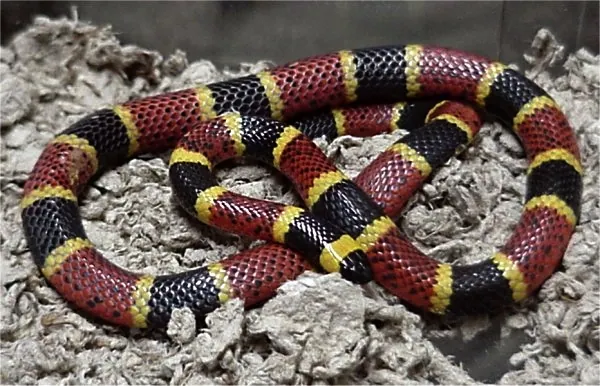
 Otú ị ga-esi mata ya
- Black, yellow and red rings, with the rings running onto the belly.1
- Smooth scales, a rounded head and round pupils.1
- Somewhat larger and stouter than the eastern coral snake.1
- Males are typically smaller than females.1
- Shy and secretive, and mostly active at night.1
A na-agwakọkarị ya na: Nonvenomous snakes copy the coral snake's colours as a form of Batesian mimicry. In the United States, the venomous coral snakes can be told apart by red rings touching yellow rings. The common rhyme "red and yellow, kill a fellow" is not always accurate because colours vary, and relying on it is dangerous.1
Ike nsị
Nsị na-esi n'eze nsị ya ma ọ bụ eze ya apụta mgbe ọ na-ata.
Gịnị ka nsị ọ na-agba na-eme?
The snake has a pair of fixed, grooved fangs at the front of the upper jaw, and venom is injected through them. Its venom contains a neurotoxin, which attacks the nerves, and a myotoxin, which damages muscle. Bite victims may experience paralysis or myolysis (muscle breakdown), which can be potentially lethal.1
Kedu otú o si dị egwu nye mmadụ?
Ihe ize ndụ nye mmadụ: Ọ dị njọỊta ya chọrọ dọkịta. Ọnwụ anaghị adịkarị ma ọlị.Before antivenom was available, the fatality rate of coral snake bites was estimated at 10%. Deaths were mainly caused by breathing or heart failure from paralysis. A single bite can deliver 10–12 mg of dry venom, about twice the lethal dose for an adult human of 5–7 mg. Many bites deliver no venom at all, known as dry bites.1
 Ozi ọma: ndị dọkịta nwere ọgwụ (antivenom) ma ọ bụ ọgwụgwọ maka nke a.1
Gịnị ka ọ na-eme mgbe ụjọ tụrụ ya?
When grabbed suddenly, or sometimes just when touched, it may thrash about, swing around and bite.1
 Ọ bụrụ na ọ tara
- Remove any jewellery from a bitten limb, in case of severe swelling. Wrap the bite area moderately tightly in a wide cloth, and move the bitten limb as little as possible. Take the bite victim to the nearest hospital as soon as possible for advanced treatment, such as antivenom.1
- Mee ka onye ahụ ghara imegharị ahụ, dịkwa jụụ, kpọga ya ụlọ ọgwụ ngwa ngwa, ọbụna ma ebe ọ tara dị ka obere ihe: mgbaàmà nwere ike ịmalite ọtụtụ awa ka e mesịrị.
Na-ebu ụzọ kpọọ nọmba mberede gị mgbe niile (112, 000, 911). Nke a bụ ndụmọdụ enyemaka mbụ n'ozuzu, ọ bụghị ndụmọdụ ọgwụ. Isi ihe enyemaka mbụ
 Nọrọ na nchekwa
- Emetụla anụ ọhịa aka, ejidela ya, emekwala ya ihe ọjọọ, ọbụna obere, ọbụna ma ọ dị ka ọ na-ehi ụra ma ọ bụ nwụọ anwụ.
- Nye ya ohere. Ọ bụrụ na ị zutere otu, dị jụụ, laghachi azụ nwayọ, hapụ ya ka ọ gaa ụzọ ya.
- Ọ bụrụ na otu tara gị: dị jụụ, emegharịla ahụ, kpọọ nọmba mberede gị (112, 000, 911) ma ọ bụ gaa ụlọ ọgwụ ngwa ngwa. Cheta ka o si dị, foto na-enye aka.
Ọ naghị achụ gị. Ọ na-eji nsị ya ejide nri ma ọ bụ chebe onwe ya, ọ ga-akakwa mma n'anya ya ịzo onwe ya. Ihe ndị ọzọ gbasara ịnọ na nchekwa
Ọ hà aṅaa?
Kedu otú o si dị ogologo?
 dị ogologo dị ka nwamba ụlọ 2.5 site n'imi ruo n'ọdụ
 dị ogologo dị ka unere 7 a tọgbọrọ n'ahịrị
 nwere ike ịgba ọsọ mita 100 n'ime sekọnd 73 (mmadụ kacha ọsọ chọrọ 9,6)
Kedu otú Texas coral snake si hà ma e jiri ya tụnyere GỊ?
Naanị mgbakọ na mwepụ n'ime browser gị. Ọ dịghị ihe echekwara ma ọ bụ ezigara ebe ọ bụla.
Kedu otú o si agba ọsọ?


Eziokwu
A single bite can deliver about twice the lethal dose for an adult human, yet many bites inject no venom at all.1
The Texas coral snake eats other snakes, including venomous ones, and will even eat its own kind.1
Colour variants exist in the wild, including albino, anerythristic, pastel and completely black (melanistic) snakes.1
Onye na-ekpughe akụkọ ụgha
Akụkọ ụgha: "Red and yellow, kill a fellow. Red on black, friend of Jack" is a reliable way to tell a coral snake from a harmless look-alike.
Eziokwu: The rhyme is not always accurate because colour patterns vary, and relying on it is dangerous to both people and snakes.1
Ebe eziokwu ndị a si
- Texas coral snake (Wikipedia (CC BY-SA 4.0))
- Micrurus tener (iNaturalist): aha na nhazi ọkwa.
- Venom Wiki: ọkwa ihe ize ndụ, nha nkịtị na nchepụta ọsọ bụ nke anyị. Lee otú anyị si achọpụta ha: Otú anyị si atụ ihe ize ndụ.
Eziokwu ọ bụla dị na peeji a nwere nọmba na-egosi ebe o si. Ọ bụrụ na anyị mehiere ihe, ndo, anyị bụ ndị hụrụ anụmanụ n'anya, ọ bụghị akwụkwọ akụkọ sayensị. Gwa anyị na [email protected], anyị ga-edozi ya.
 Akpị agụụ na-agụ! Venom Wiki bụ ọrụ otu onye: n'efu, na-enweghị mgbasa ozi na ndị na-esochi gị. Obere onyinye na-enyere aka idebe ya n'ịntanetị.Nye akpị nri
Ndị ọzọ si n'otu ahụ: Agwọ coral
 Eastern coral snakeAgwọ coralNwere ike igbu mmadụ
 Central American coral snakeAgwọ coralNwere ike igbu mmadụ
 Sonoran coral snakeAgwọ coralNaanị na-afụ ụfụ
 Allen's coral snakeAgwọ coralNwere ike igbu mmadụ
 Brown's coral snakeAgwọ coralNwere ike igbu mmadụ
 Dumeril's coral snakeAgwọ coralNwere ike igbu mmadụ
 Terciopelo
 Eastern diamondback rattlesnake
 Eyelash viper
 Timber rattlesnake
 Western diamondback rattlesnake
 Arizona bark scorpion