
 Afrịka
 Eshia
Eshia Yurop
Yurop Ndịda Amerika
 Ọstrelia na Oshenia
 Antaktika
 Oké Osimiri Pasifik
 Oké Osimiri Atlantik
 Oké Osimiri India
 Oké Osimiri Arktik
 Osimiri Mediterenian
 Osimiri Uhie
 Osimiri Karibịan
 Osimiri Coral
 Osimiri Ndịda China
 Osimiri Filipin
 Osimiri Andaman
 Osimiri Ugwu (North Sea)
 Osimiri Timor na Arafura
 Ọwara Bengal
 Ọwara California
Trinidad chevron tarantula
 Ịta
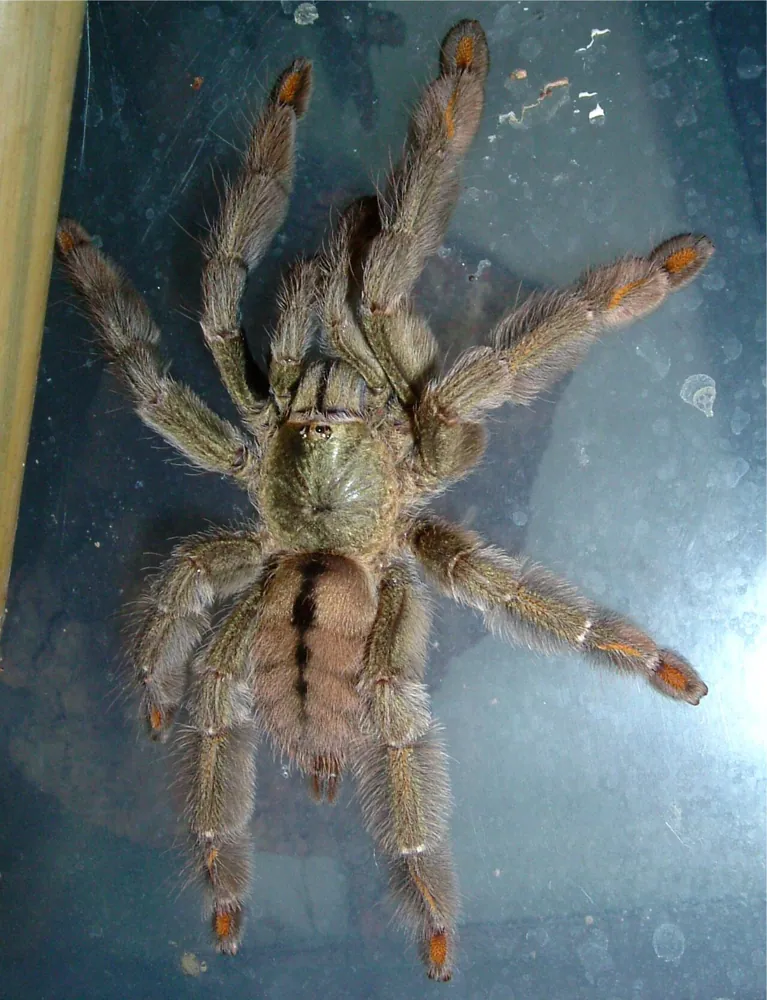
ỊtaThe Trinidad chevron tarantula is a large hairy spider that lives only on the island of Trinidad. It spends much of its life in tree bark and crevices, and it is also a popular pet in many countries because it is easy to breed in captivity.1

 Otú ị ga-esi mata ya
- Females have dark, chevron-shaped (V-shaped) markings on the abdomen.1
- Females are green, tan or brown, with orange markings on the legs.1
- Males are a more uniform grey or brown, with long legs in proportion to their body.1
- Males keep orange markings on the latter part of their legs.1
- Spiderlings are mostly dark, with pale orange bands on the legs that look like leg warmers. These bands fade as the spider grows.1
A na-agwakọkarị ya na: The female's orange leg markings are similar to those of P. irminia, another species in the same genus.1
Ike nsị
Nsị na-esi n'eze nsị ya ma ọ bụ eze ya apụta mgbe ọ na-ata.
Gịnị ka nsị ọ na-agba na-eme?
The venom has been studied for possible medical uses, including pain relief and the management of glioma, breast cancer and stroke. It is also of interest for managing cartilage damage in rheumatoid arthritis. The main active compound studied is psalmotoxin.1
Kedu otú o si dị egwu nye mmadụ?
Ihe ize ndụ nye mmadụ: Na-afụ ụfụỌ nwere ike ịfụ ụfụ nke ukwuu, mana ọ naghị adịkarị njọ. Ọ bụrụ na ọ tara
- Saa ebe ọ tara, mee ka ọ jụọ oyi. Chọọ enyemaka ọgwụ ma ọ bụrụ na mgbu ahụ siri ike ma ọ bụ na ahụ adịghị onye ahụ mma.
Na-ebu ụzọ kpọọ nọmba mberede gị mgbe niile (112, 000, 911). Nke a bụ ndụmọdụ enyemaka mbụ n'ozuzu, ọ bụghị ndụmọdụ ọgwụ. Isi ihe enyemaka mbụ
 Nọrọ na nchekwa
- Emetụla anụ ọhịa aka, ejidela ya, emekwala ya ihe ọjọọ, ọbụna obere, ọbụna ma ọ dị ka ọ na-ehi ụra ma ọ bụ nwụọ anwụ.
- Nye ya ohere. Ọ bụrụ na ị zutere otu, dị jụụ, laghachi azụ nwayọ, hapụ ya ka ọ gaa ụzọ ya.
- Ọ bụrụ na otu tara gị: dị jụụ, emegharịla ahụ, kpọọ nọmba mberede gị (112, 000, 911) ma ọ bụ gaa ụlọ ọgwụ ngwa ngwa. Cheta ka o si dị, foto na-enye aka.
Ọ naghị achụ gị. Ọ na-eji nsị ya ejide nri ma ọ bụ chebe onwe ya, ọ ga-akakwa mma n'anya ya ịzo onwe ya. Ihe ndị ọzọ gbasara ịnọ na nchekwa
Ọ hà aṅaa?
Kedu otú o si dị ogologo?
 dị ogologo dị ka blọk egwuregwu 5 n'ahịrị
 nwere ike ịgba ọsọ mita 100 n'ime sekọnd 200 (mmadụ kacha ọsọ chọrọ 9,6)
Kedu otú Trinidad chevron tarantula si hà ma e jiri ya tụnyere GỊ?
Naanị mgbakọ na mwepụ n'ime browser gị. Ọ dịghị ihe echekwara ma ọ bụ ezigara ebe ọ bụla.
Kedu otú o si agba ọsọ?


Eziokwu
The venom is being studied for possible uses in medicine, including pain relief and treatments for some cancers and stroke.1
Spiderlings have pale orange bands on their legs that look like leg warmers. These fade as they grow.1
Males have a much shorter lifespan than females. Their life ends soon after they mature and reproduce.1
P. cambridgei has stridulatory setae (called lyra) on its maxillae. This trait was once seen only in Asian and African species.1
Ebe eziokwu ndị a si
- Psalmopoeus cambridgei (Wikipedia (CC BY-SA 4.0))
- Psalmopoeus cambridgei (iNaturalist): aha na nhazi ọkwa.
- Venom Wiki: ọkwa ihe ize ndụ, nha nkịtị na nchepụta ọsọ bụ nke anyị. Lee otú anyị si achọpụta ha: Otú anyị si atụ ihe ize ndụ.
Eziokwu ọ bụla dị na peeji a nwere nọmba na-egosi ebe o si. Ọ bụrụ na anyị mehiere ihe, ndo, anyị bụ ndị hụrụ anụmanụ n'anya, ọ bụghị akwụkwọ akụkọ sayensị. Gwa anyị na [email protected], anyị ga-edozi ya.
 Akpị agụụ na-agụ! Venom Wiki bụ ọrụ otu onye: n'efu, na-enweghị mgbasa ozi na ndị na-esochi gị. Obere onyinye na-enyere aka idebe ya n'ịntanetị.Nye akpị nri
Ndị ọzọ si n'otu ahụ: Tarantula na funnel-web
 Mexican redknee tarantulaTarantula na funnel-webAdịghị njọ
 Arizona blond tarantulaTarantula na funnel-webAdịghị njọ
 Ravine trapdoor spiderTarantula na funnel-webAdịghị njọ
 Antilles pinktoe tarantulaTarantula na funnel-webAdịghị njọ
 California trapdoor spiderTarantula na funnel-webAdịghị njọ
 Costa Rican zebra tarantulaTarantula na funnel-webAdịghị njọ
 Terciopelo
 Eastern coral snake
 Eastern diamondback rattlesnake
 Eyelash viper
 Timber rattlesnake
 Western diamondback rattlesnake