
 Afríka
 Asía
Asía Evrópa
 Suður-Ameríka
 Ástralía og Eyjaálfa
 Suðurskautslandið
 Kyrrahaf
 Atlantshaf
 Indlandshaf
 Norður-Íshaf
 Miðjarðarhaf
 Rauðahaf
 Karíbahaf
 Kóralhaf
 Suður-Kínahaf
 Filippseyjahaf
 Andamanhaf
 Norðursjór
 Tímorhaf og Arafúrahaf
 Bengalflói
 Kaliforníuflói
Rough-skinned newt
 Eitur í húðinniEitrað að snerta eða borða, ekki eitrað bit eða stunga
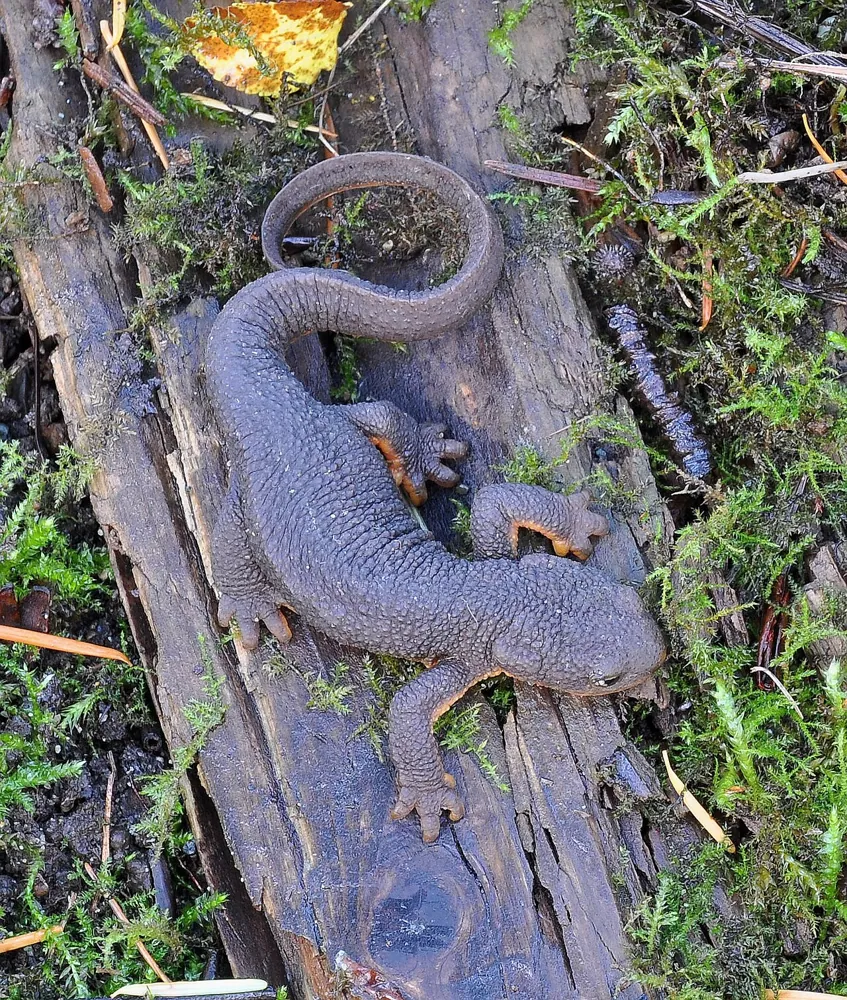
The rough-skinned newt is a small, stocky amphibian from the Pacific Northwest of North America. Its skin gives off one of the strongest toxins of any newt, so it is a creature to admire from a distance and never handle. Its toxin is also linked to a famous fight between newts and garter snakes.1
 Svona þekkir þú það
- Stocky body with a rounded snout.1
- Top ranges from light brown to olive or brownish-black.1
- Underside, including the head, legs and tail, is orange to yellow.1
- Skin is granular, but males are smooth-skinned during the breeding season.1
- Adults are 11 to 18 cm long overall, including the tail.1
Oft ruglað saman við: The California newt (Taricha torosa) looks similar. The rough-skinned newt has smaller eyes, yellow irises, V-shaped tooth patterns and uniformly dark eyelids. During breeding season, males have large swollen vent lobes and cornified toe pads, which separate them from females.1
Eiturkraftur
Húðin er eitruð. Það er hættulegt að snerta það, sleikja eða borða.
Hvað gerir eitrið ef maður snertir það eða borðar það?
This animal is poisonous rather than venomous, so it does not bite or sting. Its skin produces tetrodotoxin (TTX), a neurotoxin that attacks the nerves. It blocks the sodium channels that nerves need to send signals. This can cause paralysis and death by asphyxiation, which means the person cannot breathe.1
Hversu hættulegt er það fólki?
Hætta fyrir fólk: Mjög hættulegtÞað getur drepið manneskju sem fær enga meðferð.The toxin is mainly dangerous if the newt is eaten. Some people have had skin irritation after handling the newt, especially if they touch their eyes without washing their hands first. In 1979, a 29-year-old man from Oregon died after eating one. Some newts make enough toxin to kill several adult humans.1
Hvað gerir það þegar það er hrætt?
It gives off an acrid smell that warns animals to stay away.1
 Ef einhver hefur snert það eða borðað
- Ef einhver hefur snert eitt slíkt: þvoðu hendurnar vel og ekki snerta augun eða munninn. Ef barn eða gæludýr hefur sleikt eða borðað eitt slíkt: hringdu í eitrunarmiðstöð eða neyðarnúmerið.
Hringdu alltaf fyrst í neyðarnúmerið (112, 000, 911). Þetta eru almennar leiðbeiningar um skyndihjálp, ekki læknisráð. Grunnatriði skyndihjálpar
 Farðu varlega
- Aldrei snerta, ná í eða stríða villtu dýri, ekki einu sinni litlu, og ekki einu sinni ef það virðist sofa eða vera dautt.
- Gefðu því pláss. Ef þú hittir eitt, haltu ró þinni, bakkaðu hægt og leyfðu því að fara sína leið.
- Ef þú snertir það eða borðaðir það: ekki nudda augun eða munninn, þvoðu þér um hendurnar og fáðu læknishjálp.
Það er ekki á eftir þér. Eitrið er bara til staðar svo að ekkert éti það. Meira um að fara varlega
Hvar í heiminum?
Hversu stórt er það?
Hversu langt er það?
 jafn langt og 6 leikfangakubbar í röð
Hversu stórt er Rough-skinned newt miðað við ÞIG?
Bara reikningur í vafranum þínum. Ekkert er vistað eða sent neitt.
Hversu hratt er það?


Staðreyndir
Some common garter snakes can eat rough-skinned newts and survive. They are the only known animals today able to do this.1
A garter snake tests a newt's toxin level by partly swallowing it, then either swallows it fully or lets it go.1
Newts can detect the chemical signature of a snake that has digested one of their kind, and they move away from it.1
The toxin is made by the newt's skin microbiome, meaning the bacteria living on its skin.1
The newt and the garter snake are an example of an evolutionary arms race. Each change in one species drives change in the other.1
The toxin also appears in pufferfish and other marine animals, which share the same nerve-blocking effect.1
Fyrir eitursérfræðinga
Hvaðan staðreyndirnar koma
- Rough-skinned newt (Wikipedia (CC BY-SA 4.0))
- Taricha granulosa (iNaturalist): nöfn og flokkun.
- Venom Wiki: hættustigið, dæmigerða stærðin og ágiskaði hraðinn eru okkar eigið mat. Sjáðu hvernig við finnum það út: Svona metum við hættuna.
Hver staðreynd á þessari síðu hefur númer sem vísar á heimildina. Ef við höfum rangt fyrir okkur, fyrirgefðu, við erum dýraaðdáendur, ekki vísindatímarit. Láttu okkur vita á [email protected] og við lögum það.
 Sporðdrekinn er svangur! Venom Wiki er eins manns verkefni: ókeypis, án auglýsinga og án rakningar. Smá þjórfé hjálpar til við að halda því á netinu.Gefðu sporðdrekanum að borða
Meira úr sama flokki: Eiturfroskar, körtur og salamöndrur
 Cane toadEiturfroskar, körtur og salamöndrurÞarf lækniEkki snerta
 Strawberry poison-dart frogEiturfroskar, körtur og salamöndrurEr bara sártEkki snerta
 California newtEiturfroskar, körtur og salamöndrurGetur drepiðEkki snerta
 Colorado River toadEiturfroskar, körtur og salamöndrurÞarf lækniEkki snerta
 Panamanian golden frogEiturfroskar, körtur og salamöndrurÞarf lækniEkki snerta
 Eastern newtEiturfroskar, körtur og salamöndrurEr bara sártEkki snerta
 Terciopelo
 Eastern coral snake
 Eastern diamondback rattlesnake
 Eyelash viper
 Timber rattlesnake
 Western diamondback rattlesnake
.JPG)