
 Africa
 Asia
Asia Europa
 Sud America
 Australia e Oceania
 Antartide
 Oceano Pacifico
 Oceano Atlantico
 Oceano Indiano
 Oceano Artico
 Mar Mediterraneo
 Mar Rosso
 Mar dei Caraibi
 Mar dei Coralli
 Mar Cinese Meridionale
 Mar delle Filippine
 Mare delle Andamane
 Mare del Nord
 Mar di Timor e Mar degli Arafura
 Golfo del Bengala
 Golfo di California
Blue-lined octopus
 Morsi
MorsiThe blue-lined octopus is a small sea creature, about the size of a golf ball, that lives in shallow reefs and rock pools in the Pacific Ocean. It is one of the most dangerous animals in the sea, because its bite contains venom that can be fatal to people. It is shy and usually hides, but its bright blue lines are a clear warning to leave it alone.1
 Come riconoscerlo
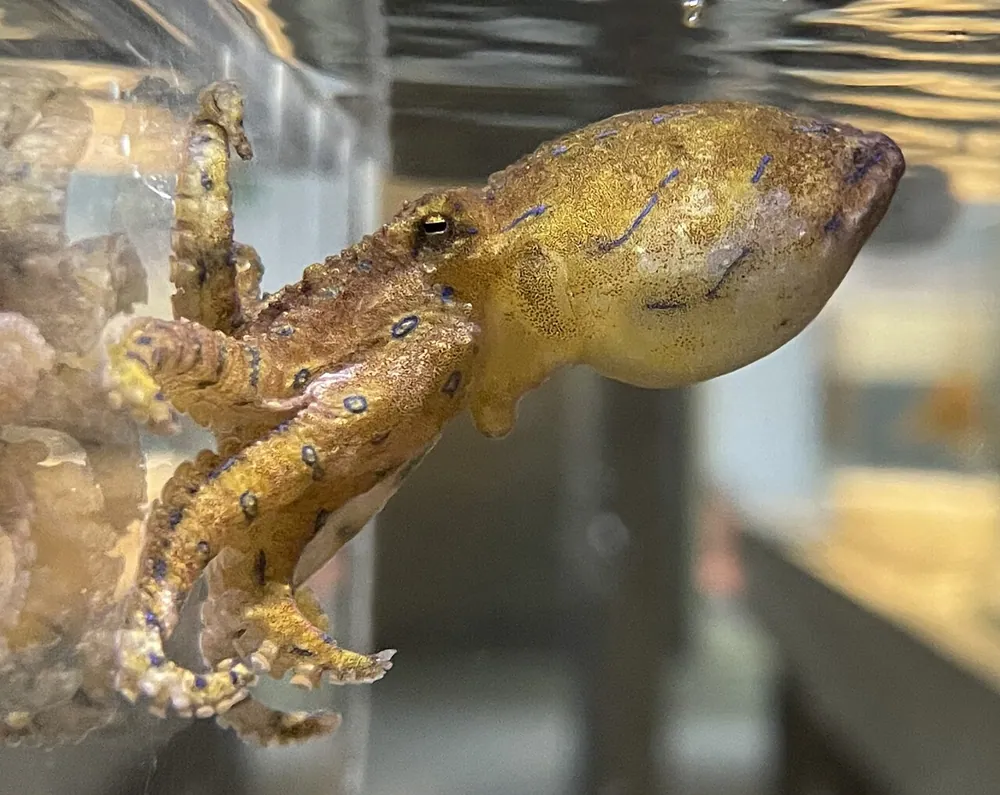
- At rest, its body is mottled yellow-brown with dark blue or black streaks, and its underside is paler.1
- When it feels threatened, it shows bright, iridescent blue lines across its body.1
- It is small, with a mantle (main body) up to 45 mm long, about the size of a golf ball.1
- Its blue markings are lines, not rings.1
- The visceral hump (the bulge behind the head) is regularly pointed.1
Spesso confuso con: The greater blue-ringed octopus, southern blue-ringed octopus and blue-ringed octopus have circular blue rings rather than lines. The blue-lined octopus is also the smallest of the four species in its genus.1
Potere del veleno
Il veleno esce dalle zanne o dai denti quando morde.
Cosa fa il suo veleno?
Its venom is tetrodotoxin (TTX), a neurotoxic venom, which attacks the nerves. A bite may not be felt at first. After some time, symptoms include loss of feeling in the tongue and lips, muscle weakness or paralysis, respiratory failure (breathing failure), and unconsciousness, which can lead to death.1
Quanto è pericoloso per le persone?
Pericolo per le persone: MortaleUno degli animali più pericolosi del mondo.It is regarded as one of the most dangerous animals in the sea, and its venom can be fatal to humans. At least three human deaths have been reported. The greatest risk is to people who pick it up or touch it.1
Cosa fa quando ha paura?
When threatened, it displays bright blue warning lines to predators, and it is more likely to flee and hide in shelter than to fight.1
 Se morde
- Bendaggio compressivo e immobilizzazione: avvolgi una benda elastica ben salda sopra il morso e poi su tutto l'arto, immobilizzalo con una stecca e tieni la persona completamente ferma finché non arrivano i soccorsi.
- Un polpo dagli anelli blu o un mollusco cono possono fermare il respiro di una persona mentre è ancora sveglia: chiama aiuto e preparati a fare le ventilazioni di soccorso finché non subentrano i soccorritori dell'ambulanza.
Chiama sempre prima il numero di emergenza (112, 000, 911). Queste sono indicazioni generali di primo soccorso, non consigli medici. Primo soccorso di base
 Stai al sicuro
- Non toccare, catturare o stuzzicare mai un animale selvatico, anche se è piccolo e anche se sembra addormentato o morto.
- Lasciagli spazio. Se ne incontri uno, resta calmo, indietreggia piano e lascialo andare per la sua strada.
- Se uno ti morde: resta calmo, stai fermo, chiama il numero di emergenza (112, 000, 911) o vai subito in ospedale. Ricorda com'era, una foto aiuta.
Non ce l'ha con te. Usa il veleno per procurarsi il cibo o per difendersi, e preferisce di gran lunga nascondersi. Altro su come stare al sicuro
Dove nel mondo?
Quanto è grande?
Quanto è lungo?
 più corto del tuo dito mignolo
 potrebbe nuotare per tutta la lunghezza di una grande piscina (50 m) in 7,2 secondi
Quanto è grande Blue-lined octopus rispetto a TE?
Solo calcoli nel tuo browser. Niente viene salvato o inviato da nessuna parte.
Quanto è veloce?

Informazioni
A single 25-gram blue-lined octopus carries enough venom to kill about ten adults weighing 75 kilograms each, according to estimates.1
Male blue-lined octopuses bite the female's aorta during mating, injecting TTX. This paralyses her within about 8 minutes, which lets the male transfer his sperm packets safely.1
Hapalochlaena is the only octopus genus known to produce TTX, a toxin thought to have played an important role in the evolution of the species.1
The blue-lined octopus is the only one of the four blue-ringed species with lined blue markings instead of circular ones.1
Blue-lined octopuses are nocturnal hunters, while the greater blue-ringed octopus hunts during the day.1
Its range has been spreading across the Pacific. Warming ocean water may be shifting suitable habitat, and scientists monitor this for public health and safety.1
Sfatiamo i miti
Mito: Because it is so shy, the blue-lined octopus is not really dangerous.
Verità: It is extremely shy and usually flees, but its venom can still be fatal to people, and at least three deaths have been reported.1
Per gli esperti di veleni
- Nome scientifico
- Hapalochlaena fasciata
- Gruppo
- Molluschi cono e polpi
- Famiglia
- Octopodidae2
- Ordine
- Octopoda
- Continenti
- Oceano Indiano, Oceano Pacifico, Mar dei Coralli, Gli oceani
- Cuccioli
- A female lays 50 to 100 large eggs about 30 days after mating, hides them under her arms until they hatch, and then dies. The hatchlings take about two months to develop.1
- Pericolo per le persone
- 5 / 5: Mortale3
Da dove vengono le informazioni
- Blue-lined octopus (Wikipedia (CC BY-SA 4.0))
- Hapalochlaena fasciata (iNaturalist): nomi e classificazione.
- Venom Wiki: il livello di pericolo, la taglia tipica e la stima della velocità sono nostri. Guarda come li calcoliamo: Come valutiamo il pericolo.
Ogni informazione in questa pagina ha un numero che rimanda alla sua fonte. Se abbiamo sbagliato qualcosa, scusa, siamo appassionati di animali, non una rivista scientifica. Scrivici a [email protected] e lo correggeremo.
 Lo scorpione ha fame! Venom Wiki è un progetto di una sola persona: gratis, senza pubblicità e senza tracker. Una piccola mancia aiuta a tenerlo online.Dai da mangiare allo scorpione
Altri dello stesso gruppo: Molluschi cono e polpi
 Geography cone
 Greater blue-ringed octopus
 Southern blue-ringed octopus
 Blue sea dragon
 Common octopus
 Giant Pacific octopus
Vive anche in: Oceano Indiano
 Australian box jellyfishMeduse e altri urticanti mariniMortaleNon toccare
 Hawksbill sea turtleAltri animali tossiciPuò uccidere
 Irukandji jellyfishMeduse e altri urticanti mariniPuò uccidereNon toccare
 Reef stonefishPesci velenosiPuò uccidereNon toccare
 Crown-of-thorns starfishRicci, stelle e vermiServe un medicoNon toccare
 Portuguese man o' warMeduse e altri urticanti mariniServe un medicoNon toccare