
 Africa
 Asia
Asia Europa
 Sud America
 Australia e Oceania
 Antartide
 Oceano Pacifico
 Oceano Atlantico
 Oceano Indiano
 Oceano Artico
 Mar Mediterraneo
 Mar Rosso
 Mar dei Caraibi
 Mar dei Coralli
 Mar Cinese Meridionale
 Mar delle Filippine
 Mare delle Andamane
 Mare del Nord
 Mar di Timor e Mar degli Arafura
 Golfo del Bengala
 Golfo di California
Cane toad
 Tossine nella pelle
The cane toad is a large toad that is very poisonous to many animals. It is native to South and mainland Central America, but people have moved it to islands in Oceania and the Caribbean and to northern Australia. It matters because it spreads quickly and harms native wildlife and pets.1
 Come riconoscerlo
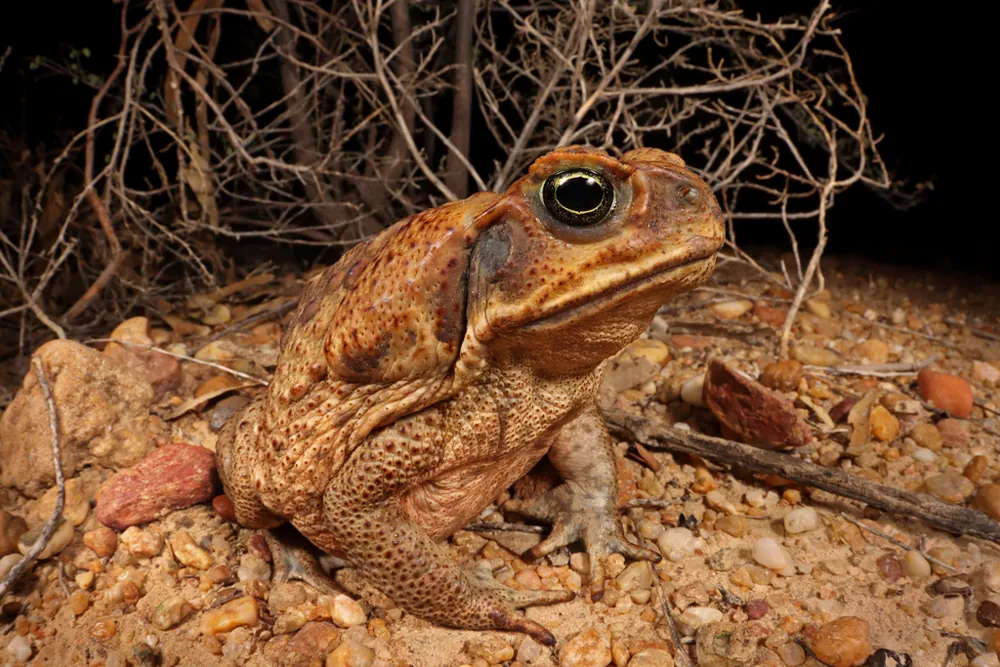
- Very large, with adults usually 10 to 15 cm long1
- Dry, warty skin with distinct ridges above the eyes that run down the snout1
- A large parotoid gland (a swollen gland) behind each eye1
- Grey, yellowish, red-brown or olive-brown skin, often with patterns1
- Horizontal pupils and golden irises1
Spesso confuso con: In Australia, adults can be confused with large native frogs, but these lack the large parotoid glands and the ridge between the nostril and eye. The giant burrowing frog has vertical pupils and silver-grey irises, while the cane toad has horizontal pupils and golden irises. In the United States, the southern toad has two bulbs in front of the parotoid glands.1
Potere tossico
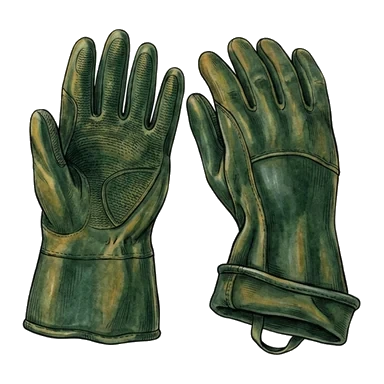
La sua pelle è tossica. È pericoloso toccarlo, leccarlo o mangiarlo.
Cosa fanno le sue tossine?
The toad's glands secrete a milky-white fluid called bufotoxin when it is threatened. Components of bufotoxin are toxic to many animals. In dogs, signs of poisoning include excessive drooling, extremely red gums, head-shaking, crying and loss of coordination.1
Quanto è pericoloso per le persone?
Pericolo per le persone: GraveSe qualcuno lo tocca o lo mangia, serve un medico. Le morti sono molto rare.The toxic skin can kill many wild and domestic animals. Dogs are especially at risk from licking or biting the toad. Human deaths have also been recorded after people ate cane toads.1
Cosa fa quando ha paura?
When threatened, it releases bufotoxin from its glands.1
 Se qualcuno l'ha toccato o mangiato
- Se qualcuno ne ha toccato uno: lava bene le mani e non toccare occhi o bocca. Se un bambino o un animale domestico ne ha leccato o mangiato uno: chiama il centro antiveleni o il numero di emergenza.
Chiama sempre prima il numero di emergenza (112, 000, 911). Queste sono indicazioni generali di primo soccorso, non consigli medici. Primo soccorso di base
 Stai al sicuro
- Non toccare, catturare o stuzzicare mai un animale selvatico, anche se è piccolo e anche se sembra addormentato o morto.
- Lasciagli spazio. Se ne incontri uno, resta calmo, indietreggia piano e lascialo andare per la sua strada.
- Se l'hai toccato o mangiato: non strofinarti gli occhi o la bocca, lavati le mani e cerca aiuto medico.
Non ce l'ha con te. Le sue tossine servono solo perché nessuno lo mangi. Altro su come stare al sicuro
Dove nel mondo?
Quanto è grande?
Quanto è lungo?
 lungo come 8 mattoncini da costruzione in fila
 potrebbe percorrere 100 metri in 180 secondi (l'uomo più veloce ci mette 9,6)
Quanto è grande Cane toad rispetto a TE?
Solo calcoli nel tuo browser. Niente viene salvato o inviato da nessuna parte.
Quanto è veloce?


Informazioni
Young toads lose the toxicity they had as eggs and tadpoles, and they only develop their poison glands later. Only an estimated 0.5% of cane toads reach adulthood.1
In Australia, tadpoles have evolved to be more likely to eat their siblings than tadpoles in South America.1
A female can lay thousands of eggs in one spawn, in strings up to 20 metres long.1
In the wild, cane toads can live 10 to 15 years, and one captive toad was reported to have lived 35 years.1
The cane toad is considered the largest species in the Bufonidae, the toad family.1
Cane toads eat both living and dead matter, which is unusual among frogs and toads.1
Sfatiamo i miti
Mito: The name 'marine toad' suggests that cane toads live in the sea.
Verità: Cane toads do not live in the sea. The name came from a mistaken belief by an early naturalist.1
Per gli esperti di veleni
- Nome scientifico
- Rhinella marina
- Gruppo
- Rane dardo, rospi e tritoni
- Famiglia
- Bufonidae2
- Ordine
- Anura
- Continenti
- Nord America, Sud America
- Cuccioli
- A female lays 8,000 to 25,000 eggs at once, in long jelly strings that can stretch up to 20 metres.1
- Durata della vita
- circa 15 anni1
- Pericolo per le persone
- 3 / 5: Grave3
Da dove vengono le informazioni
- Cane toad (Wikipedia (CC BY-SA 4.0))
- Rhinella marina (iNaturalist): nomi e classificazione.
- Venom Wiki: il livello di pericolo, la taglia tipica e la stima della velocità sono nostri. Guarda come li calcoliamo: Come valutiamo il pericolo.
Ogni informazione in questa pagina ha un numero che rimanda alla sua fonte. Se abbiamo sbagliato qualcosa, scusa, siamo appassionati di animali, non una rivista scientifica. Scrivici a [email protected] e lo correggeremo.
 Lo scorpione ha fame! Venom Wiki è un progetto di una sola persona: gratis, senza pubblicità e senza tracker. Una piccola mancia aiuta a tenerlo online.Dai da mangiare allo scorpione
Altri dello stesso gruppo: Rane dardo, rospi e tritoni
 Golden poison frogRane dardo, rospi e tritoniMortaleNon toccare
 Dyeing poison dart frogRane dardo, rospi e tritoniFa solo maleNon toccare
 Strawberry poison-dart frogRane dardo, rospi e tritoniFa solo maleNon toccare
 Black-legged poison frogRane dardo, rospi e tritoniPuò uccidereNon toccare
 California newtRane dardo, rospi e tritoniPuò uccidereNon toccare
 Rough-skinned newtRane dardo, rospi e tritoniPuò uccidereNon toccare
 Terciopelo
 Eastern coral snake
 Eastern diamondback rattlesnake
 Eyelash viper
 Timber rattlesnake
 Western diamondback rattlesnake