
 Africa
 Asia
Asia Europa
 Sud America
 Australia e Oceania
 Antartide
 Oceano Pacifico
 Oceano Atlantico
 Oceano Indiano
 Oceano Artico
 Mar Mediterraneo
 Mar Rosso
 Mar dei Caraibi
 Mar dei Coralli
 Mar Cinese Meridionale
 Mar delle Filippine
 Mare delle Andamane
 Mare del Nord
 Mar di Timor e Mar degli Arafura
 Golfo del Bengala
 Golfo di California
Western diamondback rattlesnake
 Morsi
MorsiThe western diamondback rattlesnake is a large, venomous pit viper that lives in the southwestern United States and the northern half of Mexico. It is thought to cause most snakebite deaths in northern Mexico and more snakebites in the United States than any other snake. Its diamond-shaped back markings and loud rattle make it easier to recognise, but it should always be given plenty of space.1



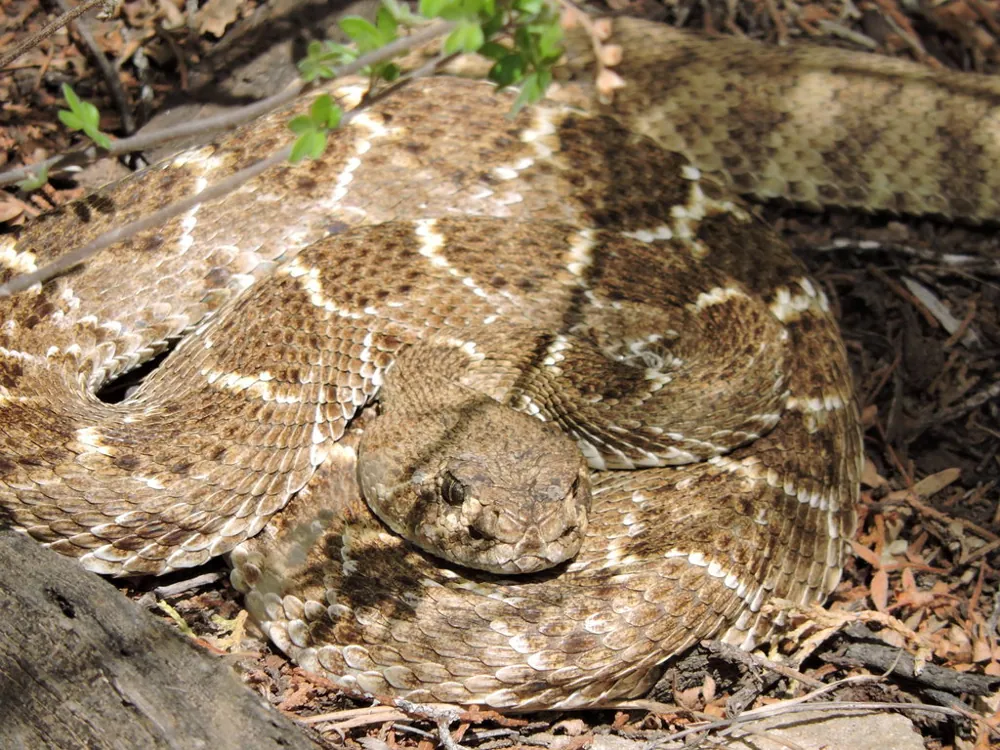
 Come riconoscerlo
- Usually khaki in colour, though it may also be pinkish, brick red, yellowish blonde or white.1
- A row of 23 to 45 brown or dark umber blotches runs along the back, becoming diamond-shaped towards the middle of the body.1
- The tail has two to eight black bands, usually four to six, separated by white or grey.1
- A grey or umber stripe runs diagonally from the eye across the side of the head, usually edged below by a white stripe.1
Spesso confuso con: The Mojave rattlesnake also has banded tail rings, but its black rings are narrow compared with the pale ones. The timber rattlesnake has no tail rings, and the black-tailed rattlesnake has a uniform black tail or indistinct rings.1
Potere del veleno
Il veleno esce dalle zanne o dai denti quando morde.
Cosa fa il suo veleno?
Its venom is mainly hemotoxic, which means it mainly damages blood vessels, blood cells and the heart. It contains enzymes that break down tissue, along with cytotoxins and myotoxins that destroy cells and muscle. Local effects include pain, heavy internal bleeding, severe swelling, muscle damage, bruising, blistering and tissue death, and general effects may include headache, nausea and vomiting.1
Quanto è pericoloso per le persone?
Pericolo per le persone: Molto pericolosoPuò uccidere una persona che non riceve cure.It is thought to be responsible for most snakebite deaths in northern Mexico and for the greatest number of snakebites in the United States. It can deliver a large amount of venom in one bite.1
Cosa fa quando ha paura?
When threatened it usually coils and rattles to warn off attackers, and it is unusually willing to stand its ground. If rattling does not work, it will strike.1
 Se morde
- Tieni la persona ferma e calma, tieni l'arto morso all'altezza del cuore, togli anelli e cose strette e portala subito in ospedale.
Chiama sempre prima il numero di emergenza (112, 000, 911). Queste sono indicazioni generali di primo soccorso, non consigli medici. Primo soccorso di base
 Stai al sicuro
- Non toccare, catturare o stuzzicare mai un animale selvatico, anche se è piccolo e anche se sembra addormentato o morto.
- Lasciagli spazio. Se ne incontri uno, resta calmo, indietreggia piano e lascialo andare per la sua strada.
- Se uno ti morde: resta calmo, stai fermo, chiama il numero di emergenza (112, 000, 911) o vai subito in ospedale. Ricorda com'era, una foto aiuta.
Non ce l'ha con te. Usa il veleno per procurarsi il cibo o per difendersi, e preferisce di gran lunga nascondersi. Altro su come stare al sicuro
Dove nel mondo?
Quanto è grande?
Quanto è lungo?
Quanto pesa?
 lungo come 4 gatti di casa dal naso alla coda
 lungo come 12 banane in filapesante più o meno come un gatto di casa
 potrebbe percorrere 100 metri in 92 secondi (l'uomo più veloce ci mette 9,6)
Quanto è grande Western diamondback rattlesnake rispetto a TE?
Solo calcoli nel tuo browser. Niente viene salvato o inviato da nessuna parte.
Quanto è veloce?


Informazioni
It can go up to two years without food in the wild. In a starvation study, snakes cut their energy use by an average of 80% and still grew, as they put resources into muscle and bone.1
A juvenile was once found dead after trying to swallow a horned lizard, whose horns punctured its gullet.1
It is likely the second largest rattlesnake species, behind only its close relative the eastern diamondback rattlesnake.1
It is one of the few snake species that scavenges for food.1
Among rattlesnakes, it may be the most adaptable to towns and suburbs, and it thrives deep within developed areas.1
It is an important predator of small rodents, rabbits and birds, and it is itself eaten by coyotes, foxes, hawks and owls.1
Da dove vengono le informazioni
- Western diamondback rattlesnake (Wikipedia (CC BY-SA 4.0))
- Crotalus atrox (iNaturalist): nomi e classificazione.
- Venom Wiki: il livello di pericolo, la taglia tipica e la stima della velocità sono nostri. Guarda come li calcoliamo: Come valutiamo il pericolo.
Ogni informazione in questa pagina ha un numero che rimanda alla sua fonte. Se abbiamo sbagliato qualcosa, scusa, siamo appassionati di animali, non una rivista scientifica. Scrivici a [email protected] e lo correggeremo.
 Lo scorpione ha fame! Venom Wiki è un progetto di una sola persona: gratis, senza pubblicità e senza tracker. Una piccola mancia aiuta a tenerlo online.Dai da mangiare allo scorpione
Altri dello stesso gruppo: Serpenti a sonagli
 Eastern diamondback rattlesnakeSerpenti a sonagliPuò uccidere
 Timber rattlesnakeSerpenti a sonagliPuò uccidere
 SidewinderSerpenti a sonagliServe un medico
 Mojave rattlesnakeSerpenti a sonagliPuò uccidere
 Aruba rattlesnakeSerpenti a sonagliServe un medico
 Black-tailed rattlesnakeSerpenti a sonagliServe un medico
 Terciopelo
 Eastern coral snake
 Eyelash viper
 Arizona bark scorpion
 Brown recluse
 Cane toad