
 Africa
 Asia
Asia Europa
 Sud America
 Australia e Oceania
 Antartide
 Oceano Pacifico
 Oceano Atlantico
 Oceano Indiano
 Oceano Artico
 Mar Mediterraneo
 Mar Rosso
 Mar dei Caraibi
 Mar dei Coralli
 Mar Cinese Meridionale
 Mar delle Filippine
 Mare delle Andamane
 Mare del Nord
 Mar di Timor e Mar degli Arafura
 Golfo del Bengala
 Golfo di California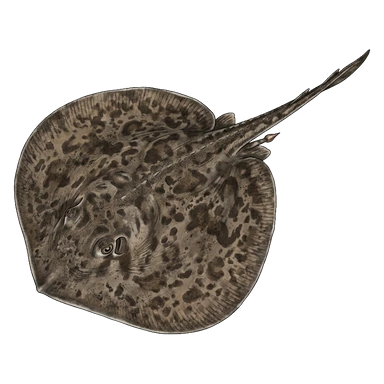
Giant freshwater stingray
 Punture
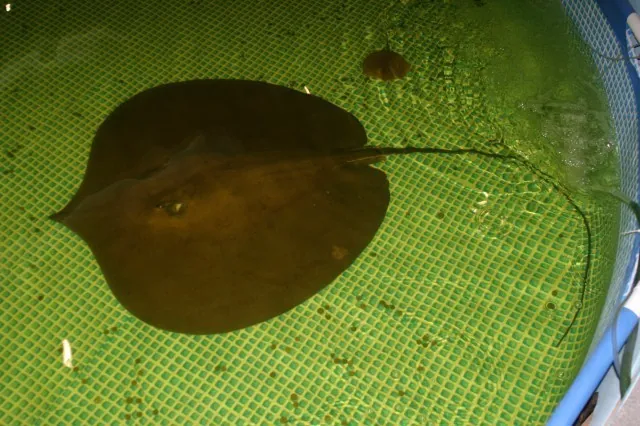
The giant freshwater stingray is a large ray that lives in big rivers and estuaries in Southeast Asia and Borneo. It is the widest freshwater fish in the world, and it is now endangered because of fishing and habitat loss. It has a long, whip-like tail with a sharp spine near the base.1



 Come riconoscerlo
- Plain grayish brown on top, often with a yellowish or pinkish tint towards the fin edges1
- White underside with broad dark bands on the rear edges of the pectoral and pelvic fins1
- Thin, whip-like tail that is black behind the spine and has no fin folds1
- Sharply pointed snout that projects beyond the disc1
- A single serrated stinging spine on the upper tail near its base, up to 38 cm long1
Spesso confuso con: Similar freshwater stingrays in South Asia, Southeast Asia and Australasia were once tentatively grouped with this species. Some of them, such as the Australian Urogymnus dalyensis, are now described as separate species.1
Potere del veleno
Il veleno esce da un pungiglione.
Cosa fa il suo veleno?
Its sting is sheathed in toxic mucus. The sting is capable of piercing bone.1
Quanto è pericoloso per le persone?
Pericolo per le persone: GraveUna puntura richiede un medico. Le morti sono molto rare.The giant freshwater stingray is not aggressive. Its sting is strong enough to pierce bone and is coated in toxic mucus, so it should be treated with care.1
 Se punge
- Metti la ferita in acqua calda, calda quanto la persona riesce a sopportare senza scottarsi (provala con la tua mano), da 30 a 90 minuti. Cerca aiuto medico, soprattutto per pesci pietra e pastinache.
Chiama sempre prima il numero di emergenza (112, 000, 911). Queste sono indicazioni generali di primo soccorso, non consigli medici. Primo soccorso di base
 Stai al sicuro
- Non toccare, catturare o stuzzicare mai un animale selvatico, anche se è piccolo e anche se sembra addormentato o morto.
- Lasciagli spazio. Se ne incontri uno, resta calmo, indietreggia piano e lascialo andare per la sua strada.
- Se uno ti punge: resta calmo, stai fermo, chiama il numero di emergenza (112, 000, 911) o vai subito in ospedale. Ricorda com'era, una foto aiuta.
Non ce l'ha con te. Usa il veleno per procurarsi il cibo o per difendersi, e preferisce di gran lunga nascondersi. Altro su come stare al sicuro
Dove nel mondo?
Quanto è grande?
Quanto è lungo?
Quanto pesa?
 lungo come 5 cani dal naso alla coda
 lungo come 28 banane in fila
 potrebbe nuotare per tutta la lunghezza di una grande piscina (50 m) in 6 secondi
Quanto è grande Giant freshwater stingray rispetto a TE?
Solo calcoli nel tuo browser. Niente viene salvato o inviato da nessuna parte.
Quanto è veloce?

Informazioni
In June 2022, a specimen caught in the Mekong River was reported as the largest strict freshwater fish ever documented, at about 300 kg.1
It is the widest freshwater fish in the world, growing up to 2.2 m across.1
Its tail spine is up to 38 cm long, the largest of any stingray species.1
Pups are nourished in the womb by a milk-like substance called histotroph, or 'uterine milk', made by the mother.1
In Cambodia, the average weight of a landed ray fell from 23.2 kg in 1980 to 6.9 kg in 2006.1
Per gli esperti di veleni
- Nome scientifico
- Urogymnus polylepis
- Gruppo
- Pesci velenosi
- Famiglia
- Dasyatidae2
- Ordine
- Myliobatiformes
- Continenti
- Asia
- Cuccioli
- It gives birth to live young. Females have litters of one to four pups, each about 30 cm across at birth.1
- Come se la passa in natura
- Endangered (IUCN overall); Critically Endangered in Thailand1
- Pericolo per le persone
- 3 / 5: Grave3
Da dove vengono le informazioni
- Giant freshwater stingray (Wikipedia (CC BY-SA 4.0))
- Urogymnus polylepis (iNaturalist): nomi e classificazione.
- Venom Wiki: il livello di pericolo, la taglia tipica e la stima della velocità sono nostri. Guarda come li calcoliamo: Come valutiamo il pericolo.
Ogni informazione in questa pagina ha un numero che rimanda alla sua fonte. Se abbiamo sbagliato qualcosa, scusa, siamo appassionati di animali, non una rivista scientifica. Scrivici a [email protected] e lo correggeremo.
 Lo scorpione ha fame! Venom Wiki è un progetto di una sola persona: gratis, senza pubblicità e senza tracker. Una piccola mancia aiuta a tenerlo online.Dai da mangiare allo scorpione
Altri dello stesso gruppo: Pesci velenosi
 Walking catfishPesci velenosiFa solo maleNon toccare
 Asian stinging catfishPesci velenosiServe un medicoNon toccare
 Reef stonefishPesci velenosiPuò uccidereNon toccare
 Red lionfishPesci velenosiServe un medicoNon toccare
 Estuarine stonefishPesci velenosiPuò uccidereNon toccare
 Short-tail stingrayPesci velenosiPuò uccidere
 Scorpione giallo palestinese
 Cobra indiano
 Echide carenata
 Cobra reale
 Vipera soffiante
 Vipera di Russell