
 Africa
 Asia
Asia Europa
 Sud America
 Australia e Oceania
 Antartide
 Oceano Pacifico
 Oceano Atlantico
 Oceano Indiano
 Oceano Artico
 Mar Mediterraneo
 Mar Rosso
 Mar dei Caraibi
 Mar dei Coralli
 Mar Cinese Meridionale
 Mar delle Filippine
 Mare delle Andamane
 Mare del Nord
 Mar di Timor e Mar degli Arafura
 Golfo del Bengala
 Golfo di California
Golden silk orb-weaver
 Morsi
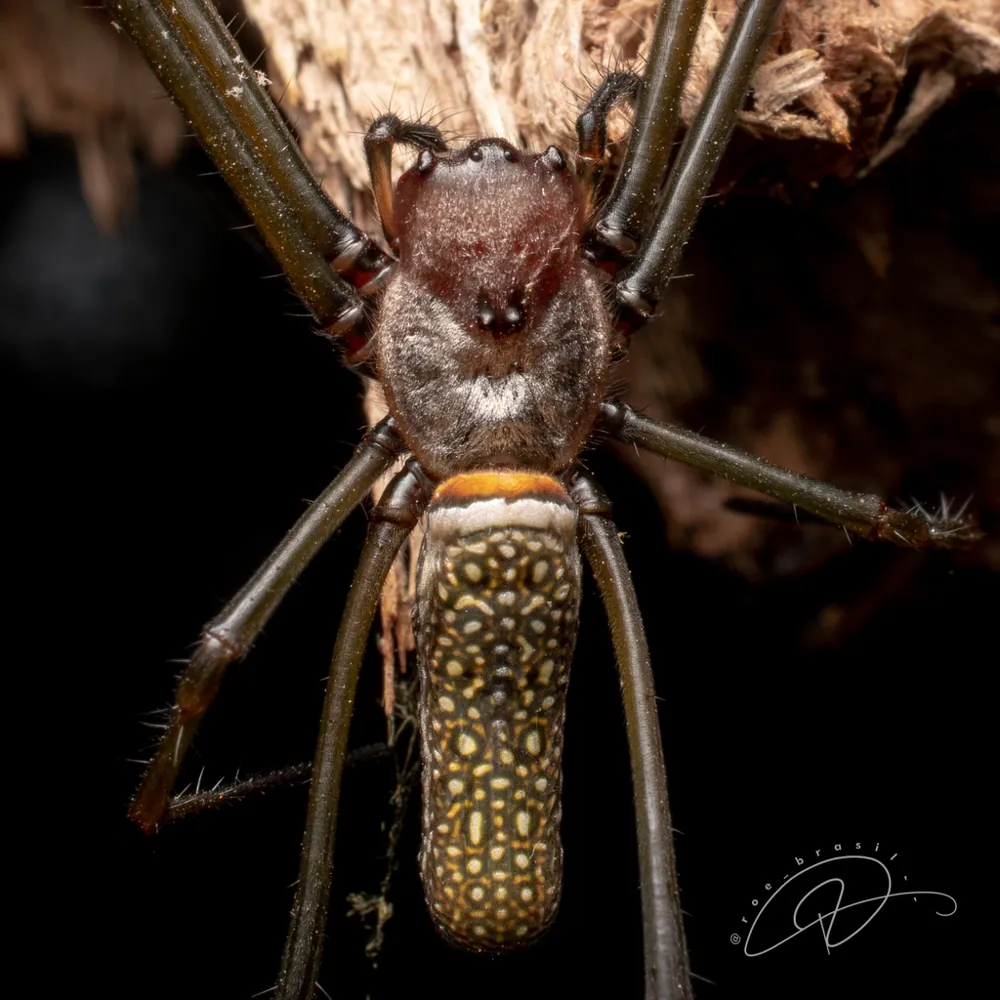
MorsiThe golden silk orb-weaver is a large spider with silk that shines golden in sunlight. It lives in forests and wooded areas from the southern United States to Argentina. It is special because its silk is studied by scientists, and because it is one of the largest non-tarantula spiders in North America.1

 Come riconoscerlo
- Females have a silvery white front body (cephalothorax) and a longer orange-brown abdomen with two rows of small white-yellow spots.1
- Females have dark yellow and brown banding on their legs, with black brush-like tufts of hair near the joints of the first, second and fourth leg pairs.1
- Females are about 24 to 40 mm long when fully grown.1
- Males are much smaller, about 6 mm long, with a plain dark brown body and legs.1
- The large webs are circular and vertical, and the yellow pigment in the silk gives them a golden glow in good light.1
Spesso confuso con: Trichonephila plumipes also has stiff hairs on its legs. In that species the hairs are set more closely together than in the golden silk orb-weaver.1
Potere del veleno
Il veleno esce dalle zanne o dai denti quando morde.
Cosa fa il suo veleno?
Its venom has low toxicity. It is relatively harmless and poses little health concern to healthy adult humans.1
Quanto è pericoloso per le persone?
Pericolo per le persone: LieveCome una puntura d'ape o meno. In pratica innocuo per le persone.It is not known to be aggressive towards humans. It bites only in self-defence if it is touched, and its venom poses little health concern to healthy adults.1
Cosa fa quando ha paura?
It bites only in self-defence if it is touched.1
 Se morde
- Lava il morso e mettici una borsa del ghiaccio per il dolore. Cerca aiuto medico se il dolore è forte, si diffonde o la persona si sente male.
Chiama sempre prima il numero di emergenza (112, 000, 911). Queste sono indicazioni generali di primo soccorso, non consigli medici. Primo soccorso di base
 Stai al sicuro
- Non toccare, catturare o stuzzicare mai un animale selvatico, anche se è piccolo e anche se sembra addormentato o morto.
- Lasciagli spazio. Se ne incontri uno, resta calmo, indietreggia piano e lascialo andare per la sua strada.
- Se uno ti morde: resta calmo, stai fermo, chiama il numero di emergenza (112, 000, 911) o vai subito in ospedale. Ricorda com'era, una foto aiuta.
Non ce l'ha con te. Usa il veleno per procurarsi il cibo o per difendersi, e preferisce di gran lunga nascondersi. Altro su come stare al sicuro
Dove nel mondo?
Quanto è grande?
Quanto è lungo?
 lungo più o meno come una graffetta
 potrebbe percorrere 100 metri in 210 secondi (l'uomo più veloce ci mette 9,6)
Quanto è grande Golden silk orb-weaver rispetto a TE?
Solo calcoli nel tuo browser. Niente viene salvato o inviato da nessuna parte.
Quanto è veloce?


Informazioni
Its silk may help in surgeries involving the nervous system, as shown in past experimental studies.1
It produces seven different types of silk, and its silk is valued in spider silk research.1
Its genome was the first of the orb-weaving spiders to be completely annotated, revealing 28 unique genes for spider silk proteins.1
Some individuals living in developed areas have grown significantly larger than their rural counterparts.1
Males rarely suffer sexual cannibalism or genital mutilation, unlike males of many related species, which makes it a focus of study into spider mating.1
Females are some of the largest non-tarantula spiders in North America, and may be the largest orb-weaver species native to the United States.1
Sfatiamo i miti
Mito: The golden silk orb-weaver is an aggressive spider that attacks people.
Verità: It is not known to be aggressive towards humans. It bites only in self-defence if it is touched.1
Da dove vengono le informazioni
- Trichonephila clavipes (Wikipedia (CC BY-SA 4.0))
- Trichonephila clavipes (iNaturalist): nomi e classificazione.
- Venom Wiki: il livello di pericolo, la taglia tipica e la stima della velocità sono nostri. Guarda come li calcoliamo: Come valutiamo il pericolo.
Ogni informazione in questa pagina ha un numero che rimanda alla sua fonte. Se abbiamo sbagliato qualcosa, scusa, siamo appassionati di animali, non una rivista scientifica. Scrivici a [email protected] e lo correggeremo.
 Lo scorpione ha fame! Venom Wiki è un progetto di una sola persona: gratis, senza pubblicità e senza tracker. Una piccola mancia aiuta a tenerlo online.Dai da mangiare allo scorpione
 Brazilian wandering spider
 Brown recluse
 Southern black widow
 Amazon wandering spider
 Chilean recluse
 Northern black widow
 Terciopelo
 Eastern coral snake
 Eastern diamondback rattlesnake
 Eyelash viper
 Timber rattlesnake
 Western diamondback rattlesnake