
 Africa
 Asia
Asia Europa
 Sud America
 Australia e Oceania
 Antartide
 Oceano Pacifico
 Oceano Atlantico
 Oceano Indiano
 Oceano Artico
 Mar Mediterraneo
 Mar Rosso
 Mar dei Caraibi
 Mar dei Coralli
 Mar Cinese Meridionale
 Mar delle Filippine
 Mare delle Andamane
 Mare del Nord
 Mar di Timor e Mar degli Arafura
 Golfo del Bengala
 Golfo di California
Pygmy slow loris
 Morsi
MorsiThe pygmy slow loris is a small, nocturnal primate that moves slowly through forest trees at night. It lives in parts of Vietnam, Laos, Cambodia and China. It is one of the few primates that can produce a toxic bite, which makes it special and very rare.1



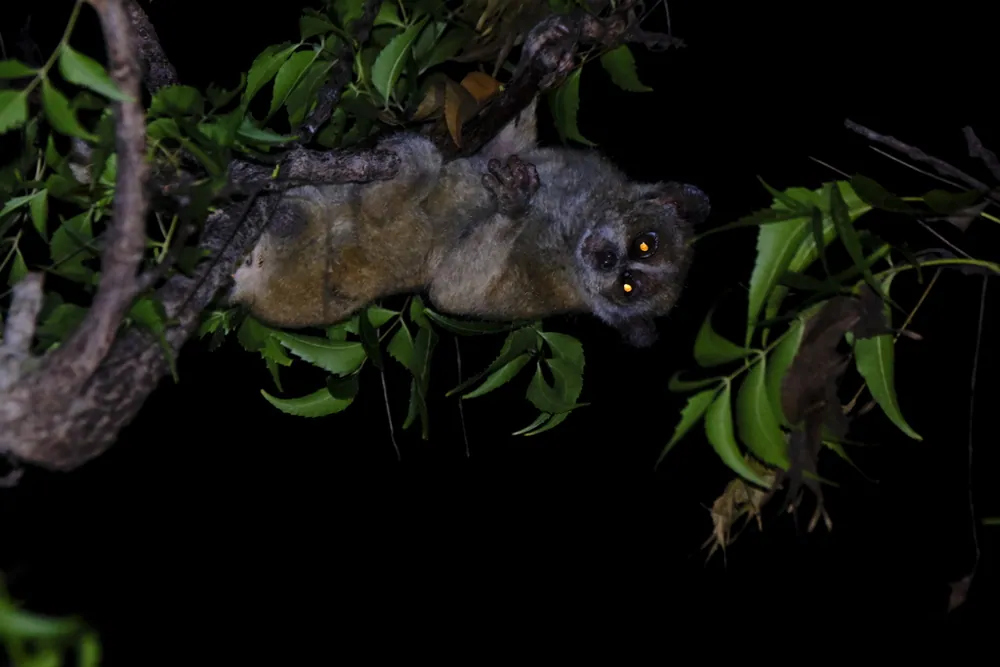
 Come riconoscerlo
- Rings around the eyes that are seal brown in adults and darker in young animals1
- A white stripe running from the nose up to the forehead1
- Small black ears, about 23 mm long, with no fur on the tips1
- A rufous to brownish-black stripe along the back, from the nape to the middle of the lower back1
- Silvery white hands and feet with yellowish-white nails1
Spesso confuso con: The Bengal slow loris (N. bengalensis) lives in some of the same areas, near the border of southern China and Vietnam. The two can be told apart by differences in their chromosomes, not by appearance alone.1
Potere del veleno
Il veleno esce dalle zanne o dai denti quando morde.
Cosa fa il suo veleno?
The bite is toxic. The animal licks a clear, oily secretion from glands on the inside of its elbows and mixes it with its saliva, which creates a noxious toxin. The secretion contains over 200 chemical components, and one of them is a protein similar to an allergen found in cat dander. In people who are sensitive to it, this can cause anaphylaxis, a severe allergic reaction.1
Quanto è pericoloso per le persone?
Pericolo per le persone: DolorosoPuò fare davvero male, ma non è quasi mai grave.The main risk is anaphylaxis, which can affect people who are sensitive to the protein in its secretion.1
Cosa fa quando ha paura?
When startled, it licks the secretion from its elbow glands and spreads it over its head.1
 Se morde
- Lava bene la ferita e cerca aiuto medico.
Chiama sempre prima il numero di emergenza (112, 000, 911). Queste sono indicazioni generali di primo soccorso, non consigli medici. Primo soccorso di base
 Stai al sicuro
- Non toccare, catturare o stuzzicare mai un animale selvatico, anche se è piccolo e anche se sembra addormentato o morto.
- Lasciagli spazio. Se ne incontri uno, resta calmo, indietreggia piano e lascialo andare per la sua strada.
- Se uno ti morde: resta calmo, stai fermo, chiama il numero di emergenza (112, 000, 911) o vai subito in ospedale. Ricorda com'era, una foto aiuta.
Non ce l'ha con te. Usa il veleno per procurarsi il cibo o per difendersi, e preferisce di gran lunga nascondersi. Altro su come stare al sicuro
Dove nel mondo?
Quanto è grande?
Quanto è lungo?
Quanto pesa?

 lungo come 7 mattoncini da costruzione in fila
 potrebbe percorrere 100 metri in 180 secondi (l'uomo più veloce ci mette 9,6)
Quanto è grande Pygmy slow loris rispetto a TE?
Solo calcoli nel tuo browser. Niente viene salvato o inviato da nessuna parte.
Quanto è veloce?


Informazioni
Its lower teeth form a comb-like toothcomb, which it uses for grooming and for scraping resin from tree bark.1
Its weight changes with the seasons. Adults can be about 50 percent heavier in winter than in summer, and individuals up to 700 grams have been recorded.1
Unlike most other primates, it does not leap. It moves by crawling slowly along branches.1
Males mark their territories with scent, and females prefer males whose scent is familiar.1
Females are only fertile for a short time each year, so mating opportunities are rare.1
Sfatiamo i miti
Mito: Animals found near Hòa Bình in Vietnam were a separate species, N. intermedius.
Verità: DNA analysis showed these were adults of the pygmy slow loris. Differences in dorsal stripes and silvery hairs are seasonal variation.1
Per gli esperti di veleni
- Nome scientifico
- Xanthonycticebus pygmaeus
- Gruppo
- Mammiferi velenosi
- Famiglia
- Lorisidae2
- Ordine
- Primates
- Continenti
- Asia
- Cuccioli
- It usually has one or two offspring after a gestation of about six months, and the young cling to their mother's belly for the first few days.1
- Durata della vita
- circa 20 anni1
- Come se la passa in natura
- Endangered1
- Pericolo per le persone
- 2 / 5: Doloroso3
Da dove vengono le informazioni
- Pygmy slow loris (Wikipedia (CC BY-SA 4.0))
- Xanthonycticebus pygmaeus (iNaturalist): nomi e classificazione.
- Venom Wiki: il livello di pericolo, la taglia tipica e la stima della velocità sono nostri. Guarda come li calcoliamo: Come valutiamo il pericolo.
Ogni informazione in questa pagina ha un numero che rimanda alla sua fonte. Se abbiamo sbagliato qualcosa, scusa, siamo appassionati di animali, non una rivista scientifica. Scrivici a [email protected] e lo correggeremo.
 Lo scorpione ha fame! Venom Wiki è un progetto di una sola persona: gratis, senza pubblicità e senza tracker. Una piccola mancia aiuta a tenerlo online.Dai da mangiare allo scorpione
 Bengal slow loris
 Javan slow loris
 Sunda slow loris
 Kayan River slow loris
 Philippine slow loris
 Eurasian water shrew
 Scorpione giallo palestinese
 Cobra indiano
 Echide carenata
 Cobra reale
 Vipera soffiante
 Vipera di Russell