
 アフリカ
アフリカ アジア
アジア ヨーロッパ
ヨーロッパ 南アメリカ
南アメリカ オーストラリアとオセアニア
 南極大陸
南極大陸 太平洋
太平洋 大西洋
大西洋 インド洋
インド洋 北極海
北極海 地中海
地中海 紅海
紅海 カリブ海
カリブ海 サンゴ海
サンゴ海 南シナ海
南シナ海 フィリピン海
 アンダマン海
 北海
北海 ティモール海とアラフラ海
 ベンガル湾
ベンガル湾 カリフォルニア湾
By-the-wind sailor
 刺す触手
刺す触手The by-the-wind sailor is a small, deep blue animal that floats on the surface of the open ocean. It is not a single creature but a colony of tiny linked animals, and it moves by catching the wind with a small stiff sail. Its stinging tentacles are generally harmless to people, but they can irritate the skin.1

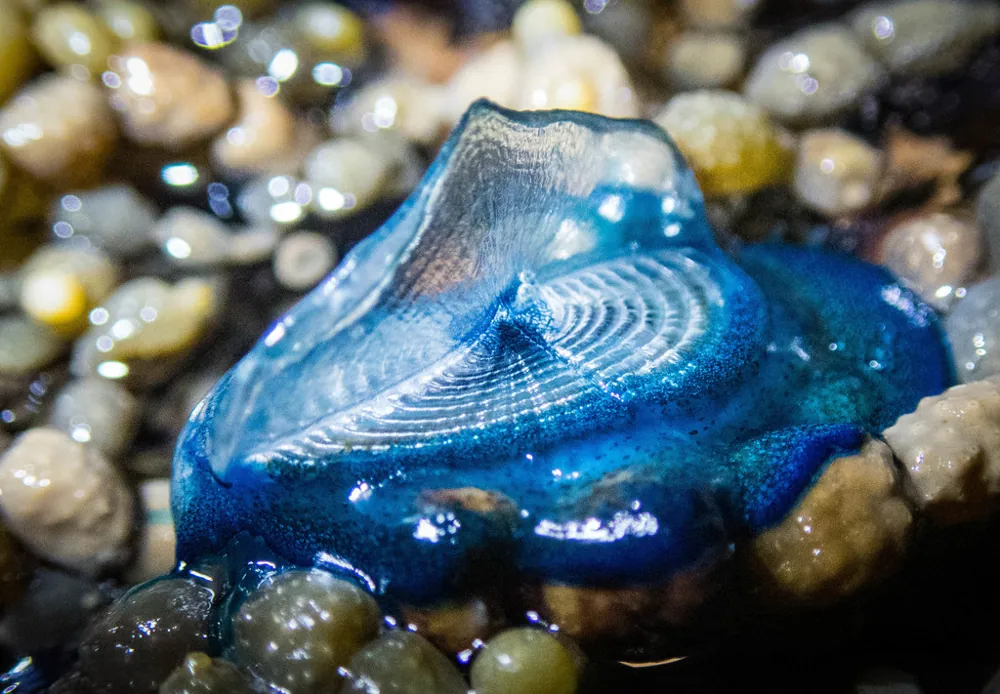
 見分け方
見分け方毒パワー
何かがふれると、何千もの小さな刺胞がいっせいに発射されるよ。
その毒(かむ・刺す毒)はどうなるの?
Its nematocysts contain toxins that are effective against its prey, which are mostly plankton. The nematocysts are relatively benign to humans, but each person may respond differently to the toxin. Contact may cause irritation to exposed skin.1
人にとってどれくらい危険?
人への危険: 軽いハチに刺されたくらいか、それ以下。人にはほぼ無害。It is relatively harmless to humans. Its main effect is possible skin irritation after contact. Mass strandings can leave large numbers of dying and rotting animals on beaches.1
 刺されたら
刺されたら
- 水から出て、触手を取りのぞこう(手袋か布を使って)。
- 熱帯のハコクラゲには:刺されたところに酢を少なくとも30秒かけて、助けを呼び、心肺蘇生(CPR)ができるようにしておこう。カツオノエボシやほとんどのクラゲには:海水で洗い流し、そのあと痛みにはお湯を。
まず必ず救急番号(112、000、911)に電話しよう。これは一般的な応急手当の案内で、医療のアドバイスではないよ。 応急手当の基本
 安全に過ごそう
- 野生の動物には、小さくても、ねているように見えても、死んでいるように見えても、ぜったいにさわったり、つかまえたり、からかったりしないこと。
- 近づかないで。出会ったら落ちついて、ゆっくりあとずさりして、そのまま行かせてあげよう。
- 刺されたら:落ちついて、じっとして、救急番号(112、000、911)に電話するか、急いで病院へ行こう。見た目をおぼえておいてね。写真があると役に立つよ。
きみをねらっているわけじゃないよ。毒はエサをとったり身を守ったりするために使うだけで、本当はかくれていたいんだ。 安全に過ごすためにもっと知ろう
どれくらい大きい?
どれくらい長い?
 おもちゃのブロック2こを1列にならべた長さ
 大きなプール(50 m)を180秒で泳げる
By-the-wind sailorは、きみとくらべてどれくらい大きい?
ブラウザで計算しているだけ。何も保存されないし、どこにも送られないよ。
どれくらい速い?

データ
Its floating colonies are mirror images of each other, either 'left-handed' or 'right-handed', and this affects where they drift. In the northern Pacific, one form tends to drift to North America and the other to eastern Asia, such as Japan.1
Each blue 'animal' with a sail is really a colony of linked polyps that share food through a canal system.1
Each colony is either all male or all female.1
Its sail is not a fin. It works like a sail, so the animal tends to drift downwind at a small angle to the wind.1
Its tiny jellyfish carry zooxanthellae, single-celled organisms that use sunlight to provide energy, a feature also found in corals.1
It has no means of moving other than its sail, so it depends on prevailing winds, and mass strandings on beaches happen in many parts of the world.1
うそ・ほんとう
うそ: Each blue sail is a single, simple animal.
ほんとう: Each apparent individual is a colony of many connected polyps that share food and divide the work between feeding, reproductive and protective polyps.1
毒のエキスパート向け
- 学名
- Velella velella
- グループ
- クラゲと海の刺す生き物
- 家族
- Porpitidae2
- ならびかえ
- Anthoathecata
- 大陸
- 太平洋, 大西洋, インド洋, 地中海, 南極海, 南極大陸, 海
- 赤ちゃん
- Each colony's feeding polyps (gonozooids) bud off thousands of tiny jellyfish, each about 1 mm wide, over several weeks. These develop into a free-swimming larva called a conaria, which grows into a new floating colony.1
- 人への危険
- 1 / 5: 軽い3
事実の出典
- Velella (Wikipedia (CC BY-SA 4.0))
- Velella velella (iNaturalist): 名前と分類。
- Venom Wiki: 危険レベル、ふつうの大きさ、スピードの予想は、わたしたち独自のものだよ。どうやって決めているかはこちら: 危険度のつけ方.
このページのどの事実にも、出典をしめす番号がついているよ。まちがいがあったらごめんね、わたしたちは動物好きで、科学雑誌じゃないんだ。[email protected]に教えてくれたら直すよ。
 サソリはおなかがペコペコ! Venom Wikiはひとりでつくっているプロジェクト:無料で、広告もトラッカーもなし。少しのチップがサイトを続ける助けになるよ。サソリにエサをあげる
 オーストラリアウンバチクラゲ
 Irukandji jellyfish
 Portuguese man o' war
 Lion's mane jellyfish
 Moon jellyfish
 Common kingslayer
 アンボイナガイ
 オオマルモンダコ
 トラフグ
トラフグ ミナミヒョウモンダコ
 Hawksbill sea turtle
 Reef stonefish