
 アフリカ
アフリカ アジア
アジア ヨーロッパ
ヨーロッパ 南アメリカ
南アメリカ オーストラリアとオセアニア
 南極大陸
南極大陸 太平洋
太平洋 大西洋
大西洋 インド洋
インド洋 北極海
北極海 地中海
地中海 紅海
紅海 カリブ海
カリブ海 サンゴ海
サンゴ海 南シナ海
南シナ海 フィリピン海
 アンダマン海
 北海
北海 ティモール海とアラフラ海
 ベンガル湾
ベンガル湾 カリフォルニア湾
Radiant sea urchin
 毒のとげ
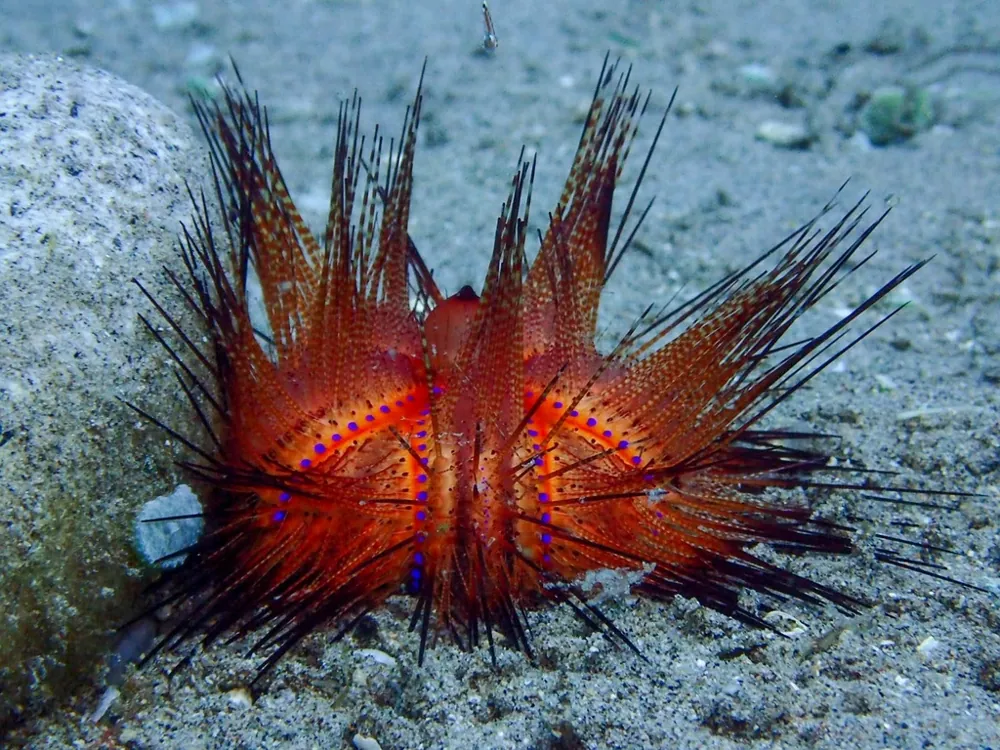
毒のとげThe radiant sea urchin is a large, colourful sea urchin with long, spiky spines. It lives in warm, shallow seas across the Indo-Pacific, from the African coast to Hawaii and Australia. Its spines are venomous, so it is one to admire from a distance.1

 見分け方
見分け方
- A large urchin, with a body (test) up to 20 cm across.1
- Long, hollow spines up to 4 cm, in five vertical clusters.1
- Between the clusters are bare, V-shaped red areas with lines of iridescent blue dots.1
- The rest of the body and spines range from reddish brown to purple, dark brown or nearly black.1
- Juveniles have spines with banding across them, and this sometimes stays into adulthood.1
よくまちがえられるのは: It is often called the false fire urchin to tell it apart from the true fire urchin, Asthenosoma varium.1
毒パワー
するどいとげに毒があるよ。ふんだりつかんだりすると痛い。
その毒(かむ・刺す毒)はどうなるの?
Its spines are venomous and can cause painful wounds. The spines are long and hollow, and the shorter of the two kinds are the venomous ones.1
人にとってどれくらい危険?
人への危険: 痛いすごく痛いこともあるけど、深刻になることはほとんどないよ。It is not deadly to humans, but its spines can cause painful wounds. Because it is large and brightly coloured, divers can usually see it, so injuries from stepping on one are fairly rare. On the 'Kings of Pain' pain index it scores 12 out of 30.1
こわいとき、どうするの?
It is sensitive to light and can angle its spines towards an approaching threat.1
 とげが刺さったら
- 傷口をお湯につけよう。やけどしない範囲で、その人ががまんできるいちばん熱いお湯で。とげを取ってもらうために医療の助けを受けよう。自分でほじくり出さないで。
まず必ず救急番号(112、000、911)に電話しよう。これは一般的な応急手当の案内で、医療のアドバイスではないよ。 応急手当の基本
 安全に過ごそう
- 野生の動物には、小さくても、ねているように見えても、死んでいるように見えても、ぜったいにさわったり、つかまえたり、からかったりしないこと。
- 近づかないで。出会ったら落ちついて、ゆっくりあとずさりして、そのまま行かせてあげよう。
- とげが刺さったら:落ちついて、じっとして、救急番号(112、000、911)に電話するか、急いで病院へ行こう。見た目をおぼえておいてね。写真があると役に立つよ。
きみをねらっているわけじゃないよ。毒はエサをとったり身を守ったりするために使うだけで、本当はかくれていたいんだ。 安全に過ごすためにもっと知ろう
どれくらい大きい?
どれくらい長い?
 おもちゃのブロック6こを1列にならべた長さ
 カタツムリより遅い
Radiant sea urchinは、きみとくらべてどれくらい大きい?
ブラウザで計算しているだけ。何も保存されないし、どこにも送られないよ。
どれくらい速い?

データ
A crab called Dorippe frascone carries the urchin on its back.1
Several shrimps, crabs and small fish live among its spines for shelter.1
Its scientific name refers to a star-shaped pattern around its anus, not to the animal's shape as a whole.1
Its bright colours and size make it a favourite subject for underwater photographers and some expert fish-keepers.1
Its young larvae drift in the ocean as plankton before they settle on the seabed.1
毒のエキスパート向け
- 学名
- Astropyga radiata
- グループ
- ウニ、ヒトデ、ゴカイのなかま
- 家族
- Diadematidae2
- ならびかえ
- Diadematoida
- 大陸
- インド洋, 太平洋, サンゴ海, フィリピン海, ティモール海とアラフラ海, ベンガル湾, 海
- 赤ちゃん
- Males and females are separate. Eggs and sperm are released into the water, and the larvae drift as plankton through several stages before settling on the seabed and becoming juveniles.1
- 人への危険
- 2 / 5: 痛い3
事実の出典
- Astropyga radiata (Wikipedia (CC BY-SA 4.0))
- Astropyga radiata (iNaturalist): 名前と分類。
- Venom Wiki: 危険レベル、ふつうの大きさ、スピードの予想は、わたしたち独自のものだよ。どうやって決めているかはこちら: 危険度のつけ方.
このページのどの事実にも、出典をしめす番号がついているよ。まちがいがあったらごめんね、わたしたちは動物好きで、科学雑誌じゃないんだ。[email protected]に教えてくれたら直すよ。
 サソリはおなかがペコペコ! Venom Wikiはひとりでつくっているプロジェクト:無料で、広告もトラッカーもなし。少しのチップがサイトを続ける助けになるよ。サソリにエサをあげる
 Crown-of-thorns starfish
 Flower urchin
 Fire urchin
 Bearded fireworm
 Black long-spined urchin
 Bloodworm
 オーストラリアウンバチクラゲ
 アンボイナガイ
 オオマルモンダコ
 ミナミヒョウモンダコ
 Hawksbill sea turtle
 Irukandji jellyfish