
 អាហ្វ្រិក
 អាស៊ី
អាស៊ី អឺរ៉ុប
 អាមេរិកខាងត្បូង
 អូស្ត្រាលី និងអូសេអានី
 អង់តាក់ទិក
 មហាសមុទ្រប៉ាស៊ីហ្វិក
 មហាសមុទ្រអាត្លង់ទិក
 មហាសមុទ្រឥណ្ឌា
 មហាសមុទ្រអាកទិក
 សមុទ្រមេឌីទែរ៉ាណេ
 សមុទ្រក្រហម
 សមុទ្រការ៉ាអ៊ីប
 សមុទ្រផ្កាថ្ម
 សមុទ្រចិនខាងត្បូង
 សមុទ្រហ្វីលីពីន
 សមុទ្រអង់ដាម៉ាន់
 សមុទ្រខាងជើង
 សមុទ្រទីម័រ និងសមុទ្រអារ៉ាហ្វូរ៉ា
 ឈូងសមុទ្របេងហ្គាល់
 ឈូងសមុទ្រកាលីហ្វ័រញ៉ា
Bald-faced hornet
 ទិច
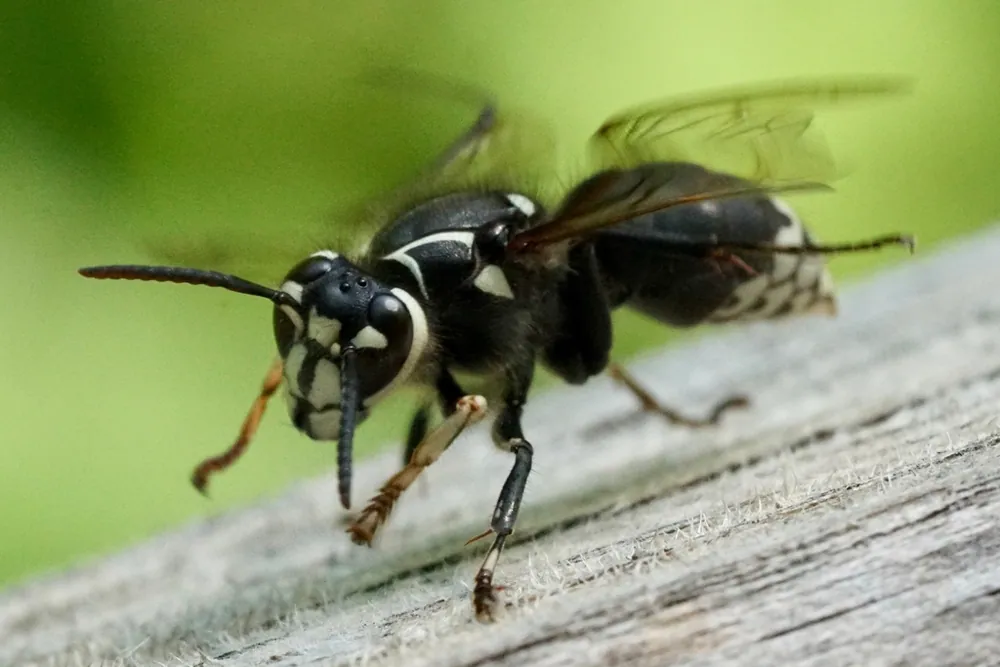
ទិចThe bald-faced hornet is a wasp with a striking black and white body and a white face. It builds large, hanging paper nests in trees and bushes across North America. Its workers will defend the nest by stinging repeatedly, so it is important to keep well away from its nests.1



 របៀបស្គាល់វា
- Black and white colouring, unlike other yellowjackets of its genus, which are mostly black and yellow1
- A white or "bald" face1
- Three white stripes at the end of the body1
- Adults average about 19 mm long, larger than other Dolichovespula species1
- A large, egg-shaped, grey paper nest that hangs from trees or bushes, up to 58 cm long1
ច្រើនតែច្រឡំជាមួយ៖ Other Dolichovespula wasps are mostly black and yellow. The bald-faced hornet's black and white colouring and white face set it apart. It is not one of the true hornets, which belong to the genus Vespa.1
អំណាចពិស
ពិសចេញតាមម្ជុលទិច។
តើពិសរបស់វាធ្វើអ្វី?
Workers can squirt venom from the stinger into the eyes of animals that intrude on the nest. The venom makes the eyes water immediately and causes temporary blindness.1
តើវាគ្រោះថ្នាក់ប៉ុណ្ណាចំពោះមនុស្ស?
គ្រោះថ្នាក់ចំពោះមនុស្ស: ឈឺចាប់វាអាចឈឺខ្លាំងមែន ប៉ុន្តែស្ទើរតែមិនដែលធ្ងន់ធ្ងរទេ។It is aggressive when defending its nest. Workers sting repeatedly, and colonies can have 400 to 700 workers. The risk is highest when people walk too close to a nest or when a nest is built near homes.1
តើវាធ្វើអ្វីនៅពេលវាខ្លាច?
Workers defend the nest by stinging repeatedly and can squirt venom into the eyes of intruders.1
 ប្រសិនបើវាទិច
- កោសម្ជុលទិចរបស់ឃ្មុំចេញ ហើយធ្វើឱ្យកន្លែងនោះត្រជាក់។
- ប្រសិនបើអ្នករងគ្រោះពិបាកដកដង្ហើម ហើមមុខ ឬហើមបំពង់ក ឬមានអារម្មណ៍ដូចជិតសន្លប់ នោះជាភាពអាសន្ននៃប្រតិកម្មអាឡែស៊ី៖ ទូរស័ព្ទទៅលេខសង្គ្រោះបន្ទាន់ ហើយប្រើប៉ាកាចាក់អាដ្រេណាលីនរបស់គាត់ ប្រសិនបើគាត់មាន។
ត្រូវទូរស័ព្ទទៅលេខសង្គ្រោះបន្ទាន់ជាមុនសិនជានិច្ច (112, 000, 911)។ នេះជាការណែនាំសង្គ្រោះបឋមទូទៅ មិនមែនជាដំបូន្មានវេជ្ជសាស្ត្រទេ។ មូលដ្ឋាននៃការសង្គ្រោះបឋម
 រក្សាសុវត្ថិភាព
- កុំប៉ះ ចាប់ ឬរំខានសត្វព្រៃជាដាច់ខាត ទោះបីវាតូចក៏ដោយ ហើយទោះបីវាមើលទៅដូចជាកំពុងដេក ឬងាប់ក៏ដោយ។
- ទុកចន្លោះឱ្យវា។ ប្រសិនបើអ្នកជួបវា ចូរនៅស្ងប់ ថយក្រោយយឺតៗ ហើយទុកឱ្យវាទៅតាមផ្លូវរបស់វា។
- ប្រសិនបើវាទិចអ្នក៖ ចូរនៅស្ងប់ នៅស្ងៀម ទូរស័ព្ទទៅលេខសង្គ្រោះបន្ទាន់ (112, 000, 911) ឬទៅមន្ទីរពេទ្យឱ្យបានលឿន។ ចងចាំថាវាមានរូបរាងយ៉ាងដូចម្តេច រូបថតមួយអាចជួយបាន។
វាមិនមែនចង់តាមចាប់អ្នកទេ។ វាប្រើពិសរបស់វាដើម្បីចាប់ចំណី ឬការពារខ្លួន ហើយវាចូលចិត្តលាក់ខ្លួនជាង។ បន្ថែមទៀតអំពីការរក្សាសុវត្ថិភាព
នៅកន្លែងណាក្នុងពិភពលោក?
តើវាធំប៉ុណ្ណា?
តើវាវែងប៉ុណ្ណា?
 ខ្លីជាងម្រាមដៃកូនរបស់អ្នក
 អាចហោះឆ្លងកាត់ទីលានបាល់ទាត់ទាំងមូលក្នុងរយៈពេល 15 វិនាទី
តើ Bald-faced hornet ធំប៉ុណ្ណា បើប្រៀបនឹងអ្នក?
គ្រាន់តែជាការគណនានៅក្នុងកម្មវិធីរុករករបស់អ្នក។ គ្មានអ្វីត្រូវបានរក្សាទុក ឬផ្ញើទៅកន្លែងណាទេ។
តើវាលឿនប៉ុណ្ណា?


ការពិត
It can spray venom from its stinger into the eyes of nest intruders, causing temporary blindness.1
Its colony can have 400 to 700 workers, the largest recorded colony size in its genus, Dolichovespula.1
Female bee moths can lay eggs in its nests, and the hatched larvae feed on the eggs, larvae and pupae inside, sometimes destroying large parts of the nest.1
Its nests are made from chewed wood fibres mixed with saliva, which dries into a papery structure.1
A colony lasts about 4 months in Washington, from mid-May to mid-September. Colonies in lower latitudes last longer.1
បំបែកជំនឿខុស
ជំនឿខុស៖ It is a true hornet.
តាមពិត៖ It is a yellowjacket wasp. True hornets belong to the genus Vespa.1
សម្រាប់អ្នកជំនាញខាងពិស
- ឈ្មោះវិទ្យាសាស្ត្រ
- Dolichovespula maculata
- ក្រុម
- ឃ្មុំ ឪម៉ាល់ និងឪម៉ាល់ធំ
- គ្រួសារ
- Vespidae2
- លំដាប់
- Hymenoptera
- ទ្វីបនានា
- អាមេរិកខាងជើង
- កូនតូចៗ
- A single queen starts each new nest in spring, laying eggs that hatch into workers, and later lays eggs that become males and new queens.1
- គ្រោះថ្នាក់ចំពោះមនុស្ស
- 2 / 5: ឈឺចាប់3
ការពិតមកពីណា
- Dolichovespula maculata (Wikipedia (CC BY-SA 4.0))
- Dolichovespula maculata (iNaturalist): ឈ្មោះ និងចំណាត់ថ្នាក់។
- Venom Wiki: កម្រិតគ្រោះថ្នាក់ ទំហំធម្មតា និងការប៉ាន់ស្មានល្បឿន គឺជារបស់យើងផ្ទាល់។ មើលពីរបៀបដែលយើងគណនាវា៖ របៀបដែលយើងវាយតម្លៃគ្រោះថ្នាក់.
ការពិតនីមួយៗនៅលើទំព័រនេះមានលេខដែលចង្អុលទៅប្រភពរបស់វា។ ប្រសិនបើយើងសរសេរខុស សូមអភ័យទោស យើងជាអ្នកស្រឡាញ់សត្វ មិនមែនជាទស្សនាវដ្តីវិទ្យាសាស្ត្រទេ។ ប្រាប់យើងតាម [email protected] ហើយយើងនឹងកែវា។
 ខ្ទួយឃ្លានហើយ! Venom Wiki ជាគម្រោងរបស់មនុស្សម្នាក់៖ ឥតគិតថ្លៃ គ្មានការផ្សាយពាណិជ្ជកម្ម និងគ្មានកម្មវិធីតាមដាន។ ការឧបត្ថម្ភតិចតួចជួយឱ្យវានៅតែដំណើរការលើអ៊ីនធឺណិត។ផ្តល់ចំណីខ្ទួយ
បន្ថែមទៀតពីក្រុមដូចគ្នា: ឃ្មុំ ឪម៉ាល់ និងឪម៉ាល់ធំ
 Tarantula hawkឃ្មុំ ឪម៉ាល់ និងឪម៉ាល់ធំគ្រាន់តែឈឺ
 Executioner waspឃ្មុំ ឪម៉ាល់ និងឪម៉ាល់ធំត្រូវការគ្រូពេទ្យ
 Warrior waspឃ្មុំ ឪម៉ាល់ និងឪម៉ាល់ធំត្រូវការគ្រូពេទ្យ
 Cow killer velvet antឃ្មុំ ឪម៉ាល់ និងឪម៉ាល់ធំគ្រាន់តែឈឺ
 Eastern cicada killerឃ្មុំ ឪម៉ាល់ និងឪម៉ាល់ធំគ្មានគ្រោះថ្នាក់
 Aerial yellowjacketឃ្មុំ ឪម៉ាល់ និងឪម៉ាល់ធំគ្រាន់តែឈឺ
 Terciopelo
 Eastern coral snake
 Eastern diamondback rattlesnake
 Eyelash viper
 Timber rattlesnake
 Western diamondback rattlesnake