
 អាហ្វ្រិក
 អាស៊ី
អាស៊ី អឺរ៉ុប
 អាមេរិកខាងត្បូង
 អូស្ត្រាលី និងអូសេអានី
 អង់តាក់ទិក
 មហាសមុទ្រប៉ាស៊ីហ្វិក
 មហាសមុទ្រអាត្លង់ទិក
 មហាសមុទ្រឥណ្ឌា
 មហាសមុទ្រអាកទិក
 សមុទ្រមេឌីទែរ៉ាណេ
 សមុទ្រក្រហម
 សមុទ្រការ៉ាអ៊ីប
 សមុទ្រផ្កាថ្ម
 សមុទ្រចិនខាងត្បូង
 សមុទ្រហ្វីលីពីន
 សមុទ្រអង់ដាម៉ាន់
 សមុទ្រខាងជើង
 សមុទ្រទីម័រ និងសមុទ្រអារ៉ាហ្វូរ៉ា
 ឈូងសមុទ្របេងហ្គាល់
 ឈូងសមុទ្រកាលីហ្វ័រញ៉ា
Filament-finned stinger
 បន្លាមានពិស
The filament-finned stinger is a well-camouflaged fish with venomous spines on its skin. It lives on sandy and silty seabeds in warm coastal waters, from the Red Sea and East Africa to the Maldives. It is easy to step on or touch by accident, so it is worth knowing what it looks like.1

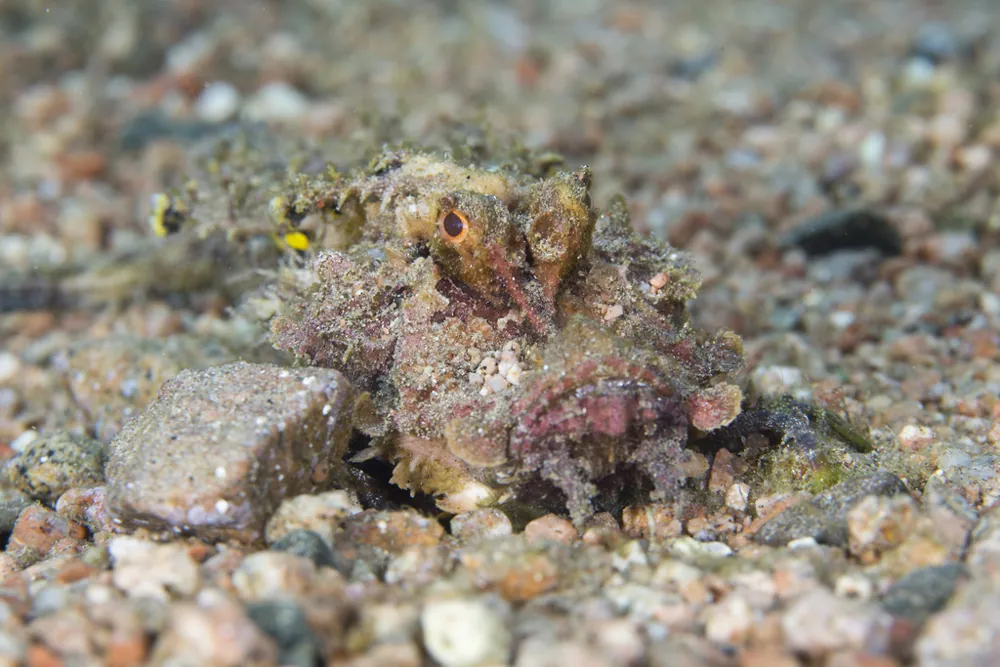
 របៀបស្គាល់វា
- Body colour is dull yellow, grey, brown or rust, with light blotches that match the seabed1
- Skin has no scales along most of the body, but is covered in venomous spines and wart-like glands, giving a knobby look1
- Flattened, concave head, with the eyes, mouth and nostrils projecting upwards and outwards1
- Caudal (tail) fin has dark bands at its base and near its tip1
- Two pectoral fin rays are detached and angled downwards, and are used like legs1
ច្រើនតែច្រឡំជាមួយ៖ It is often confused with Inimicus sinensis, which is nearly identical. The key difference is on the underside of the pectoral fins: the black bands of this species are faint, while those of I. sinensis have yellow spots.1
អំណាចពិស
បន្លាមុតស្រួចផ្ទុកពិស។ ការជាន់ ឬចាប់វាធ្វើឱ្យឈឺ។
តើវាគ្រោះថ្នាក់ប៉ុណ្ណាចំពោះមនុស្ស?
គ្រោះថ្នាក់ចំពោះមនុស្ស: ធ្ងន់ធ្ងរប្រសិនបើបន្លារបស់វាចាក់អ្នក ចូរទៅជួបគ្រូពេទ្យ។ ការស្លាប់កម្រណាស់។តើវាធ្វើអ្វីនៅពេលវាខ្លាច?
When disturbed by a diver or a possible predator, it fans out its brightly coloured pectoral and tail fins as a warning, and it is very reluctant to leave its hiding place once dug in.1
 ប្រសិនបើបន្លារបស់វាចាក់អ្នក
- ដាក់របួសក្នុងទឹកក្តៅ ក្តៅតាមដែលអ្នករងគ្រោះអាចទ្រាំបានដោយមិនរលាក (សាកល្បងវាដោយដៃរបស់អ្នកផ្ទាល់) រយៈពេល 30 ទៅ 90 នាទី។ រកជំនួយវេជ្ជសាស្ត្រ ជាពិសេសសម្រាប់ត្រីថ្ម និងត្រីបបែល។
ត្រូវទូរស័ព្ទទៅលេខសង្គ្រោះបន្ទាន់ជាមុនសិនជានិច្ច (112, 000, 911)។ នេះជាការណែនាំសង្គ្រោះបឋមទូទៅ មិនមែនជាដំបូន្មានវេជ្ជសាស្ត្រទេ។ មូលដ្ឋាននៃការសង្គ្រោះបឋម
 រក្សាសុវត្ថិភាព
- កុំប៉ះ ចាប់ ឬរំខានសត្វព្រៃជាដាច់ខាត ទោះបីវាតូចក៏ដោយ ហើយទោះបីវាមើលទៅដូចជាកំពុងដេក ឬងាប់ក៏ដោយ។
- ទុកចន្លោះឱ្យវា។ ប្រសិនបើអ្នកជួបវា ចូរនៅស្ងប់ ថយក្រោយយឺតៗ ហើយទុកឱ្យវាទៅតាមផ្លូវរបស់វា។
- ប្រសិនបើបន្លារបស់វាចាក់អ្នក៖ ចូរនៅស្ងប់ នៅស្ងៀម ទូរស័ព្ទទៅលេខសង្គ្រោះបន្ទាន់ (112, 000, 911) ឬទៅមន្ទីរពេទ្យឱ្យបានលឿន។ ចងចាំថាវាមានរូបរាងយ៉ាងដូចម្តេច រូបថតមួយអាចជួយបាន។
វាមិនមែនចង់តាមចាប់អ្នកទេ។ វាប្រើពិសរបស់វាដើម្បីចាប់ចំណី ឬការពារខ្លួន ហើយវាចូលចិត្តលាក់ខ្លួនជាង។ បន្ថែមទៀតអំពីការរក្សាសុវត្ថិភាព
នៅកន្លែងណាក្នុងពិភពលោក?
តើវាធំប៉ុណ្ណា?
តើវាវែងប៉ុណ្ណា?
តើវាធ្ងន់ប៉ុណ្ណា?

 វែងដូចប្លុកសំណង់ក្មេងលេង 8 ដុំតជាជួរ
 អាចហែលពេញប្រវែងអាងហែលទឹកធំ (50 ម៉ែត្រ) ក្នុងរយៈពេល 36 វិនាទី
តើ Filament-finned stinger ធំប៉ុណ្ណា បើប្រៀបនឹងអ្នក?
គ្រាន់តែជាការគណនានៅក្នុងកម្មវិធីរុករករបស់អ្នក។ គ្មានអ្វីត្រូវបានរក្សាទុក ឬផ្ញើទៅកន្លែងណាទេ។
តើវាលឿនប៉ុណ្ណា?
ការពិត
It walks slowly along the seabed, using the two lower pectoral fin rays on each side as legs.1
Its pectoral fins can be brightly coloured, which it shows as a warning when threatened.1
It has no known natural predators.1
During the day it covers itself with sand and debris, which hides it further.1
It is nocturnal, so it hunts mainly at night.1
ការពិតមកពីណា
- Inimicus filamentosus (Wikipedia (CC BY-SA 4.0))
- Inimicus filamentosus (iNaturalist): ឈ្មោះ និងចំណាត់ថ្នាក់។
- Venom Wiki: កម្រិតគ្រោះថ្នាក់ ទំហំធម្មតា និងការប៉ាន់ស្មានល្បឿន គឺជារបស់យើងផ្ទាល់។ មើលពីរបៀបដែលយើងគណនាវា៖ របៀបដែលយើងវាយតម្លៃគ្រោះថ្នាក់.
ការពិតនីមួយៗនៅលើទំព័រនេះមានលេខដែលចង្អុលទៅប្រភពរបស់វា។ ប្រសិនបើយើងសរសេរខុស សូមអភ័យទោស យើងជាអ្នកស្រឡាញ់សត្វ មិនមែនជាទស្សនាវដ្តីវិទ្យាសាស្ត្រទេ។ ប្រាប់យើងតាម [email protected] ហើយយើងនឹងកែវា។
 ខ្ទួយឃ្លានហើយ! Venom Wiki ជាគម្រោងរបស់មនុស្សម្នាក់៖ ឥតគិតថ្លៃ គ្មានការផ្សាយពាណិជ្ជកម្ម និងគ្មានកម្មវិធីតាមដាន។ ការឧបត្ថម្ភតិចតួចជួយឱ្យវានៅតែដំណើរការលើអ៊ីនធឺណិត។ផ្តល់ចំណីខ្ទួយ
បន្ថែមទៀតពីក្រុមដូចគ្នា: ត្រីមានពិស
 Reef stonefish
 Red lionfish
 Estuarine stonefish
 Short-tail stingray
 Striped eel catfish
 Bluespotted ribbontail ray
ក៏រស់នៅក្នុង: មហាសមុទ្រឥណ្ឌា
 Australian box jellyfishចាហួយសមុទ្រ និងសត្វសមុទ្រដែលទិចគ្រោះថ្នាក់ដល់ជីវិតកុំប៉ះ
 Geography coneខ្យងកោណ និងមឹកយក្សគ្រោះថ្នាក់ដល់ជីវិត
 Greater blue-ringed octopusខ្យងកោណ និងមឹកយក្សគ្រោះថ្នាក់ដល់ជីវិត
 Southern blue-ringed octopusខ្យងកោណ និងមឹកយក្សគ្រោះថ្នាក់ដល់ជីវិត
 Hawksbill sea turtleសត្វពុលផ្សេងទៀតអាចសម្លាប់បាន
 Irukandji jellyfishចាហួយសមុទ្រ និងសត្វសមុទ្រដែលទិចអាចសម្លាប់បានកុំប៉ះ