
 អាហ្វ្រិក
 អាស៊ី
អាស៊ី អឺរ៉ុប
 អាមេរិកខាងត្បូង
 អូស្ត្រាលី និងអូសេអានី
 អង់តាក់ទិក
 មហាសមុទ្រប៉ាស៊ីហ្វិក
 មហាសមុទ្រអាត្លង់ទិក
 មហាសមុទ្រឥណ្ឌា
 មហាសមុទ្រអាកទិក
 សមុទ្រមេឌីទែរ៉ាណេ
 សមុទ្រក្រហម
 សមុទ្រការ៉ាអ៊ីប
 សមុទ្រផ្កាថ្ម
 សមុទ្រចិនខាងត្បូង
 សមុទ្រហ្វីលីពីន
 សមុទ្រអង់ដាម៉ាន់
 សមុទ្រខាងជើង
 សមុទ្រទីម័រ និងសមុទ្រអារ៉ាហ្វូរ៉ា
 ឈូងសមុទ្របេងហ្គាល់
 ឈូងសមុទ្រកាលីហ្វ័រញ៉ា
Fu Manchu lionfish
 បន្លាមានពិស
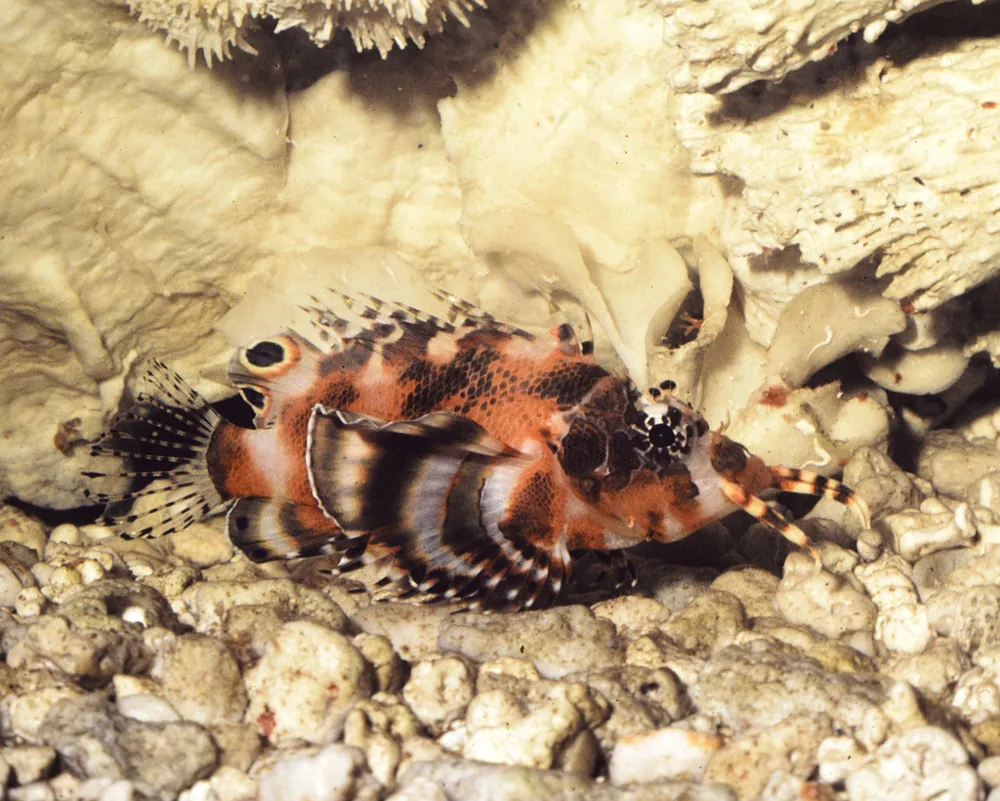
The Fu Manchu lionfish is a small, reddish-brown reef fish with two large dark spots on its back fin that look like eyes. It lives in warm, clear tropical seas across the Indo-West Pacific, mostly among coral. Its spines carry venom, so it is one to admire from a distance.1



 របៀបស្គាល់វា
- Overall colour is reddish-brown.1
- Usually has 2, sometimes 3, large black eye-like spots on the soft-rayed part of the back fin.1
- Has 3 pink to yellowish bars across its flanks.1
- Pectoral (side) fins are banded with pale and brown.1
- Long tentacles on the upper jaw, more than twice the width of the eye.1
អំណាចពិស
បន្លាមុតស្រួចផ្ទុកពិស។ ការជាន់ ឬចាប់វាធ្វើឱ្យឈឺ។
តើពិសរបស់វាធ្វើអ្វី?
The fin spines are venomous, so a puncture from one injects venom.1
តើវាគ្រោះថ្នាក់ប៉ុណ្ណាចំពោះមនុស្ស?
គ្រោះថ្នាក់ចំពោះមនុស្ស: ឈឺចាប់វាអាចឈឺខ្លាំងមែន ប៉ុន្តែស្ទើរតែមិនដែលធ្ងន់ធ្ងរទេ។ ប្រសិនបើបន្លារបស់វាចាក់អ្នក
- ដាក់របួសក្នុងទឹកក្តៅ ក្តៅតាមដែលអ្នករងគ្រោះអាចទ្រាំបានដោយមិនរលាក (សាកល្បងវាដោយដៃរបស់អ្នកផ្ទាល់) រយៈពេល 30 ទៅ 90 នាទី។ រកជំនួយវេជ្ជសាស្ត្រ ជាពិសេសសម្រាប់ត្រីថ្ម និងត្រីបបែល។
ត្រូវទូរស័ព្ទទៅលេខសង្គ្រោះបន្ទាន់ជាមុនសិនជានិច្ច (112, 000, 911)។ នេះជាការណែនាំសង្គ្រោះបឋមទូទៅ មិនមែនជាដំបូន្មានវេជ្ជសាស្ត្រទេ។ មូលដ្ឋាននៃការសង្គ្រោះបឋម
 រក្សាសុវត្ថិភាព
- កុំប៉ះ ចាប់ ឬរំខានសត្វព្រៃជាដាច់ខាត ទោះបីវាតូចក៏ដោយ ហើយទោះបីវាមើលទៅដូចជាកំពុងដេក ឬងាប់ក៏ដោយ។
- ទុកចន្លោះឱ្យវា។ ប្រសិនបើអ្នកជួបវា ចូរនៅស្ងប់ ថយក្រោយយឺតៗ ហើយទុកឱ្យវាទៅតាមផ្លូវរបស់វា។
- ប្រសិនបើបន្លារបស់វាចាក់អ្នក៖ ចូរនៅស្ងប់ នៅស្ងៀម ទូរស័ព្ទទៅលេខសង្គ្រោះបន្ទាន់ (112, 000, 911) ឬទៅមន្ទីរពេទ្យឱ្យបានលឿន។ ចងចាំថាវាមានរូបរាងយ៉ាងដូចម្តេច រូបថតមួយអាចជួយបាន។
វាមិនមែនចង់តាមចាប់អ្នកទេ។ វាប្រើពិសរបស់វាដើម្បីចាប់ចំណី ឬការពារខ្លួន ហើយវាចូលចិត្តលាក់ខ្លួនជាង។ បន្ថែមទៀតអំពីការរក្សាសុវត្ថិភាព
នៅកន្លែងណាក្នុងពិភពលោក?
តើវាធំប៉ុណ្ណា?
តើវាវែងប៉ុណ្ណា?
 វែងដូចប្លុកសំណង់ក្មេងលេង 4 ដុំតជាជួរ
 អាចហែលពេញប្រវែងអាងហែលទឹកធំ (50 ម៉ែត្រ) ក្នុងរយៈពេល 45 វិនាទី
តើ Fu Manchu lionfish ធំប៉ុណ្ណា បើប្រៀបនឹងអ្នក?
គ្រាន់តែជាការគណនានៅក្នុងកម្មវិធីរុករករបស់អ្នក។ គ្មានអ្វីត្រូវបានរក្សាទុក ឬផ្ញើទៅកន្លែងណាទេ។
តើវាលឿនប៉ុណ្ណា?
ការពិត
Before feeding, it snaps its back fin spines and shakes its head from side to side as it approaches prey. This may distract the prey or possibly attract it.1
It may also use the fleshy tentacles on its upper jaw to lure prey within striking distance.1
It moves towards prey by 'hopping' on its pelvic fins or by waving its tail fin, until it is about half its body length away.1
It appears occasionally in the aquarium trade, where it is moderately difficult to keep and not suited to beginners.1
បំបែកជំនឿខុស
ជំនឿខុស៖ It belongs to the genus Dendrochirus.
តាមពិត៖ Before 2023 it was classed in Dendrochirus, but it is now understood not to be particularly closely related to that genus.1
ការពិតមកពីណា
- Nemapterois biocellatus (Wikipedia (CC BY-SA 4.0))
- Dendrochirus biocellatus (iNaturalist): ឈ្មោះ និងចំណាត់ថ្នាក់។
- Venom Wiki: កម្រិតគ្រោះថ្នាក់ ទំហំធម្មតា និងការប៉ាន់ស្មានល្បឿន គឺជារបស់យើងផ្ទាល់។ មើលពីរបៀបដែលយើងគណនាវា៖ របៀបដែលយើងវាយតម្លៃគ្រោះថ្នាក់.
ការពិតនីមួយៗនៅលើទំព័រនេះមានលេខដែលចង្អុលទៅប្រភពរបស់វា។ ប្រសិនបើយើងសរសេរខុស សូមអភ័យទោស យើងជាអ្នកស្រឡាញ់សត្វ មិនមែនជាទស្សនាវដ្តីវិទ្យាសាស្ត្រទេ។ ប្រាប់យើងតាម [email protected] ហើយយើងនឹងកែវា។
 ខ្ទួយឃ្លានហើយ! Venom Wiki ជាគម្រោងរបស់មនុស្សម្នាក់៖ ឥតគិតថ្លៃ គ្មានការផ្សាយពាណិជ្ជកម្ម និងគ្មានកម្មវិធីតាមដាន។ ការឧបត្ថម្ភតិចតួចជួយឱ្យវានៅតែដំណើរការលើអ៊ីនធឺណិត។ផ្តល់ចំណីខ្ទួយ
បន្ថែមទៀតពីក្រុមដូចគ្នា: ត្រីមានពិស
 Reef stonefish
 Red lionfish
 Estuarine stonefish
 Short-tail stingray
 Striped eel catfish
 Bluespotted ribbontail ray
ក៏រស់នៅក្នុង: មហាសមុទ្រប៉ាស៊ីហ្វិក
 Australian box jellyfishចាហួយសមុទ្រ និងសត្វសមុទ្រដែលទិចគ្រោះថ្នាក់ដល់ជីវិតកុំប៉ះ
 Geography coneខ្យងកោណ និងមឹកយក្សគ្រោះថ្នាក់ដល់ជីវិត
 Greater blue-ringed octopusខ្យងកោណ និងមឹកយក្សគ្រោះថ្នាក់ដល់ជីវិត
 Japanese pufferfishសត្វពុលផ្សេងទៀតគ្រោះថ្នាក់ដល់ជីវិត
 Southern blue-ringed octopusខ្យងកោណ និងមឹកយក្សគ្រោះថ្នាក់ដល់ជីវិត
 Hawksbill sea turtleសត្វពុលផ្សេងទៀតអាចសម្លាប់បាន