
 អាហ្វ្រិក
 អាស៊ី
អាស៊ី អឺរ៉ុប
 អាមេរិកខាងត្បូង
 អូស្ត្រាលី និងអូសេអានី
 អង់តាក់ទិក
 មហាសមុទ្រប៉ាស៊ីហ្វិក
 មហាសមុទ្រអាត្លង់ទិក
 មហាសមុទ្រឥណ្ឌា
 មហាសមុទ្រអាកទិក
 សមុទ្រមេឌីទែរ៉ាណេ
 សមុទ្រក្រហម
 សមុទ្រការ៉ាអ៊ីប
 សមុទ្រផ្កាថ្ម
 សមុទ្រចិនខាងត្បូង
 សមុទ្រហ្វីលីពីន
 សមុទ្រអង់ដាម៉ាន់
 សមុទ្រខាងជើង
 សមុទ្រទីម័រ និងសមុទ្រអារ៉ាហ្វូរ៉ា
 ឈូងសមុទ្របេងហ្គាល់
 ឈូងសមុទ្រកាលីហ្វ័រញ៉ា
Harlequin poison frog
 ជាតិពុលនៅក្នុងស្បែក
The harlequin poison frog is a small, brightly marked frog that lives on the forest floor of western Colombia. Its skin carries strong toxins, so it is one of the poison dart frogs that should never be handled. It is now critically endangered because its rainforest home is being destroyed.1

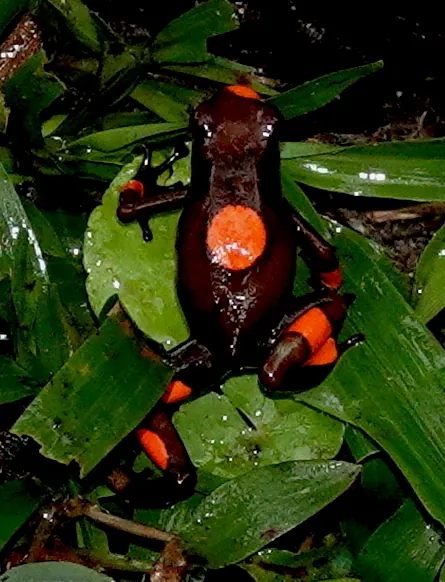
 របៀបស្គាល់វា
- Background colour ranges from light to dark brown.1
- Usually has a vivid, bright spot on its back.1
- Small, with an average snout-to-vent length of about 3.3 cm.1
- Active on the forest floor, feeding on the ground after sunrise and hiding under leaf litter or on fallen logs by 16:00.1
ច្រើនតែច្រឡំជាមួយ៖ Some frogs that were once classed as this species were separated into new species in 2018: Oophaga anchicayensis, Oophaga andresi and Oophaga solanensis.1
អំណាចជាតិពុល
ស្បែករបស់វាពុល។ វាគ្រោះថ្នាក់ក្នុងការប៉ះ លិត ឬញ៉ាំ។
តើជាតិពុលរបស់វាធ្វើអ្វី?
The frog produces histrionicotoxins, which are cardiotoxins, meaning they affect the heart. These compounds act as potent blockers of nicotinic acetylcholine receptors, the sites that receive nerve signals at muscle and nerve junctions. They also affect sodium and potassium channels, though much less strongly.1
តើវាគ្រោះថ្នាក់ប៉ុណ្ណាចំពោះមនុស្ស?
គ្រោះថ្នាក់ចំពោះមនុស្ស: ធ្ងន់ធ្ងរប្រសិនបើនរណាម្នាក់ប៉ះ ឬញ៉ាំវា ចូរទៅជួបគ្រូពេទ្យ។ ការស្លាប់កម្រណាស់។The frog's toxins can be dangerous. Wild-caught frogs may be toxic and dangerous to handle, and they often have a much higher fatality rate in captivity.1
 ប្រសិនបើនរណាម្នាក់បានប៉ះ ឬញ៉ាំវា
- ប្រសិនបើនរណាម្នាក់បានប៉ះវា៖ លាងដៃឱ្យបានស្អាត ហើយកុំប៉ះភ្នែក ឬមាត់។ ប្រសិនបើក្មេង ឬសត្វចិញ្ចឹមបានលិត ឬញ៉ាំវា៖ ទូរស័ព្ទទៅមជ្ឈមណ្ឌលប្រឆាំងការពុល ឬលេខសង្គ្រោះបន្ទាន់។
ត្រូវទូរស័ព្ទទៅលេខសង្គ្រោះបន្ទាន់ជាមុនសិនជានិច្ច (112, 000, 911)។ នេះជាការណែនាំសង្គ្រោះបឋមទូទៅ មិនមែនជាដំបូន្មានវេជ្ជសាស្ត្រទេ។ មូលដ្ឋាននៃការសង្គ្រោះបឋម
 រក្សាសុវត្ថិភាព
- កុំប៉ះ ចាប់ ឬរំខានសត្វព្រៃជាដាច់ខាត ទោះបីវាតូចក៏ដោយ ហើយទោះបីវាមើលទៅដូចជាកំពុងដេក ឬងាប់ក៏ដោយ។
- ទុកចន្លោះឱ្យវា។ ប្រសិនបើអ្នកជួបវា ចូរនៅស្ងប់ ថយក្រោយយឺតៗ ហើយទុកឱ្យវាទៅតាមផ្លូវរបស់វា។
- ប្រសិនបើអ្នកបានប៉ះ ឬញ៉ាំវា៖ កុំត្រដុសភ្នែក ឬមាត់ ចូរលាងដៃ ហើយរកជំនួយវេជ្ជសាស្ត្រ។
វាមិនមែនចង់តាមចាប់អ្នកទេ។ ជាតិពុលរបស់វាមានតែដើម្បីកុំឱ្យសត្វណាស៊ីវាប៉ុណ្ណោះ។ បន្ថែមទៀតអំពីការរក្សាសុវត្ថិភាព
នៅកន្លែងណាក្នុងពិភពលោក?
តើវាធំប៉ុណ្ណា?
តើវាវែងប៉ុណ្ណា?
 វែងប្រហែលដែកកៀបក្រដាសមួយ
 អាចរត់បាន 100 ម៉ែត្រក្នុងរយៈពេល 97 វិនាទី (មនុស្សលឿនបំផុតត្រូវការ 9.6)
តើ Harlequin poison frog ធំប៉ុណ្ណា បើប្រៀបនឹងអ្នក?
គ្រាន់តែជាការគណនានៅក្នុងកម្មវិធីរុករករបស់អ្នក។ គ្មានអ្វីត្រូវបានរក្សាទុក ឬផ្ញើទៅកន្លែងណាទេ។
តើវាលឿនប៉ុណ្ណា?


ការពិត
The tadpoles cannot feed on their own. They are obligate egg-feeders and will starve without the unfertilised eggs their mother provides.1
A parent carries the tadpoles to tiny water pools, often found in the axil of a bromeliad plant, where they develop.1
Histrionicotoxins are hard to make in a lab. Synthesising them has been the subject of many different attempts.1
Harlequin poison frogs are among the most difficult poison dart frogs to raise in captivity.1
Adults are active on the ground during the day and retreat to refuge by mid-afternoon.1
សម្រាប់អ្នកជំនាញខាងពិស
- ឈ្មោះវិទ្យាសាស្ត្រ
- Oophaga histrionica
- ក្រុម
- កង្កែបពុល កង្កែបពក និងសត្វញូត
- គ្រួសារ
- Dendrobatidae2
- លំដាប់
- Anura
- ទ្វីបនានា
- អាមេរិកខាងត្បូង
- កូនតូចៗ
- The female lays eggs among leaf litter. A parent carries the newly hatched tadpoles to a small water pool, often in a bromeliad, and the mother later lays unfertilised eggs for the tadpoles to eat.1
- ស្ថានភាពរបស់វានៅក្នុងធម្មជាតិ
- Critically Endangered1
- គ្រោះថ្នាក់ចំពោះមនុស្ស
- 3 / 5: ធ្ងន់ធ្ងរ3
ការពិតមកពីណា
- Harlequin poison frog (Wikipedia (CC BY-SA 4.0))
- Oophaga histrionica (iNaturalist): ឈ្មោះ និងចំណាត់ថ្នាក់។
- Venom Wiki: កម្រិតគ្រោះថ្នាក់ ទំហំធម្មតា និងការប៉ាន់ស្មានល្បឿន គឺជារបស់យើងផ្ទាល់។ មើលពីរបៀបដែលយើងគណនាវា៖ របៀបដែលយើងវាយតម្លៃគ្រោះថ្នាក់.
ការពិតនីមួយៗនៅលើទំព័រនេះមានលេខដែលចង្អុលទៅប្រភពរបស់វា។ ប្រសិនបើយើងសរសេរខុស សូមអភ័យទោស យើងជាអ្នកស្រឡាញ់សត្វ មិនមែនជាទស្សនាវដ្តីវិទ្យាសាស្ត្រទេ។ ប្រាប់យើងតាម [email protected] ហើយយើងនឹងកែវា។
 ខ្ទួយឃ្លានហើយ! Venom Wiki ជាគម្រោងរបស់មនុស្សម្នាក់៖ ឥតគិតថ្លៃ គ្មានការផ្សាយពាណិជ្ជកម្ម និងគ្មានកម្មវិធីតាមដាន។ ការឧបត្ថម្ភតិចតួចជួយឱ្យវានៅតែដំណើរការលើអ៊ីនធឺណិត។ផ្តល់ចំណីខ្ទួយ
បន្ថែមទៀតពីក្រុមដូចគ្នា: កង្កែបពុល កង្កែបពក និងសត្វញូត
 Golden poison frogកង្កែបពុល កង្កែបពក និងសត្វញូតគ្រោះថ្នាក់ដល់ជីវិតកុំប៉ះ
 Cane toadកង្កែបពុល កង្កែបពក និងសត្វញូតត្រូវការគ្រូពេទ្យកុំប៉ះ
 Dyeing poison dart frogកង្កែបពុល កង្កែបពក និងសត្វញូតគ្រាន់តែឈឺកុំប៉ះ
 Black-legged poison frogកង្កែបពុល កង្កែបពក និងសត្វញូតអាចសម្លាប់បានកុំប៉ះ
 Bruno's casque-headed frogកង្កែបពុល កង្កែបពក និងសត្វញូតត្រូវការគ្រូពេទ្យកុំប៉ះ
 Giant leaf frogកង្កែបពុល កង្កែបពក និងសត្វញូតគ្រាន់តែឈឺកុំប៉ះ
 Terciopelo
 Brazilian wandering spider
 Eyelash viper
 Golden lancehead
 South American bushmaster
 Peruvian giant centipede