
 អាហ្វ្រិក
 អាស៊ី
អាស៊ី អឺរ៉ុប
 អាមេរិកខាងត្បូង
 អូស្ត្រាលី និងអូសេអានី
 អង់តាក់ទិក
 មហាសមុទ្រប៉ាស៊ីហ្វិក
 មហាសមុទ្រអាត្លង់ទិក
 មហាសមុទ្រឥណ្ឌា
 មហាសមុទ្រអាកទិក
 សមុទ្រមេឌីទែរ៉ាណេ
 សមុទ្រក្រហម
 សមុទ្រការ៉ាអ៊ីប
 សមុទ្រផ្កាថ្ម
 សមុទ្រចិនខាងត្បូង
 សមុទ្រហ្វីលីពីន
 សមុទ្រអង់ដាម៉ាន់
 សមុទ្រខាងជើង
 សមុទ្រទីម័រ និងសមុទ្រអារ៉ាហ្វូរ៉ា
 ឈូងសមុទ្របេងហ្គាល់
 ឈូងសមុទ្រកាលីហ្វ័រញ៉ា
Mediterranean box jellyfish
 សរសៃដៃដែលទិច
The Mediterranean box jellyfish is a small, see-through jellyfish with a box-shaped body about 3 cm across. It lives only in the Mediterranean Sea, where it is the only box jellyfish, and its sting can hurt people who swim in shallow water.1

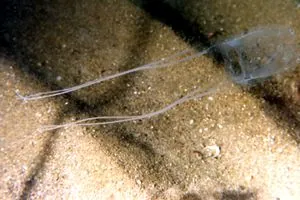
 របៀបស្គាល់វា
- Transparent, box-shaped bell about 3 cm across1
- Four long tentacles at the lower corners of the bell, up to 30 cm long1
- Red banding on the tentacles1
- Small white or yellowish warts on the bell that carry stinging cells1
- Often found in small groups1
ច្រើនតែច្រឡំជាមួយ៖ Other box jellyfish of the genus Carybdea look similar, but they live in warm oceans elsewhere. The red banding on the tentacles is the feature that separates this species from them.1
អំណាចពិស
កោសិកាទិចតូចៗរាប់ពាន់បាញ់ចេញ នៅពេលមានអ្វីមួយប៉ះពួកវា។
តើពិសរបស់វាធ្វើអ្វី?
Its sting is venomous to humans, but some swimmers feel no painful sensation at all. In severe cases the symptoms spread through the body, with pain at the sting site and elsewhere, paresthesia (abnormal prickling or tingling sensations), hyperesthesia (over-sensitive skin) and skin lesions. These symptoms can take a few months to fully disappear.1
តើវាគ្រោះថ្នាក់ប៉ុណ្ណាចំពោះមនុស្ស?
គ្រោះថ្នាក់ចំពោះមនុស្ស: ឈឺចាប់វាអាចឈឺខ្លាំងមែន ប៉ុន្តែស្ទើរតែមិនដែលធ្ងន់ធ្ងរទេ។It is far less dangerous than some box jellyfish species from other parts of the world. It is still considered the second-most significant stinging jellyfish in the Mediterranean, after Pelagia noctiluca.1
 ប្រសិនបើវាទិច
- ចេញពីទឹក ហើយរើសសរសៃដៃរបស់ចាហួយសមុទ្រដែលនៅជាប់ចេញ (ដោយពាក់ស្រោមដៃ ឬប្រើក្រណាត់)។
- សម្រាប់ចាហួយសមុទ្រប្រអប់តំបន់ត្រូពិច៖ ចាក់ទឹកខ្មេះលើកន្លែងទិចយ៉ាងហោចណាស់ 30 វិនាទី ហៅរកជំនួយ ហើយត្រៀមខ្លួនធ្វើ CPR (ការសង្គ្រោះបេះដូង និងសួត)។ សម្រាប់ចាហួយសមុទ្រដបខៀវ និងប្រភេទផ្សេងទៀតភាគច្រើន៖ លាងជម្រះដោយទឹកសមុទ្រ បន្ទាប់មកប្រើទឹកក្តៅដើម្បីបំបាត់ការឈឺចាប់។
ត្រូវទូរស័ព្ទទៅលេខសង្គ្រោះបន្ទាន់ជាមុនសិនជានិច្ច (112, 000, 911)។ នេះជាការណែនាំសង្គ្រោះបឋមទូទៅ មិនមែនជាដំបូន្មានវេជ្ជសាស្ត្រទេ។ មូលដ្ឋាននៃការសង្គ្រោះបឋម
 រក្សាសុវត្ថិភាព
- កុំប៉ះ ចាប់ ឬរំខានសត្វព្រៃជាដាច់ខាត ទោះបីវាតូចក៏ដោយ ហើយទោះបីវាមើលទៅដូចជាកំពុងដេក ឬងាប់ក៏ដោយ។
- ទុកចន្លោះឱ្យវា។ ប្រសិនបើអ្នកជួបវា ចូរនៅស្ងប់ ថយក្រោយយឺតៗ ហើយទុកឱ្យវាទៅតាមផ្លូវរបស់វា។
- ប្រសិនបើវាទិចអ្នក៖ ចូរនៅស្ងប់ នៅស្ងៀម ទូរស័ព្ទទៅលេខសង្គ្រោះបន្ទាន់ (112, 000, 911) ឬទៅមន្ទីរពេទ្យឱ្យបានលឿន។ ចងចាំថាវាមានរូបរាងយ៉ាងដូចម្តេច រូបថតមួយអាចជួយបាន។
វាមិនមែនចង់តាមចាប់អ្នកទេ។ វាប្រើពិសរបស់វាដើម្បីចាប់ចំណី ឬការពារខ្លួន ហើយវាចូលចិត្តលាក់ខ្លួនជាង។ បន្ថែមទៀតអំពីការរក្សាសុវត្ថិភាព
នៅកន្លែងណាក្នុងពិភពលោក?
តើវាធំប៉ុណ្ណា?
តើវាវែងប៉ុណ្ណា?
 វែងប្រហែលដែកកៀបក្រដាសមួយ
 អាចហែលពេញប្រវែងអាងហែលទឹកធំ (50 ម៉ែត្រ) ក្នុងរយៈពេល 36 វិនាទី
តើ Mediterranean box jellyfish ធំប៉ុណ្ណា បើប្រៀបនឹងអ្នក?
គ្រាន់តែជាការគណនានៅក្នុងកម្មវិធីរុករករបស់អ្នក។ គ្មានអ្វីត្រូវបានរក្សាទុក ឬផ្ញើទៅកន្លែងណាទេ។
តើវាលឿនប៉ុណ្ណា?
ការពិត
It has comparatively sophisticated eyes with lenses, which help it detect and avoid obstacles such as posts or a ship's rudder.1
After a free-swimming larva forms, it develops into a polyp that can reproduce by budding, and it can regenerate missing parts within 72 hours.1
It swims by making rapid contractions of its bell, moving between 3 and 6 metres per minute.1
Its tentacles can grow up to 30 cm long, many times the width of its box-shaped bell.1
It is the only box jellyfish found in the Mediterranean Sea.1
សម្រាប់អ្នកជំនាញខាងពិស
- ឈ្មោះវិទ្យាសាស្ត្រ
- Carybdea marsupialis
- ក្រុម
- ចាហួយសមុទ្រ និងសត្វសមុទ្រដែលទិច
- គ្រួសារ
- Carybdeidae2
- លំដាប់
- Carybdeida
- ទ្វីបនានា
- មហាសមុទ្រអាត្លង់ទិក, សមុទ្រមេឌីទែរ៉ាណេ, មហាសមុទ្រ
- កូនតូចៗ
- The sexes are separate, and eggs and sperm (gametes) are released into the open water to fuse; the young develop into a free-swimming larva and then a small polyp stage before becoming jellyfish.1
- គ្រោះថ្នាក់ចំពោះមនុស្ស
- 2 / 5: ឈឺចាប់3
ការពិតមកពីណា
- Carybdea marsupialis (Wikipedia (CC BY-SA 4.0))
- Carybdea marsupialis (iNaturalist): ឈ្មោះ និងចំណាត់ថ្នាក់។
- Venom Wiki: កម្រិតគ្រោះថ្នាក់ ទំហំធម្មតា និងការប៉ាន់ស្មានល្បឿន គឺជារបស់យើងផ្ទាល់។ មើលពីរបៀបដែលយើងគណនាវា៖ របៀបដែលយើងវាយតម្លៃគ្រោះថ្នាក់.
ការពិតនីមួយៗនៅលើទំព័រនេះមានលេខដែលចង្អុលទៅប្រភពរបស់វា។ ប្រសិនបើយើងសរសេរខុស សូមអភ័យទោស យើងជាអ្នកស្រឡាញ់សត្វ មិនមែនជាទស្សនាវដ្តីវិទ្យាសាស្ត្រទេ។ ប្រាប់យើងតាម [email protected] ហើយយើងនឹងកែវា។
 ខ្ទួយឃ្លានហើយ! Venom Wiki ជាគម្រោងរបស់មនុស្សម្នាក់៖ ឥតគិតថ្លៃ គ្មានការផ្សាយពាណិជ្ជកម្ម និងគ្មានកម្មវិធីតាមដាន។ ការឧបត្ថម្ភតិចតួចជួយឱ្យវានៅតែដំណើរការលើអ៊ីនធឺណិត។ផ្តល់ចំណីខ្ទួយ
បន្ថែមទៀតពីក្រុមដូចគ្នា: ចាហួយសមុទ្រ និងសត្វសមុទ្រដែលទិច
 Australian box jellyfishចាហួយសមុទ្រ និងសត្វសមុទ្រដែលទិចគ្រោះថ្នាក់ដល់ជីវិតកុំប៉ះ
 Irukandji jellyfishចាហួយសមុទ្រ និងសត្វសមុទ្រដែលទិចអាចសម្លាប់បានកុំប៉ះ
 Portuguese man o' warចាហួយសមុទ្រ និងសត្វសមុទ្រដែលទិចត្រូវការគ្រូពេទ្យកុំប៉ះ
 Lion's mane jellyfishចាហួយសមុទ្រ និងសត្វសមុទ្រដែលទិចគ្រាន់តែឈឺកុំប៉ះ
 Moon jellyfishចាហួយសមុទ្រ និងសត្វសមុទ្រដែលទិចគ្មានគ្រោះថ្នាក់
 Common kingslayerចាហួយសមុទ្រ និងសត្វសមុទ្រដែលទិចអាចសម្លាប់បានកុំប៉ះ
 Hawksbill sea turtle
 Blue sea dragon
 Greenland shark
 Common octopus
 Common stingray
 Greater weever