
 អាហ្វ្រិក
 អាស៊ី
អាស៊ី អឺរ៉ុប
 អាមេរិកខាងត្បូង
 អូស្ត្រាលី និងអូសេអានី
 អង់តាក់ទិក
 មហាសមុទ្រប៉ាស៊ីហ្វិក
 មហាសមុទ្រអាត្លង់ទិក
 មហាសមុទ្រឥណ្ឌា
 មហាសមុទ្រអាកទិក
 សមុទ្រមេឌីទែរ៉ាណេ
 សមុទ្រក្រហម
 សមុទ្រការ៉ាអ៊ីប
 សមុទ្រផ្កាថ្ម
 សមុទ្រចិនខាងត្បូង
 សមុទ្រហ្វីលីពីន
 សមុទ្រអង់ដាម៉ាន់
 សមុទ្រខាងជើង
 សមុទ្រទីម័រ និងសមុទ្រអារ៉ាហ្វូរ៉ា
 ឈូងសមុទ្របេងហ្គាល់
 ឈូងសមុទ្រកាលីហ្វ័រញ៉ា
Spotted jelly
 សរសៃដៃដែលទិច
The spotted jelly is a jellyfish with spots on the top of its bell, the rounded body. It lives in the warm Indo-Pacific oceans, and in some saltwater lakes in Palau and Indonesia. Its lake populations are famous because they have lost most of their sting.1


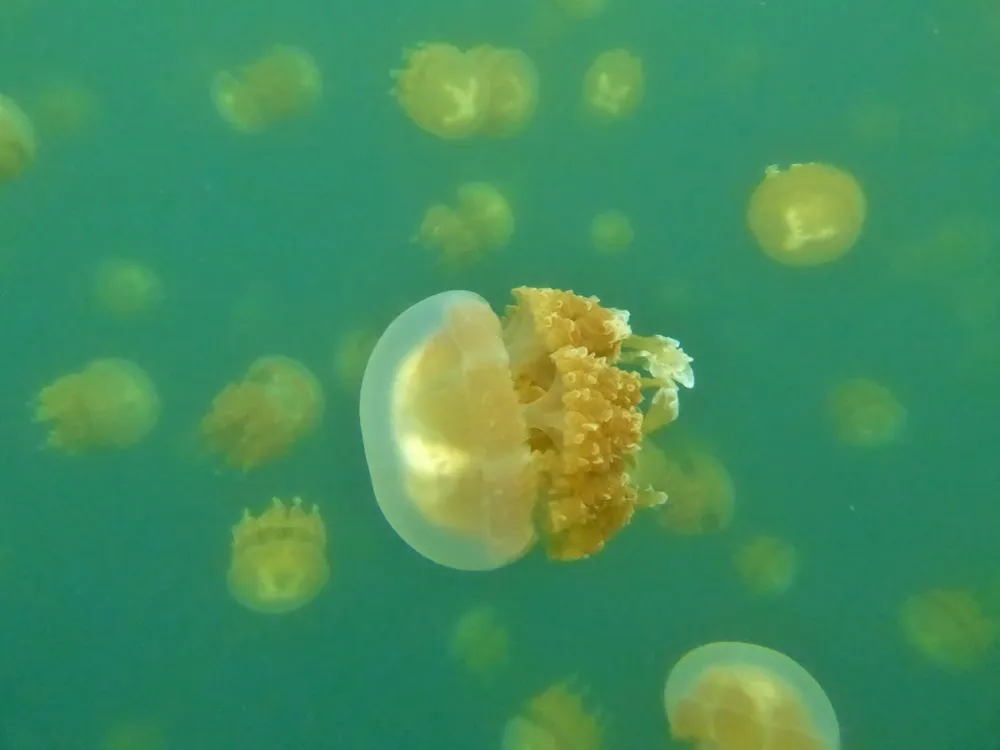
 របៀបស្គាល់វា
- Distinctive spots on the top of the bell1
- Colour ranges from greenish blue to olive green, from the algae living in its tissues1
- Eight rhopalia (sensory organs) along the edge of the bell1
- Eight frilled oral arms, each ending in a club-like appendage1
- Numerous small mouths along the bottom of the oral arms, unlike many other jellies1
អំណាចពិស
កោសិកាទិចតូចៗរាប់ពាន់បាញ់ចេញ នៅពេលមានអ្វីមួយប៉ះពួកវា។
តើពិសរបស់វាធ្វើអ្វី?
The venom is protein-based and is delivered by stinging cells called nematocytes (cnidocytes) on the upper surfaces of the oral arms. In jellyfish living in marine lakes, conditions in the lake are thought to break down this venom, so those populations do not sting humans.1
តើវាគ្រោះថ្នាក់ប៉ុណ្ណាចំពោះមនុស្ស?
គ្រោះថ្នាក់ចំពោះមនុស្ស: ស្រាលដូចឃ្មុំទិច ឬតិចជាងនេះ។ ជាទូទៅគ្មានគ្រោះថ្នាក់ចំពោះមនុស្សទេ។Jellyfish in the open ocean have stinging cells on their oral arms. Populations in marine lakes, such as Jellyfish Lake in Palau, do not sting humans.1
 ប្រសិនបើវាទិច
- ចេញពីទឹក ហើយរើសសរសៃដៃរបស់ចាហួយសមុទ្រដែលនៅជាប់ចេញ (ដោយពាក់ស្រោមដៃ ឬប្រើក្រណាត់)។
- សម្រាប់ចាហួយសមុទ្រប្រអប់តំបន់ត្រូពិច៖ ចាក់ទឹកខ្មេះលើកន្លែងទិចយ៉ាងហោចណាស់ 30 វិនាទី ហៅរកជំនួយ ហើយត្រៀមខ្លួនធ្វើ CPR (ការសង្គ្រោះបេះដូង និងសួត)។ សម្រាប់ចាហួយសមុទ្រដបខៀវ និងប្រភេទផ្សេងទៀតភាគច្រើន៖ លាងជម្រះដោយទឹកសមុទ្រ បន្ទាប់មកប្រើទឹកក្តៅដើម្បីបំបាត់ការឈឺចាប់។
ត្រូវទូរស័ព្ទទៅលេខសង្គ្រោះបន្ទាន់ជាមុនសិនជានិច្ច (112, 000, 911)។ នេះជាការណែនាំសង្គ្រោះបឋមទូទៅ មិនមែនជាដំបូន្មានវេជ្ជសាស្ត្រទេ។ មូលដ្ឋាននៃការសង្គ្រោះបឋម
 រក្សាសុវត្ថិភាព
- កុំប៉ះ ចាប់ ឬរំខានសត្វព្រៃជាដាច់ខាត ទោះបីវាតូចក៏ដោយ ហើយទោះបីវាមើលទៅដូចជាកំពុងដេក ឬងាប់ក៏ដោយ។
- ទុកចន្លោះឱ្យវា។ ប្រសិនបើអ្នកជួបវា ចូរនៅស្ងប់ ថយក្រោយយឺតៗ ហើយទុកឱ្យវាទៅតាមផ្លូវរបស់វា។
- ប្រសិនបើវាទិចអ្នក៖ ចូរនៅស្ងប់ នៅស្ងៀម ទូរស័ព្ទទៅលេខសង្គ្រោះបន្ទាន់ (112, 000, 911) ឬទៅមន្ទីរពេទ្យឱ្យបានលឿន។ ចងចាំថាវាមានរូបរាងយ៉ាងដូចម្តេច រូបថតមួយអាចជួយបាន។
វាមិនមែនចង់តាមចាប់អ្នកទេ។ វាប្រើពិសរបស់វាដើម្បីចាប់ចំណី ឬការពារខ្លួន ហើយវាចូលចិត្តលាក់ខ្លួនជាង។ បន្ថែមទៀតអំពីការរក្សាសុវត្ថិភាព
នៅកន្លែងណាក្នុងពិភពលោក?
តើវាធំប៉ុណ្ណា?
តើវាវែងប៉ុណ្ណា?
 វែងដូចប្លុកសំណង់ក្មេងលេង 9 ដុំតជាជួរ
តើ Spotted jelly ធំប៉ុណ្ណា បើប្រៀបនឹងអ្នក?
គ្រាន់តែជាការគណនានៅក្នុងកម្មវិធីរុករករបស់អ្នក។ គ្មានអ្វីត្រូវបានរក្សាទុក ឬផ្ញើទៅកន្លែងណាទេ។
តើវាលឿនប៉ុណ្ណា?


ការពិត
Lake populations of spotted jellies have lost most of their ability to sting, probably after being cut off in marine lakes long ago.1
Each day, spotted jellies rise to the surface and follow the sun from east to west, so their algae can photosynthesise.1
Lake jellyfish are over three times wider than ocean ones, yet their tentacles are about the same length.1
Unlike many jellies, spotted jellies have several small mouths along their oral arms.1
A sea anemone called Entacmaea medusivora preys on spotted jellies, catching them in its tentacles.1
At night they stay lower in the water column.1
បំបែកជំនឿខុស
ជំនឿខុស៖ All spotted jellies sting people.
តាមពិត៖ Ocean populations have stinging cells, but the jellyfish in marine lakes such as Jellyfish Lake in Palau do not sting humans.1
ការពិតមកពីណា
- Spotted jelly (Wikipedia (CC BY-SA 4.0))
- Mastigias papua (iNaturalist): ឈ្មោះ និងចំណាត់ថ្នាក់។
- Venom Wiki: កម្រិតគ្រោះថ្នាក់ ទំហំធម្មតា និងការប៉ាន់ស្មានល្បឿន គឺជារបស់យើងផ្ទាល់។ មើលពីរបៀបដែលយើងគណនាវា៖ របៀបដែលយើងវាយតម្លៃគ្រោះថ្នាក់.
ការពិតនីមួយៗនៅលើទំព័រនេះមានលេខដែលចង្អុលទៅប្រភពរបស់វា។ ប្រសិនបើយើងសរសេរខុស សូមអភ័យទោស យើងជាអ្នកស្រឡាញ់សត្វ មិនមែនជាទស្សនាវដ្តីវិទ្យាសាស្ត្រទេ។ ប្រាប់យើងតាម [email protected] ហើយយើងនឹងកែវា។
 ខ្ទួយឃ្លានហើយ! Venom Wiki ជាគម្រោងរបស់មនុស្សម្នាក់៖ ឥតគិតថ្លៃ គ្មានការផ្សាយពាណិជ្ជកម្ម និងគ្មានកម្មវិធីតាមដាន។ ការឧបត្ថម្ភតិចតួចជួយឱ្យវានៅតែដំណើរការលើអ៊ីនធឺណិត។ផ្តល់ចំណីខ្ទួយ
បន្ថែមទៀតពីក្រុមដូចគ្នា: ចាហួយសមុទ្រ និងសត្វសមុទ្រដែលទិច
 Australian box jellyfishចាហួយសមុទ្រ និងសត្វសមុទ្រដែលទិចគ្រោះថ្នាក់ដល់ជីវិតកុំប៉ះ
 Irukandji jellyfishចាហួយសមុទ្រ និងសត្វសមុទ្រដែលទិចអាចសម្លាប់បានកុំប៉ះ
 Portuguese man o' warចាហួយសមុទ្រ និងសត្វសមុទ្រដែលទិចត្រូវការគ្រូពេទ្យកុំប៉ះ
 Lion's mane jellyfishចាហួយសមុទ្រ និងសត្វសមុទ្រដែលទិចគ្រាន់តែឈឺកុំប៉ះ
 Moon jellyfishចាហួយសមុទ្រ និងសត្វសមុទ្រដែលទិចគ្មានគ្រោះថ្នាក់
 Common kingslayerចាហួយសមុទ្រ និងសត្វសមុទ្រដែលទិចអាចសម្លាប់បានកុំប៉ះ
ក៏រស់នៅក្នុង: មហាសមុទ្រប៉ាស៊ីហ្វិក
 Geography coneខ្យងកោណ និងមឹកយក្សគ្រោះថ្នាក់ដល់ជីវិត
 Greater blue-ringed octopusខ្យងកោណ និងមឹកយក្សគ្រោះថ្នាក់ដល់ជីវិត
 Japanese pufferfishសត្វពុលផ្សេងទៀតគ្រោះថ្នាក់ដល់ជីវិត
 Southern blue-ringed octopusខ្យងកោណ និងមឹកយក្សគ្រោះថ្នាក់ដល់ជីវិត
 Hawksbill sea turtleសត្វពុលផ្សេងទៀតអាចសម្លាប់បាន
 Reef stonefishត្រីមានពិសអាចសម្លាប់បានកុំប៉ះ