
 Afirika
 Asiya
Asiya Bulaaya
 Amerika ey'Obukiikaddyo
 Awusitureeliya ne Oseyaniya
 Antakitika
 Oseyani ya Pasifiki
 Oseyani ya Atlantiki
 Oseyani y'e Buyindi
 Oseyani ya Arakitiki
 Ennyanja ya Mediterenia
 Ennyanja Emmyufu
 Ennyanja ya Karibiyani
 Ennyanja ya Korali
 Ennyanja ya China ey'Obukiikaddyo
 Ennyanja ya Bufilipino
 Ennyanja ya Andaman
 Ennyanja ey'Obukiikakkono (North Sea)
 Ennyanja ya Timor ne Arafura
 Ekikono kya Bengal
 Ekikono kya Kalifoniya
Baja California bark scorpion
 Kibojja
The Baja California bark scorpion is a slender scorpion with a long tail. It lives in the western deserts and wet places of North America, mainly in Baja California. It matters because it is closely related to the Arizona bark scorpion, and scientists only confirmed in 2004 that the two are separate species.1


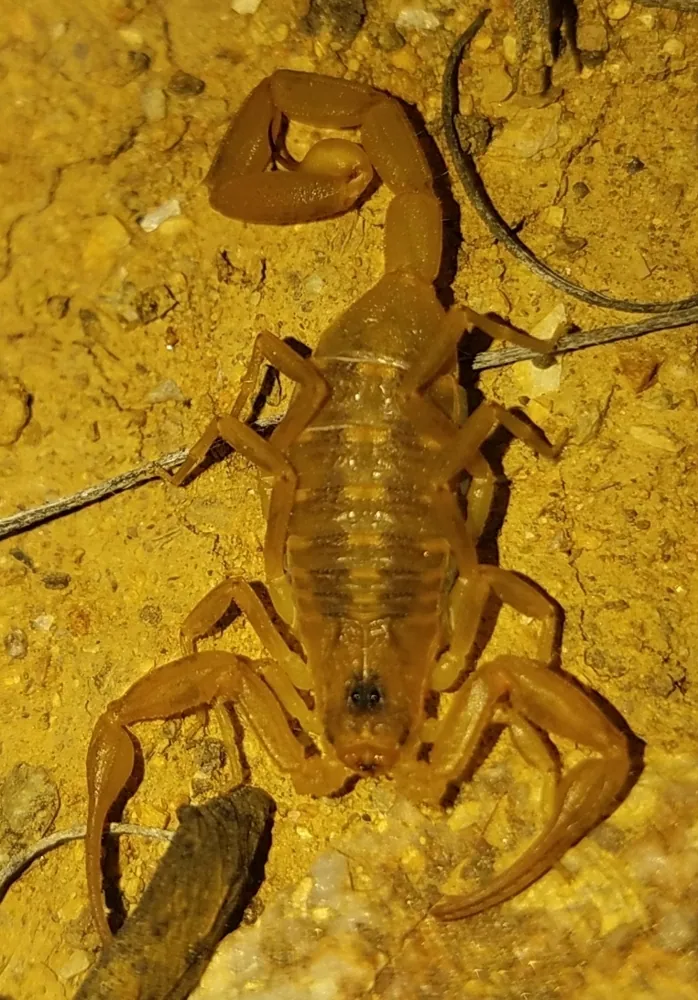
 Engeri y'okukitegeera
- Slender body with a long tail1
- Typically sand-coloured, though it can appear darker1
- Exoskeleton can be yellow, light brown or gold1
- Body length of about 3.8 to 7.6 cm1
- Rests its tail on the ground, unlike other scorpions that hold it arched over the back. It also has a subaculear tooth at the tip of its stinger1
Kitera okutabulwa ne: It is closely related to the Arizona bark scorpion, and their body shapes can be almost impossible to tell apart. Differences in venom and DNA are used to separate the two species. The subaculear tooth at the tip of the stinger and the way the tail rests on the ground are the main features that set it apart from other scorpions.1
Amaanyi g'obusagwa
Obusagwa buyita mu ggwa lyakyo eribojja.
Obusagwa bwakyo bukola ki?
It uses venom to hunt, injecting it into prey to immobilise or kill it. Each scorpion species has a unique venom profile, which is used to tell species apart. In humans, its venom may cause difficulty breathing or muscle spasms.1
Kirina akabi kenkana wa eri abantu?
Akabi eri abantu: Kya bulumiKisobola okuluma ddala, naye kumpi tekiba kya kabi kinene.Its venom has the potential to be fatal to humans, but the chances of this happening are low. It is not considered dangerous, and it is less of a medical threat than its close relative, the Arizona bark scorpion.1
 Bwe kibojja
- Nyogoza ekifo ekibojjeddwa ne ayisi era omuntu muleke ateetambula. Funa obuyambi bw'abasawo mangu, naddala ku baana: enjaba ezimu zitta abaana.
Bulijjo sooka kuba ennamba y'ebigwa bitalaze (112, 000, 911). Buno bulagirizi bwa bujjanjabi obusooka obwa bulijjo, si kuwabula kwa musawo. Obujjanjabi obusooka obw'omusingi
 Weekuume
- Tokwatako, tokwata wadde okusoomooza ensolo ey'omu nsiko, ne bw'eba ntono, era ne bw'eba erabika nga yeebase oba nga efudde.
- Gireke n'ebbanga. Bw'osisinkana emu, beera mukkakkamu, dda emabega mpola era gireke egende mu kkubo lyayo.
- Bw'emu ekubojja: beera mukkakkamu, totambula, kuba ennamba y'ebigwa bitalaze (112, 000, 911) oba tuuka mu ddwaliro mangu. Jjukira bwe yali efaanana, ekifaananyi kiyamba.
Tekikunoonya. Kikozesa obusagwa bwakyo okukwata emmere oba okwekuuma, era kyandisinze kwekweka. Ebirala ku kwekuuma
Wa mu nsi?
Kinene kyenkana wa?
Kiwanvu kyenkana wa?
 kiwanvu nga bbulooka 2,5 ez'okuzannyisa mu lunyiriri
 kyandisobodde okudduka mita 100 mu sikonda 260 (omuntu asinga embiro yeetaaga 9,6)
Baja California bark scorpion kinene kyenkana wa bw'ogeraageranya ne GGWE?
Kubala bwokka mu browser yo. Tewali kitterekebwa wadde okusindikibwa wonna.
Kidduka kyenkana wa?


Ebituufu
Omumenyi w'enfumo
Enfumo: It is the same species as the Arizona bark scorpion.
Amazima: The two were grouped as one species in 1980, but differences in venom toxicity and DNA analysis in 2004 showed they are separate species.1
Ebituufu we biva
- Centruroides exilicauda (Wikipedia (CC BY-SA 4.0))
- Centruroides exilicauda (iNaturalist): amannya n'ensengeka y'ebika.
- Venom Wiki: omutendera gw'akabi, obunene obwa bulijjo n'okuteebereza kw'embiro bibyaffe. Laba engeri gye tubibalamu: Engeri gye tupimamu akabi.
Buli kituufu ku lupapula luno kirina ennamba eraga we kyava. Bwe tuba tukoze ensobi, tusonyiwe, tuli bayagazi ba nsolo, so si magazini ya ssaayansi. Tubuulire ku [email protected] tujja kugitereeza.
 Enjaba erumwa enjala! Venom Wiki pulojekiti ya muntu omu: ya bwereere, tewali birango era tewali bikulondoola. Akasiimo akatono kayamba okugikuuma ku yintaneti.Liisa enjaba
Ebirala okuva mu kibinja kye kimu: Enjaba
 Arizona bark scorpion
 Cuban blue scorpion
 Striped bark scorpion
 Giant desert hairy scorpion
 Colima scorpion
 Durango scorpion
.jpg)
Era kibeera mu: Amerika ey'Obukiikakkono
 TerciopeloPit vipers (emisota egiwulira ebbugumu)Kitta
 Eastern coral snakeEmisota gya korali (coral snakes)Kisobola okutta
 Eastern diamondback rattlesnakeRattlesnakeKisobola okutta
 Eyelash viperPit vipers (emisota egiwulira ebbugumu)Kisobola okutta
 Timber rattlesnakeRattlesnakeKisobola okutta
 Western diamondback rattlesnakeRattlesnakeKisobola okutta