
 Afirika
 Asiya
Asiya Bulaaya
 Amerika ey'Obukiikaddyo
 Awusitureeliya ne Oseyaniya
 Antakitika
 Oseyani ya Pasifiki
 Oseyani ya Atlantiki
 Oseyani y'e Buyindi
 Oseyani ya Arakitiki
 Ennyanja ya Mediterenia
 Ennyanja Emmyufu
 Ennyanja ya Karibiyani
 Ennyanja ya Korali
 Ennyanja ya China ey'Obukiikaddyo
 Ennyanja ya Bufilipino
 Ennyanja ya Andaman
 Ennyanja ey'Obukiikakkono (North Sea)
 Ennyanja ya Timor ne Arafura
 Ekikono kya Bengal
 Ekikono kya Kalifoniya
Stonecat
 Amaggwa ag'obusagwa
The stonecat is a small freshwater catfish from North America. It hides near or under stones in fast-moving water. It is special because it has venom glands at the base of its pectoral spines, which can cause extreme pain.1



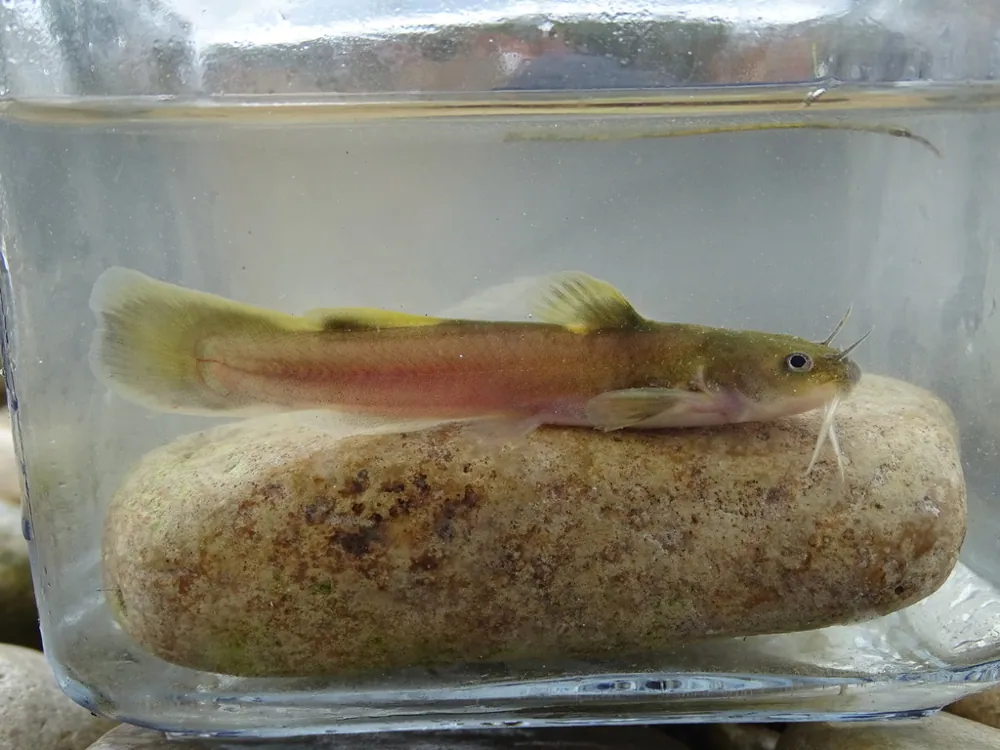
 Engeri y'okukitegeera
- Small, slender, flat-headed catfish with a thick, yellowish-brown skin1
- The sides of the head shade to yellow, and the belly is whitish1
- A white spot at the rear of the dorsal fin base and another on the upper edge of the tail fin1
- Either two light bars or a patch on the nape, depending on the population1
Amaanyi g'obusagwa
Amaggwa amasongovu ge galimu obusagwa. Okukirinnyako oba okukikwata kiruma.
Obusagwa bwakyo bukola ki?
Stonecats have venom glands, mainly at the bases of the pectoral spines. Their venom causes extreme pain, similar to that of a wasp sting. Other members of this catfish family cause irritating wounds from their spines, but the stonecat's venom is stronger.1
Kirina akabi kenkana wa eri abantu?
Akabi eri abantu: Kya bulumiKisobola okuluma ddala, naye kumpi tekiba kya kabi kinene.The spines can deliver venom that causes extreme pain, similar to a wasp sting. Keep clear of its spines.1
Kikola ki nga kitidde?
Stonecats hide near or under stones, and their venom glands sit at the bases of their pectoral spines.1
 Amaggwa gaakyo bwe gakufumita
- Teeka ekiwundu mu mazzi agookya, agookya nga omuntu bw'asobola okugumiikiriza nga tegamwokya (gagezese n'omukono gwo), okumala eddakiika 30 okutuuka ku 90. Funa obuyambi bw'abasawo, naddala ku stonefish ne stingray.
Bulijjo sooka kuba ennamba y'ebigwa bitalaze (112, 000, 911). Buno bulagirizi bwa bujjanjabi obusooka obwa bulijjo, si kuwabula kwa musawo. Obujjanjabi obusooka obw'omusingi
 Weekuume
- Tokwatako, tokwata wadde okusoomooza ensolo ey'omu nsiko, ne bw'eba ntono, era ne bw'eba erabika nga yeebase oba nga efudde.
- Gireke n'ebbanga. Bw'osisinkana emu, beera mukkakkamu, dda emabega mpola era gireke egende mu kkubo lyayo.
- Amaggwa gaayo bwe gakufumita: beera mukkakkamu, totambula, kuba ennamba y'ebigwa bitalaze (112, 000, 911) oba tuuka mu ddwaliro mangu. Jjukira bwe yali efaanana, ekifaananyi kiyamba.
Tekikunoonya. Kikozesa obusagwa bwakyo okukwata emmere oba okwekuuma, era kyandisinze kwekweka. Ebirala ku kwekuuma
Wa mu nsi?
Kinene kyenkana wa?
Kiwanvu kyenkana wa?
Kizitowa kyenkana wa?

 kiwanvu nga bbulooka 10 ez'okuzannyisa mu lunyiriri
 kyandisobodde okuwuga obuwanvu bw'ekidiba ekinene (m 50) mu sikonda 38
Stonecat kinene kyenkana wa bw'ogeraageranya ne GGWE?
Kubala bwokka mu browser yo. Tewali kitterekebwa wadde okusindikibwa wonna.
Kidduka kyenkana wa?
Ebituufu
A stonecat's pectoral spines carry venom glands, which makes them far more painful than the spines of most related catfish.1
Its eggs are amber-yellow and very large for a fish, measuring between 3.5 and 4 mm across.1
Stonecats are used as indicators of water quality, because they are absent from highly polluted or heavily silted areas.1
Stonecats form monogamous pairs for breeding, and they spawn when water temperatures reach 25 °C.1
The upper jaw of the stonecat projects beyond the lower jaw.1
Ku bakugu mu busagwa
- Erinnya erya ssaayansi
- Noturus flavus
- Ekibinja
- Ebyennyanja eby'obusagwa
- Amaka
- Ictaluridae2
- Ensengeka
- Siluriformes
- Ssemazinga
- Amerika ey'Obukiikakkono
- Abaana abawere
- Males guard the clutch of eggs under large, flat rocks, and a female may produce between 200 and 1,200 eggs per year.1
- Obuwangaazi
- nga emyaka 61
- Kiri kitya mu nsiko
- Not threatened, according to the US Endangered Species Act1
- Akabi eri abantu
- 2 / 5: Kya bulumi3
Ebituufu we biva
- Noturus flavus (Wikipedia (CC BY-SA 4.0))
- Noturus flavus (iNaturalist): amannya n'ensengeka y'ebika.
- Venom Wiki: omutendera gw'akabi, obunene obwa bulijjo n'okuteebereza kw'embiro bibyaffe. Laba engeri gye tubibalamu: Engeri gye tupimamu akabi.
Buli kituufu ku lupapula luno kirina ennamba eraga we kyava. Bwe tuba tukoze ensobi, tusonyiwe, tuli bayagazi ba nsolo, so si magazini ya ssaayansi. Tubuulire ku [email protected] tujja kugitereeza.
 Enjaba erumwa enjala! Venom Wiki pulojekiti ya muntu omu: ya bwereere, tewali birango era tewali bikulondoola. Akasiimo akatono kayamba okugikuuma ku yintaneti.Liisa enjaba
Ebirala okuva mu kibinja kye kimu: Ebyennyanja eby'obusagwa
 Channel catfishEbyennyanja eby'obusagwaKiruma bwokkaTokwatako
 Brown bullheadEbyennyanja eby'obusagwaKiruma bwokkaTokwatako
 Carolina madtomEbyennyanja eby'obusagwaKiruma bwokkaTokwatako
 Margined madtomEbyennyanja eby'obusagwaKiruma bwokkaTokwatako
 Tadpole madtomEbyennyanja eby'obusagwaKiruma bwokkaTokwatako
 Reef stonefishEbyennyanja eby'obusagwaKisobola okuttaTokwatako
Era kibeera mu: Amerika ey'Obukiikakkono
 TerciopeloPit vipers (emisota egiwulira ebbugumu)Kitta
 Eastern coral snakeEmisota gya korali (coral snakes)Kisobola okutta
 Eastern diamondback rattlesnakeRattlesnakeKisobola okutta
 Eyelash viperPit vipers (emisota egiwulira ebbugumu)Kisobola okutta
 Timber rattlesnakeRattlesnakeKisobola okutta
 Western diamondback rattlesnakeRattlesnakeKisobola okutta