
 ອາຟຣິກາ
 ອາຊີ
ອາຊີ ເອີຣົບ
 ອາເມລິກາໃຕ້
 ອົດສະຕຣາລີ ແລະ ໂອເຊຍເນຍ
 ແອນຕາກຕິກາ
 ມະຫາສະໝຸດປາຊີຟິກ
 ມະຫາສະໝຸດອັດລັງຕິກ
 ມະຫາສະໝຸດອິນເດຍ
 ມະຫາສະໝຸດອາກຕິກ
 ທະເລເມດິເຕີເຣນຽນ
 ທະເລແດງ
 ທະເລຄາຣິບບຽນ
 ທະເລຄໍຣັລ
 ທະເລຈີນໃຕ້
 ທະເລຟິລິບປິນ
 ທະເລອັນດາມັນ
 ທະເລເໜືອ
 ທະເລຕີມໍ ແລະ ທະເລອາຣາຟູຣາ
 ອ່າວເບັງກອນ
 ອ່າວແຄລິຟໍເນຍ
Giant honey bee
 ຕອດ
ຕອດThe giant honey bee is a large honey bee that lives in South and Southeast Asia. It builds its nests in open, high places, such as tree branches, cliff overhangs and buildings. It is known for fierce defence when its nest is disturbed.1


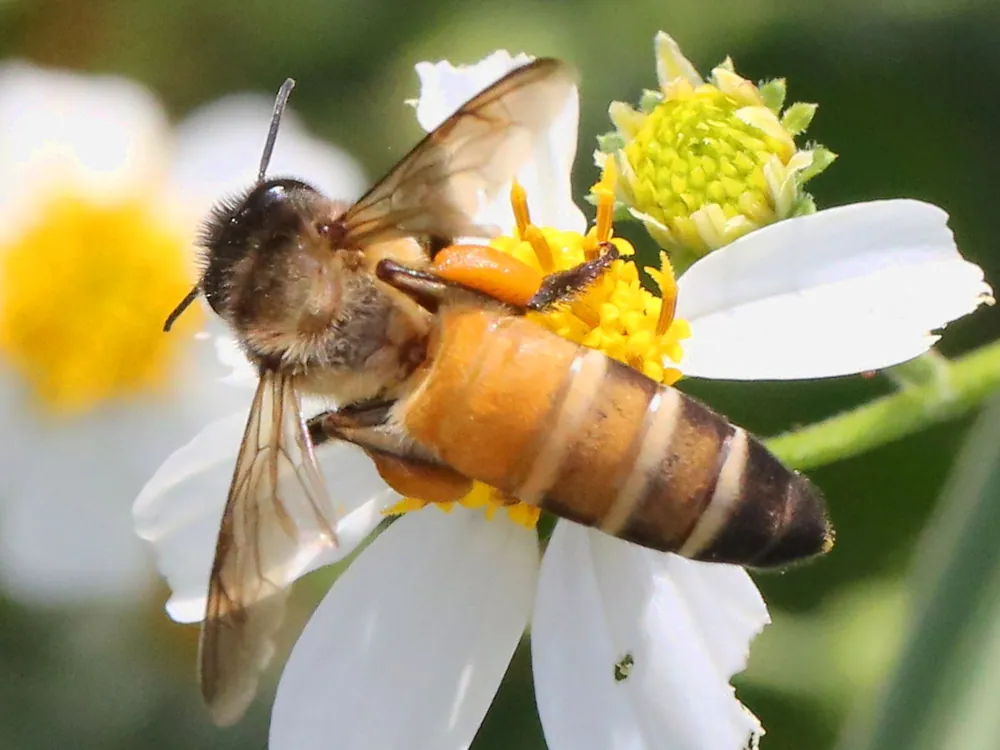
 ວິທີສັງເກດມັນ
- Typically 17 to 20 mm long1
- Builds a single vertical comb of wax, hanging from above1
- The comb is covered by a dense mass of bees in several layers1
- Nests can reach up to 1 metre across and are often grouped, with up to 200 colonies in one tree1
- Aggressive when its nest is disturbed1
ມັກສັບສົນກັບ: The Himalayan giant honey bee (A. laboriosa) is very similar in shape. It has a darker abdomen and longer thoracic hair, and is now treated as a separate species from the giant honey bee.1
ພະລັງພິດ
ພິດອອກມາທາງເຫຼັກໃນ
ມັນອັນຕະລາຍຕໍ່ຄົນປານໃດ?
ອັນຕະລາຍຕໍ່ຄົນ: ຮ້າຍແຮງຖ້າຖືກມັນຕອດ ຕ້ອງໄປຫາໝໍ ການເສຍຊີວິດເກີດຂຶ້ນໜ້ອຍຫຼາຍThis bee is known for aggressive defensive behaviour and vicious attacks when disturbed. Workers also attack bees from other colonies, so it is wise to keep well away from nests.1
ມັນເຮັດແນວໃດເວລາມັນຢ້ານ?
When disturbed, colonies defend their nest aggressively, and they attack intruders from other colonies.1
 ຖ້າມັນຕອດ
- ຂູດເຫຼັກໃນເຜິ້ງອອກ ແລະ ເຮັດໃຫ້ບ່ອນນັ້ນເຢັນ
- ຖ້າຜູ້ປ່ວຍຫາຍໃຈຍາກ, ໃບໜ້າ ຫຼື ຄໍບວມ, ຫຼື ຮູ້ສຶກຈະເປັນລົມ, ນັ້ນແມ່ນພາວະສຸກເສີນຈາກການແພ້: ໂທຫາເບີສຸກເສີນ ແລະ ໃຊ້ປາກກາສັກອະດຣີນາລີນຂອງເຂົາ ຖ້າເຂົາມີ
ໂທຫາເບີສຸກເສີນກ່ອນສະເໝີ (112, 000, 911) ນີ້ແມ່ນຄຳແນະນຳການປະຖົມພະຍາບານທົ່ວໄປ, ບໍ່ແມ່ນຄຳແນະນຳທາງການແພດ ພື້ນຖານການປະຖົມພະຍາບານ
 ຢູ່ຢ່າງປອດໄພ
- ຢ່າຈັບ, ຢ່າຈັບເອົາ ຫຼື ຢ່າຫຍອກສັດປ່າເດັດຂາດ, ເຖິງແມ່ນມັນໂຕນ້ອຍ ແລະ ເຖິງແມ່ນມັນເບິ່ງຄືນອນຫຼັບ ຫຼື ຕາຍແລ້ວ
- ໃຫ້ພື້ນທີ່ມັນ ຖ້າເຈົ້າພົບມັນ, ໃຈເຢັນໄວ້, ຖອຍຫຼັງຊ້າໆ ແລະ ປ່ອຍໃຫ້ມັນໄປທາງຂອງມັນ
- ຖ້າມີໂຕໃດຕອດເຈົ້າ: ໃຈເຢັນໄວ້, ຢູ່ນິ້ງໆ, ໂທຫາເບີສຸກເສີນ (112, 000, 911) ຫຼື ໄປໂຮງໝໍໃຫ້ໄວ ຈື່ໄວ້ວ່າມັນມີລັກສະນະແນວໃດ, ຮູບຖ່າຍຊ່ວຍໄດ້
ມັນບໍ່ໄດ້ຢາກທຳຮ້າຍເຈົ້າ ມັນໃຊ້ພິດເພື່ອຈັບອາຫານ ຫຼື ເພື່ອປ້ອງກັນຕົວ, ແລະ ມັນມັກລີ້ຫຼາຍກວ່າ ເພີ່ມເຕີມກ່ຽວກັບການຢູ່ຢ່າງປອດໄພ
ມັນໃຫຍ່ປານໃດ?
ມັນຍາວປານໃດ?
 ຍາວປະມານຄລິບໜີບເຈ້ຍອັນໜຶ່ງ
 ບິນຂ້າມສະໜາມບານເຕະທັງສະໜາມໄດ້ໃນ 15 ວິນາທີ
Giant honey bee ໃຫຍ່ປານໃດ ເມື່ອທຽບກັບເຈົ້າ?
ພຽງແຕ່ຄິດໄລ່ໃນບຣາວເຊີຂອງເຈົ້າ ບໍ່ມີຫຍັງຖືກບັນທຶກ ຫຼື ສົ່ງໄປບ່ອນໃດ
ມັນໄວປານໃດ?


ຂໍ້ມູນ
Unlike most honey bees, this species forages at night, and it is the only bee of its genus known to do so.1
The queen mates with many drones, and the Himalayan subspecies has the highest levels of polyandry of any social insect.1
Each colony can have up to 100,000 bees, and colonies are only a few centimetres apart in large groups.1
Colonies migrate between nesting sites with the seasons, usually staying about 3 to 4 months at each site.1
Bees use a waggle dance to show other bees the distance, direction and value of a food source.1
Indigenous peoples have traditionally harvested the honey and beeswax of this bee, a practice known as honey hunting.1
ຂໍ້ມູນມາຈາກໃສ
- Apis dorsata (Wikipedia (CC BY-SA 4.0))
- Apis dorsata (iNaturalist): ຊື່ ແລະ ການຈັດໝວດໝູ່
- Venom Wiki: ລະດັບອັນຕະລາຍ, ຂະໜາດທົ່ວໄປ ແລະ ຄວາມໄວທີ່ຄາດຄະເນ ແມ່ນຂອງພວກເຮົາເອງ ເບິ່ງວ່າພວກເຮົາຄິດໄລ່ແນວໃດ: ພວກເຮົາໃຫ້ຄະແນນອັນຕະລາຍແນວໃດ.
ທຸກຂໍ້ມູນໃນໜ້ານີ້ມີຕົວເລກທີ່ຊີ້ໄປຫາແຫຼ່ງທີ່ມາ ຖ້າພວກເຮົາຜິດພາດ, ຂໍໂທດເດີ້, ພວກເຮົາເປັນຄົນມັກສັດ ບໍ່ແມ່ນວາລະສານວິທະຍາສາດ ບອກພວກເຮົາທີ່ [email protected] ແລ້ວພວກເຮົາຈະແກ້ໄຂ
 ແມງເງົາຫິວແລ້ວ! Venom Wiki ເປັນໂຄງການຂອງຄົນຄົນດຽວ: ຟຣີ, ບໍ່ມີໂຄສະນາ ແລະ ບໍ່ມີຕົວຕິດຕາມ ທິບນ້ອຍໆຊ່ວຍໃຫ້ມັນຢູ່ອອນລາຍຕໍ່ໄປໄດ້ໃຫ້ອາຫານແມງເງົາ
 Asian giant hornet
 Common wasp
 European hornet
 Western honey bee
 Asian hornet
 European paper wasp
 Deathstalker
 Indian cobra
 Indian saw-scaled viper
 King cobra
 Puff adder
 Russell's viper