
 ອາຟຣິກາ
 ອາຊີ
ອາຊີ ເອີຣົບ
 ອາເມລິກາໃຕ້
 ອົດສະຕຣາລີ ແລະ ໂອເຊຍເນຍ
 ແອນຕາກຕິກາ
 ມະຫາສະໝຸດປາຊີຟິກ
 ມະຫາສະໝຸດອັດລັງຕິກ
 ມະຫາສະໝຸດອິນເດຍ
 ມະຫາສະໝຸດອາກຕິກ
 ທະເລເມດິເຕີເຣນຽນ
 ທະເລແດງ
 ທະເລຄາຣິບບຽນ
 ທະເລຄໍຣັລ
 ທະເລຈີນໃຕ້
 ທະເລຟິລິບປິນ
 ທະເລອັນດາມັນ
 ທະເລເໜືອ
 ທະເລຕີມໍ ແລະ ທະເລອາຣາຟູຣາ
 ອ່າວເບັງກອນ
 ອ່າວແຄລິຟໍເນຍ
Hickory tussock moth
 ຂົນພິດ
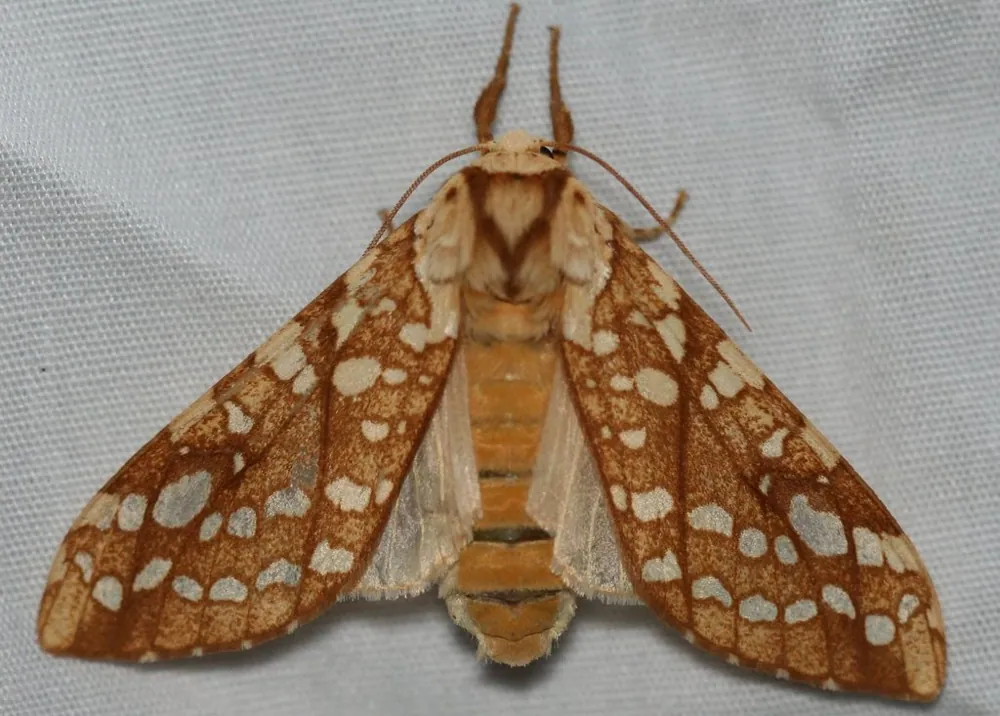
The hickory tussock moth is a moth whose caterpillars are covered in long, hairy tufts. It lives across the eastern half of North America. Its hairs can cause an itchy rash, but no venom has been found in it.1

 ວິທີສັງເກດມັນ
- The caterpillar is completely covered in long, hairlike setae arranged in spreading tufts, and most are white.1
- The caterpillar has black tufts along the middle of its back and four long black hair pencils, two near the front and two near the back.1
- The caterpillar has black spots along its sides and a black head capsule.1
- The adult moth has yellowish-brown forewings marked with white splotches, which look like stained glass.1
- The adult moth has mostly white hindwings and a hairy, pale brown body.1
ພະລັງພິດ
ຂົນນ້ອຍໆ ຫຼື ຂົນແຂງຫັກຄາຢູ່ໃນຜິວໜັງ ແລະ ເຮັດໃຫ້ແສບ
ພິດທີ່ມັນປ່ອຍອອກມາເຮັດຫຍັງ?
No venom has yet been isolated or identified in this moth. Its hairs cause irritant contact dermatitis, an itchy rash, in many people, especially those prone to allergies. The rash can resemble exposure to urushiol, the irritant found in poison ivy.1
ມັນອັນຕະລາຍຕໍ່ຄົນປານໃດ?
ອັນຕະລາຍຕໍ່ຄົນ: ເລັກນ້ອຍຄືກັບເຜິ້ງຕອດ ຫຼື ໜ້ອຍກວ່າ ເກືອບບໍ່ເປັນອັນຕະລາຍຕໍ່ຄົນIn over 350 documented cases, most people had no symptoms within 24 hours. No case involved anaphylaxis, a severe allergic reaction. The hairs are microscopically barbed, and if they are transferred from the hands to the eyes they may rarely cause serious medical complications.1
 ຖ້າເຈົ້າໄປຈັບຂົນຂອງມັນ
- ສຳລັບຂົນພິດຂອງບົ້ງ: ໃຊ້ສະກອດເທບຕິດຂົນອອກ, ແລ້ວລ້າງຜິວໜັງ ຢ່າຖູ
- ສຳລັບການຖືກກັດ: ລ້າງ ແລະ ເຮັດໃຫ້ເຢັນ ຂໍຄວາມຊ່ວຍເຫຼືອທາງການແພດຖ້າຜູ້ປ່ວຍຮູ້ສຶກບໍ່ສະບາຍ ຫຼື ເລືອດອອກງ່າຍ
ໂທຫາເບີສຸກເສີນກ່ອນສະເໝີ (112, 000, 911) ນີ້ແມ່ນຄຳແນະນຳການປະຖົມພະຍາບານທົ່ວໄປ, ບໍ່ແມ່ນຄຳແນະນຳທາງການແພດ ພື້ນຖານການປະຖົມພະຍາບານ
 ຢູ່ຢ່າງປອດໄພ
- ຢ່າຈັບ, ຢ່າຈັບເອົາ ຫຼື ຢ່າຫຍອກສັດປ່າເດັດຂາດ, ເຖິງແມ່ນມັນໂຕນ້ອຍ ແລະ ເຖິງແມ່ນມັນເບິ່ງຄືນອນຫຼັບ ຫຼື ຕາຍແລ້ວ
- ໃຫ້ພື້ນທີ່ມັນ ຖ້າເຈົ້າພົບມັນ, ໃຈເຢັນໄວ້, ຖອຍຫຼັງຊ້າໆ ແລະ ປ່ອຍໃຫ້ມັນໄປທາງຂອງມັນ
- ຖ້າເຈົ້າໄປຈັບຂົນຂອງມັນ: ໃຈເຢັນໄວ້, ຢູ່ນິ້ງໆ, ໂທຫາເບີສຸກເສີນ (112, 000, 911) ຫຼື ໄປໂຮງໝໍໃຫ້ໄວ ຈື່ໄວ້ວ່າມັນມີລັກສະນະແນວໃດ, ຮູບຖ່າຍຊ່ວຍໄດ້
ມັນບໍ່ໄດ້ຢາກທຳຮ້າຍເຈົ້າ ມັນໃຊ້ພິດເພື່ອຈັບອາຫານ ຫຼື ເພື່ອປ້ອງກັນຕົວ, ແລະ ມັນມັກລີ້ຫຼາຍກວ່າ ເພີ່ມເຕີມກ່ຽວກັບການຢູ່ຢ່າງປອດໄພ
ມັນໃຫຍ່ປານໃດ?
ມັນຍາວປານໃດ?
 ສັ້ນກວ່ານິ້ວກ້ອຍຂອງເຈົ້າ
 ຊ້າກວ່າຫອຍທາກໃນສວນ
Hickory tussock moth ໃຫຍ່ປານໃດ ເມື່ອທຽບກັບເຈົ້າ?
ພຽງແຕ່ຄິດໄລ່ໃນບຣາວເຊີຂອງເຈົ້າ ບໍ່ມີຫຍັງຖືກບັນທຶກ ຫຼື ສົ່ງໄປບ່ອນໃດ
ມັນໄວປານໃດ?

ຂໍ້ມູນ
The hairs of the caterpillar are microscopically barbed, which is why they can irritate the skin.1
Young caterpillars feed in groups of about 100, but older caterpillars are solitary.1
The adult's forewings are marked with white splotches that look like stained glass.1
The loose cocoon has hairs woven into it and overwinters in leaf litter.1
ນັກລົບລ້າງຄວາມເຊື່ອຜິດໆ
ຄວາມເຊື່ອຜິດໆ: The hickory tussock moth is venomous, as some anecdotal claims say.
ຄວາມຈິງ: No venom has been isolated or identified in this species. Its hairs cause an irritant skin rash in many people.1
ຂໍ້ມູນມາຈາກໃສ
- Lophocampa caryae (Wikipedia (CC BY-SA 4.0))
- Lophocampa caryae (iNaturalist): ຊື່ ແລະ ການຈັດໝວດໝູ່
- Venom Wiki: ລະດັບອັນຕະລາຍ, ຂະໜາດທົ່ວໄປ ແລະ ຄວາມໄວທີ່ຄາດຄະເນ ແມ່ນຂອງພວກເຮົາເອງ ເບິ່ງວ່າພວກເຮົາຄິດໄລ່ແນວໃດ: ພວກເຮົາໃຫ້ຄະແນນອັນຕະລາຍແນວໃດ.
ທຸກຂໍ້ມູນໃນໜ້ານີ້ມີຕົວເລກທີ່ຊີ້ໄປຫາແຫຼ່ງທີ່ມາ ຖ້າພວກເຮົາຜິດພາດ, ຂໍໂທດເດີ້, ພວກເຮົາເປັນຄົນມັກສັດ ບໍ່ແມ່ນວາລະສານວິທະຍາສາດ ບອກພວກເຮົາທີ່ [email protected] ແລ້ວພວກເຮົາຈະແກ້ໄຂ
 ແມງເງົາຫິວແລ້ວ! Venom Wiki ເປັນໂຄງການຂອງຄົນຄົນດຽວ: ຟຣີ, ບໍ່ມີໂຄສະນາ ແລະ ບໍ່ມີຕົວຕິດຕາມ ທິບນ້ອຍໆຊ່ວຍໃຫ້ມັນຢູ່ອອນລາຍຕໍ່ໄປໄດ້ໃຫ້ອາຫານແມງເງົາ
 Giant water bug
 Puss caterpillar
 Saddleback caterpillar
 Wheel bug
 Giant vinegaroon
 Rhodnius kissing bug
 Terciopelo
 Eastern coral snake
 Eastern diamondback rattlesnake
 Eyelash viper
 Timber rattlesnake
 Western diamondback rattlesnake