
 ອາຟຣິກາ
 ອາຊີ
ອາຊີ ເອີຣົບ
 ອາເມລິກາໃຕ້
 ອົດສະຕຣາລີ ແລະ ໂອເຊຍເນຍ
 ແອນຕາກຕິກາ
 ມະຫາສະໝຸດປາຊີຟິກ
 ມະຫາສະໝຸດອັດລັງຕິກ
 ມະຫາສະໝຸດອິນເດຍ
 ມະຫາສະໝຸດອາກຕິກ
 ທະເລເມດິເຕີເຣນຽນ
 ທະເລແດງ
 ທະເລຄາຣິບບຽນ
 ທະເລຄໍຣັລ
 ທະເລຈີນໃຕ້
 ທະເລຟິລິບປິນ
 ທະເລອັນດາມັນ
 ທະເລເໜືອ
 ທະເລຕີມໍ ແລະ ທະເລອາຣາຟູຣາ
 ອ່າວເບັງກອນ
 ອ່າວແຄລິຟໍເນຍ
Spotted ratfish
 ໜາມພິດ
The spotted ratfish is a chimaera, a cartilage fish related to sharks and rays. It lives in the northeastern Pacific Ocean, and divers often see it at night in the Pacific Northwest. It gets its name from its pointed, rat-like tail.1



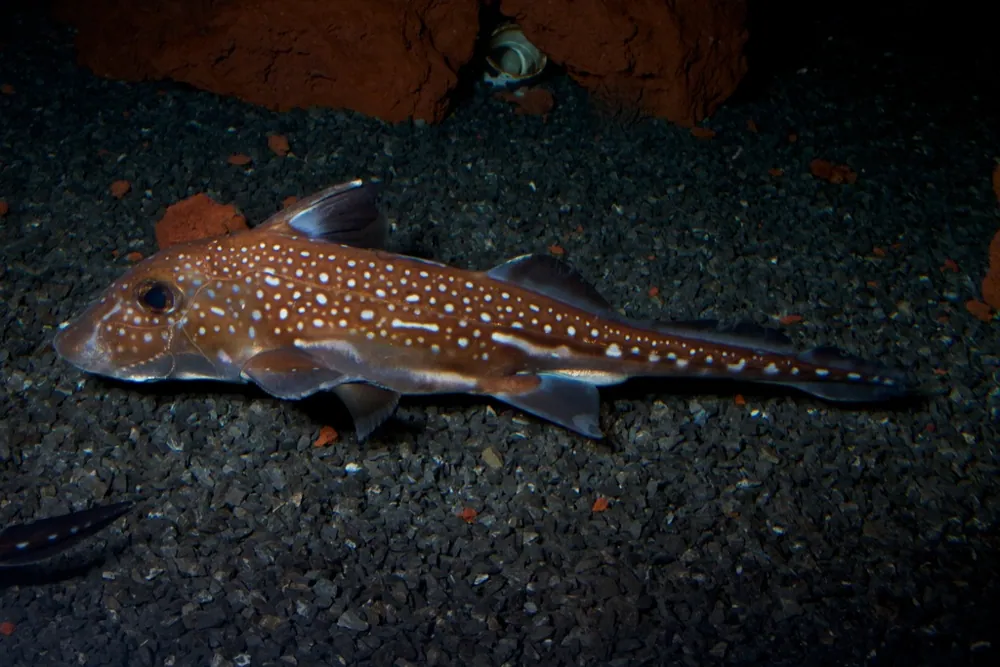
 ວິທີສັງເກດມັນ
- Smooth, scaleless skin that is silvery-bronze, often with gold, blue and green shine1
- Speckled white spots along the back1
- Large, triangular pectoral fins that stick straight out from the sides, like airplane wings1
- A pointed, rat-like tail that makes up almost half of its total length1
- Large emerald green eyes and a duckbill-shaped snout1
ພະລັງພິດ
ໜາມແຫຼມມີພິດ ການຢຽບ ຫຼື ຈັບມັນເຮັດໃຫ້ເຈັບ
ພິດທີ່ມັນປ່ອຍອອກມາເຮັດຫຍັງ?
The spine on the leading edge of its dorsal fin is grooved and connected to a venom gland at its base. The venom is mildly toxic. A sting from the spine causes a painful wound.1
ມັນອັນຕະລາຍຕໍ່ຄົນປານໃດ?
ອັນຕະລາຍຕໍ່ຄົນ: ເຈັບມັນເຈັບຫຼາຍແທ້, ແຕ່ເກືອບບໍ່ເຄີຍຮ້າຍແຮງIt does not present a serious danger to humans, but its spines can cause painful wounds. Harbor seals have been known to die after swallowing spotted ratfish, when a spine pierced the stomach or esophagus.1
ມັນເຮັດແນວໃດເວລາມັນຢ້ານ?
It usually keeps a safe distance from divers and is not aggressive, but it will defend its territory with the spine on its dorsal fin if it feels invaded.1
 ຖ້າໜາມຂອງມັນແທງເຈົ້າ
- ແຊ່ບາດແຜໃນນ້ຳຮ້ອນ, ຮ້ອນເທົ່າທີ່ຜູ້ປ່ວຍທົນໄດ້ໂດຍບໍ່ລວກຜິວ (ທົດສອບດ້ວຍມືຂອງເຈົ້າເອງ), ເປັນເວລາ 30 ຫາ 90 ນາທີ ໄປຫາໝໍ, ໂດຍສະເພາະສຳລັບປາຫີນ ແລະ ປາກະເບນ
ໂທຫາເບີສຸກເສີນກ່ອນສະເໝີ (112, 000, 911) ນີ້ແມ່ນຄຳແນະນຳການປະຖົມພະຍາບານທົ່ວໄປ, ບໍ່ແມ່ນຄຳແນະນຳທາງການແພດ ພື້ນຖານການປະຖົມພະຍາບານ
 ຢູ່ຢ່າງປອດໄພ
- ຢ່າຈັບ, ຢ່າຈັບເອົາ ຫຼື ຢ່າຫຍອກສັດປ່າເດັດຂາດ, ເຖິງແມ່ນມັນໂຕນ້ອຍ ແລະ ເຖິງແມ່ນມັນເບິ່ງຄືນອນຫຼັບ ຫຼື ຕາຍແລ້ວ
- ໃຫ້ພື້ນທີ່ມັນ ຖ້າເຈົ້າພົບມັນ, ໃຈເຢັນໄວ້, ຖອຍຫຼັງຊ້າໆ ແລະ ປ່ອຍໃຫ້ມັນໄປທາງຂອງມັນ
- ຖ້າໜາມຂອງມັນແທງເຈົ້າ: ໃຈເຢັນໄວ້, ຢູ່ນິ້ງໆ, ໂທຫາເບີສຸກເສີນ (112, 000, 911) ຫຼື ໄປໂຮງໝໍໃຫ້ໄວ ຈື່ໄວ້ວ່າມັນມີລັກສະນະແນວໃດ, ຮູບຖ່າຍຊ່ວຍໄດ້
ມັນບໍ່ໄດ້ຢາກທຳຮ້າຍເຈົ້າ ມັນໃຊ້ພິດເພື່ອຈັບອາຫານ ຫຼື ເພື່ອປ້ອງກັນຕົວ, ແລະ ມັນມັກລີ້ຫຼາຍກວ່າ ເພີ່ມເຕີມກ່ຽວກັບການຢູ່ຢ່າງປອດໄພ
ຢູ່ໃສໃນໂລກ?
ມັນໃຫຍ່ປານໃດ?
ມັນຍາວປານໃດ?
 ຍາວເທົ່າແມວບ້ານ 2 ໂຕຕໍ່ດັງຕໍ່ຫາງ
 ຍາວເທົ່າກ້ວຍ 5 ໜ່ວຍຕໍ່ກັນ
 ລອຍຕາມຄວາມຍາວຂອງສະລອຍນ້ຳໃຫຍ່ (50 ມ) ໄດ້ໃນ 12 ວິນາທີ
Spotted ratfish ໃຫຍ່ປານໃດ ເມື່ອທຽບກັບເຈົ້າ?
ພຽງແຕ່ຄິດໄລ່ໃນບຣາວເຊີຂອງເຈົ້າ ບໍ່ມີຫຍັງຖືກບັນທຶກ ຫຼື ສົ່ງໄປບ່ອນໃດ
ມັນໄວປານໃດ?

ຂໍ້ມູນ
Adult males have a club-like cephalic clasper on the head, an organ not found in any other vertebrate, which they use to hold on to females during courtship.1
Its large eyes reflect light, much like the eyes of a cat.1
It swims with its large pectoral fins, and its barrel rolls and corkscrew turns have been described as aquatic flight.1
Its teeth are plate-shaped, mineralised and permanent, unlike the easily replaced teeth of sharks, and they help it grind prey.1
Its ampullary organs on the head detect electric fields, and they are homologous to the ampullae of Lorenzini found in sharks and rays.1
Its meat is not typically eaten by humans and it is not commercially caught.1
ສຳລັບຜູ້ຊ່ຽວຊານດ້ານພິດ
- ຊື່ວິທະຍາສາດ
- Hydrolagus colliei
- ກຸ່ມ
- ປາທີ່ມີພິດ
- ຄອບຄົວ
- Chimaeridae2
- ອັນດັບ
- Chimaeriformes
- ທະວີບຕ່າງໆ
- ມະຫາສະໝຸດປາຊີຟິກ, ອ່າວແຄລິຟໍເນຍ, ມະຫາສະໝຸດ
- ລູກສັດ
- Like some sharks, it lays eggs; the female releases up to two fertilised eggs every 10–14 days in spring to autumn, and development can take up to a year.1
- ອັນຕະລາຍຕໍ່ຄົນ
- 2 / 5: ເຈັບ3
ຂໍ້ມູນມາຈາກໃສ
- Spotted ratfish (Wikipedia (CC BY-SA 4.0))
- Hydrolagus colliei (iNaturalist): ຊື່ ແລະ ການຈັດໝວດໝູ່
- Venom Wiki: ລະດັບອັນຕະລາຍ, ຂະໜາດທົ່ວໄປ ແລະ ຄວາມໄວທີ່ຄາດຄະເນ ແມ່ນຂອງພວກເຮົາເອງ ເບິ່ງວ່າພວກເຮົາຄິດໄລ່ແນວໃດ: ພວກເຮົາໃຫ້ຄະແນນອັນຕະລາຍແນວໃດ.
ທຸກຂໍ້ມູນໃນໜ້ານີ້ມີຕົວເລກທີ່ຊີ້ໄປຫາແຫຼ່ງທີ່ມາ ຖ້າພວກເຮົາຜິດພາດ, ຂໍໂທດເດີ້, ພວກເຮົາເປັນຄົນມັກສັດ ບໍ່ແມ່ນວາລະສານວິທະຍາສາດ ບອກພວກເຮົາທີ່ [email protected] ແລ້ວພວກເຮົາຈະແກ້ໄຂ
 ແມງເງົາຫິວແລ້ວ! Venom Wiki ເປັນໂຄງການຂອງຄົນຄົນດຽວ: ຟຣີ, ບໍ່ມີໂຄສະນາ ແລະ ບໍ່ມີຕົວຕິດຕາມ ທິບນ້ອຍໆຊ່ວຍໃຫ້ມັນຢູ່ອອນລາຍຕໍ່ໄປໄດ້ໃຫ້ອາຫານແມງເງົາ
ເພີ່ມເຕີມຈາກກຸ່ມດຽວກັນ: ປາທີ່ມີພິດ
 Reef stonefish
 Red lionfish
 Estuarine stonefish
 Short-tail stingray
 Striped eel catfish
 Bluespotted ribbontail ray
ຍັງອາໄສຢູ່ໃນ: ມະຫາສະໝຸດປາຊີຟິກ
 Australian box jellyfishແມງກະພຸນ ແລະ ສັດທະເລທີ່ຕອດໄດ້ເຖິງຕາຍຫ້າມຈັບ
 Geography coneຫອຍເຕົ້າປູນ ແລະ ປາມຶກເຖິງຕາຍ
 Greater blue-ringed octopusຫອຍເຕົ້າປູນ ແລະ ປາມຶກເຖິງຕາຍ
 Japanese pufferfishສັດມີພິດໃນຕົວອື່ນໆເຖິງຕາຍ
 Southern blue-ringed octopusຫອຍເຕົ້າປູນ ແລະ ປາມຶກເຖິງຕາຍ
 Hawksbill sea turtleສັດມີພິດໃນຕົວອື່ນໆເຖິງຕາຍໄດ້