
 Afrika
 Azija
Azija Europa
 Pietų Amerika
 Australija ir Okeanija
 Antarktida
 Ramusis vandenynas
 Atlanto vandenynas
 Indijos vandenynas
 Arkties vandenynas
 Viduržemio jūra
 Raudonoji jūra
 Karibų jūra
 Koralų jūra
 Pietų Kinijos jūra
 Filipinų jūra
 Andamanų jūra
 Šiaurės jūra
 Timoro ir Arafūros jūros
 Bengalijos įlanka
 Kalifornijos įlanka
Oak processionary
 Geliantys plaukeliai
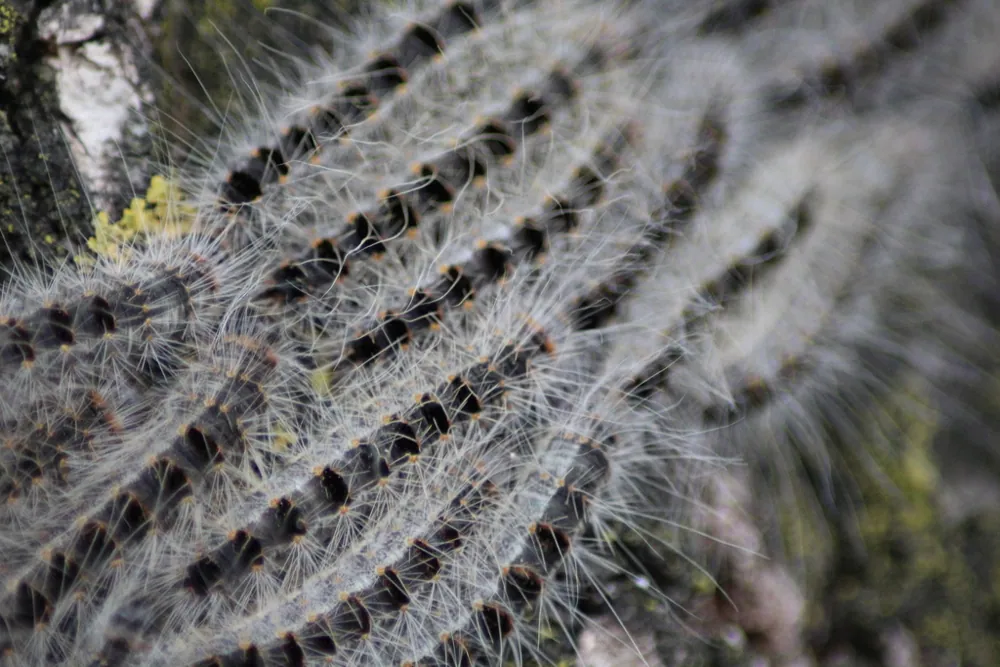
The oak processionary is a moth whose caterpillars feed on oak leaves and can strip trees bare. The caterpillars travel in long, nose-to-tail lines, which is how they got their name. Their fine, hair-like bristles can irritate skin and breathing, so they matter a lot to people.1

 Kaip jį atpažinti
- Adult moths have a wingspan of 25 to 35 mm and are tan, brown and white, which makes them hard to see against oak bark.1
- Caterpillars have very long, white hairs that contrast with shorter hairs.1
- Caterpillars march in lines, often arrow-shaped, with a leader and rows of several caterpillars side by side.1
- Nests are white and silk-like when new, and become discoloured and hard to see over time.1
- Nests can be round, teardrop-shaped, bag-like or blanket-like, and can be found at any height on an oak tree.1
Dažnai painiojamas su: Caterpillars of several other species may be mistaken for the oak processionary. Unlike other caterpillars, the oak processionary does not live on fences or walls, so it is mostly found in oak trees or on the ground beneath them in late spring and early summer.1
Nuodų galia
Mažyčiai plaukeliai ar šereliai nulūžta odoje ir gelia.
Ką daro jo nuodai?
The caterpillars' back bristles contain a urticating toxin called thaumetopoein, a protein that irritates the skin. Contact can cause a papular rash and itching, and the hairs can also cause eye inflammation (conjunctivitis). If the hairs are breathed in, they can cause sore throat (pharyngitis), breathing problems, asthma, or in rare cases anaphylaxis, a severe allergic reaction.1
Koks jis pavojingas žmonėms?
Pavojus žmonėms: SkausmingasGali labai skaudėti, bet beveik niekada nebūna rimta.The moths are an increasing nuisance to people as their range grows, and the hairs can cause a skin condition called epidemic caterpillar dermatitis. The hairs break off easily, float in the air, and can stay harmful for several seasons. Mowing a lawn can bring people into contact with them.1
 Gera žinia: gydytojai turi vaistų (priešnuodį) arba gydymą nuo to.1
Ką jis daro, kai išsigąsta?
The caterpillars defend themselves with thousands of pointed, easily broken bristles on their backs that float in the air and irritate the skin.1
 Jei paliesi jo plaukelius
- The skin irritation and itching can be largely relieved by cetirizine-based antihistamine tablets. Anyone with breathing problems or a severe reaction needs urgent medical help.1
- Geliantiems vikšrų plaukeliams: nuimk juos lipnia juostele, tada nuplauk odą. Netrink.
- Įkandus: nuplauk ir atvėsink. Kreipkis medicininės pagalbos, jei žmogus jaučiasi blogai ar lengvai kraujuoja.
Visada pirmiausia skambink pagalbos numeriu (112, 000, 911). Tai bendri pirmosios pagalbos patarimai, o ne medicininė konsultacija. Pirmosios pagalbos pagrindai
 Būk saugus
- Niekada neliesk, negaudyk ir neerzink laukinio gyvūno, net mažo, ir net jei jis atrodo miegantis ar negyvas.
- Palik jam vietos. Jei tokį sutiksi, išlik ramus, lėtai atsitrauk ir leisk jam eiti savo keliu.
- Jei palietei jo plaukelius: išlik ramus, nejudėk, skambink pagalbos numeriu (112, 000, 911) arba greitai vyk į ligoninę. Įsimink, kaip jis atrodė, nuotrauka padeda.
Jis nesiruošia tavęs medžioti. Nuodus jis naudoja maistui sugauti arba apsiginti ir daug mieliau pasislėptų. Daugiau apie saugumą
Koks jis didelis?
Koks jis ilgas?
 maždaug tokio ilgio kaip sąvaržėlė
 lėtesnis už sodo sraigę
Koks didelis Oak processionary, palyginti su TAVIMI?
Tik matematika tavo naršyklėje. Niekas neišsaugoma ir niekur nesiunčiama.
Koks jis greitas?

Faktai
Older caterpillars can have up to 63,000 pointed defensive bristles on their backs.1
In 2007, soldiers were deployed to burn infestations in the Belgian province of Limburg.1
The UK government spent £37 million trying to control the caterpillars, which had spread to all 33 London boroughs by 2019.1
In the Netherlands, great tits have been observed eating the young caterpillars before their hairs develop in April.1
In 2023, an outbreak in Ireland was successfully eradicated.1
Nuodų ekspertams
- Mokslinis pavadinimas
- Thaumetopoea processionea
- Grupė
- Vikšrai ir vabalai
- Šeima
- Notodontidae2
- Tvarka
- Lepidoptera
- Žemynai
- Europa
- Mažyliai
- Eggs hatch into caterpillars that build communal silk nests in oak trees, and the caterpillars later pupate into adult moths in these nests.1
- Pavojus žmonėms
- 2 / 5: Skausmingas3
Iš kur faktai
- Oak processionary (Wikipedia (CC BY-SA 4.0))
- Thaumetopoea processionea (iNaturalist): pavadinimai ir klasifikacija.
- Venom Wiki: pavojaus lygis, tipiškas dydis ir greičio spėjimas yra mūsų pačių. Pažiūrėk, kaip juos apskaičiuojame: Kaip vertiname pavojų.
Kiekvienas faktas šiame puslapyje turi numerį, rodantį į jo šaltinį. Jei kažką supainiojome, atsiprašome, mes gyvūnų gerbėjai, o ne mokslo žurnalas. Parašyk mums [email protected] ir mes ištaisysime.
 Skorpionas alkanas! Venom Wiki yra vieno žmogaus projektas: nemokamas, be reklamų ir be sekiklių. Maži arbatpinigiai padeda jam išlikti internete.Pamaitink skorpioną
Daugiau iš tos pačios grupės: Vikšrai ir vabalai
 Pine processionaryVikšrai ir vabalaiTik skaudaNeliesti
 Common bombardier beetleVikšrai ir vabalaiNekenksmingas
 Brown-tail mothVikšrai ir vabalaiTik skaudaNeliesti
 Masked hunterVikšrai ir vabalaiTik skauda
 Pine-tree lappetVikšrai ir vabalaiTik skaudaNeliesti
 Common backswimmerVikšrai ir vabalaiNekenksmingas
Taip pat gyvena: Europa
 Common European adderAngys ir jų giminaitėsReikia gydytojo
 Spanish flyKiti toksiški gyvūnaiReikia gydytojoNeliesti
 Common waspBitės, vapsvos ir širšėsTik skauda
 European hornetBitės, vapsvos ir širšėsTik skauda
 Fire salamanderToksiškos varlės, rupūžės ir tritonaiTik skaudaNeliesti
 Western honey beeBitės, vapsvos ir širšėsTik skauda