
 Afrika
 Azija
Azija Europa
 Pietų Amerika
 Australija ir Okeanija
 Antarktida
 Ramusis vandenynas
 Atlanto vandenynas
 Indijos vandenynas
 Arkties vandenynas
 Viduržemio jūra
 Raudonoji jūra
 Karibų jūra
 Koralų jūra
 Pietų Kinijos jūra
 Filipinų jūra
 Andamanų jūra
 Šiaurės jūra
 Timoro ir Arafūros jūros
 Bengalijos įlanka
 Kalifornijos įlanka
Pine processionary
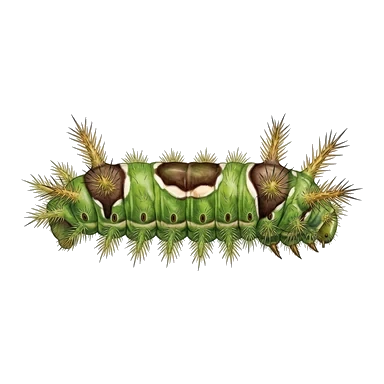 Geliantys plaukeliai
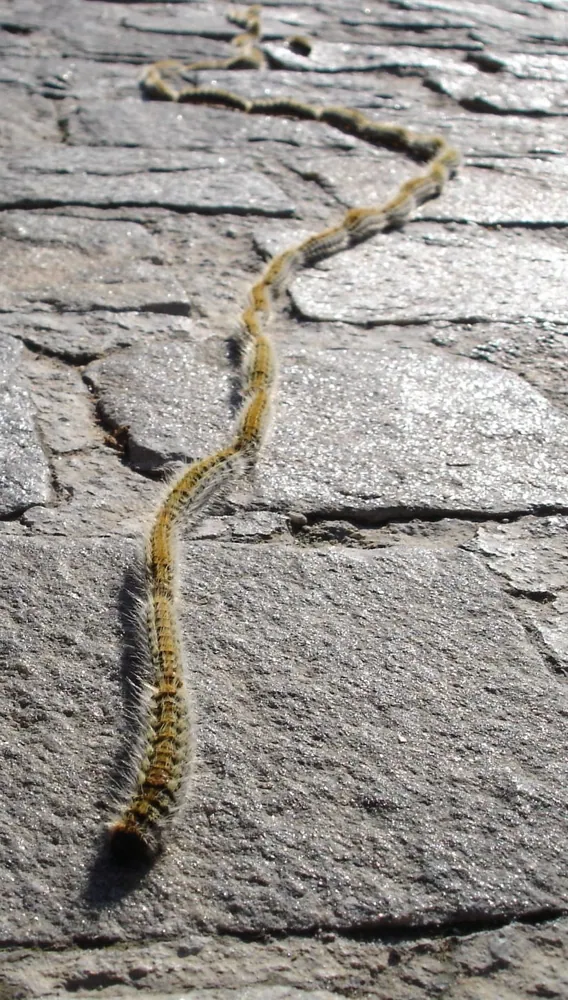
The pine processionary is a moth whose caterpillars are famous for marching in long, nose-to-tail lines through pine woods. Their hairs cause painful rashes and eye irritation, and they can strip the needles from whole trees. It lives around the Mediterranean and is spreading north.1
 Kaip jį atpažinti
- Caterpillars are orange-brown and hairy, with blue bands.1
- Large silken nests in pine trees, often with several in one tree and signs of stripped needles.1
- Caterpillars move in single-file processions, usually at night and when leaving the tree to pupate.1
- Adults have predominantly light brown forewings with brown markings and white hindwings.1
- Adult males have a crescent marking on the wings and are larger than the oak processionary.1
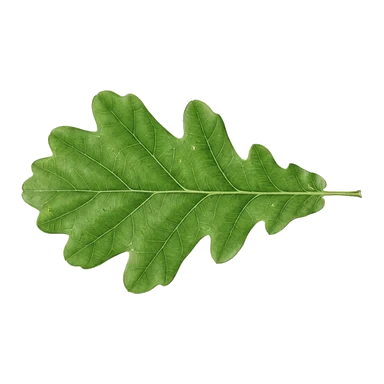
Dažnai painiojamas su: The oak processionary (Thaumetopoea processionea) is smaller as an adult, has an indistinct wing marking rather than a crescent, and lives in broad-leaved rather than coniferous forests. The pale eggar moth has no crescent marking on its wings.1
Nuodų galia
Mažyčiai plaukeliai ar šereliai nulūžta odoje ir gelia.
Ką daro jo nuodai?
The species is not venomous. Its caterpillars have hairs containing an irritant chemical called thaumetopoein, which causes skin rashes (urticaria) and eye irritation on contact. Some people may have an allergic reaction. The hairs of fifth-stage larvae can also break off and spread across nearby exposed skin.1
Koks jis pavojingas žmonėms?
Pavojus žmonėms: SkausmingasGali labai skaudėti, bet beveik niekada nebūna rimta.Simple contact with the caterpillar hairs can cause severe rashes and eye irritation in humans and other mammals. Some individuals may have an allergic reaction.1
Ką jis daro, kai išsigąsta?
When stressed or threatened, fifth-stage caterpillars eject harpoon-shaped hairs that irritate any exposed skin nearby.1
 Jei paliesi jo plaukelius
- Geliantiems vikšrų plaukeliams: nuimk juos lipnia juostele, tada nuplauk odą. Netrink.
- Įkandus: nuplauk ir atvėsink. Kreipkis medicininės pagalbos, jei žmogus jaučiasi blogai ar lengvai kraujuoja.
Visada pirmiausia skambink pagalbos numeriu (112, 000, 911). Tai bendri pirmosios pagalbos patarimai, o ne medicininė konsultacija. Pirmosios pagalbos pagrindai
 Būk saugus
- Niekada neliesk, negaudyk ir neerzink laukinio gyvūno, net mažo, ir net jei jis atrodo miegantis ar negyvas.
- Palik jam vietos. Jei tokį sutiksi, išlik ramus, lėtai atsitrauk ir leisk jam eiti savo keliu.
- Jei palietei jo plaukelius: išlik ramus, nejudėk, skambink pagalbos numeriu (112, 000, 911) arba greitai vyk į ligoninę. Įsimink, kaip jis atrodė, nuotrauka padeda.
Jis nesiruošia tavęs medžioti. Nuodus jis naudoja maistui sugauti arba apsiginti ir daug mieliau pasislėptų. Daugiau apie saugumą
Koks jis didelis?
Koks jis ilgas?
 maždaug tokio ilgio kaip sąvaržėlė
 lėtesnis už sodo sraigę
Koks didelis Pine processionary, palyginti su TAVIMI?
Tik matematika tavo naršyklėje. Niekas neišsaugoma ir niekur nesiunčiama.
Koks jis greitas?


Faktai
Caterpillars in a procession hold together through touch from the caterpillar in front, which takes priority over the trail pheromone or silk.1
The caterpillars are one of the few temperate-zone insects whose larvae develop through the winter, living in silk nests high in pine trees.1
Adults live for only a single day, during which they mate and lay eggs.1
The Greek physician Dioscorides described the itching caused by this caterpillar in the 1st century AD, and Pliny the Elder recorded a treatment for it.1
Outbreaks are somewhat cyclical, with a period of 7 to 9 years.1
Mitų griovėjas
Mitas: Fabre's caterpillars marched in a circle around a flower pot only because they were trapped on its rim.
Tiesa: Young caterpillars' circular trails continue for as long as 12 hours even when they are free on a flat surface.1
Nuodų ekspertams
- Mokslinis pavadinimas
- Thaumetopoea pityocampa
- Grupė
- Vikšrai ir vabalai
- Šeima
- Notodontidae2
- Tvarka
- Lepidoptera
- Žemynai
- Europa, Afrika, Azija
- Mažyliai
- Each female lays an enormous number of eggs near the tops of pine trees, in cylindrical egg masses 4 to 5 cm long covered with scales that mimic pine shoots.1
- Pavojus žmonėms
- 2 / 5: Skausmingas3
Iš kur faktai
- Pine processionary (Wikipedia (CC BY-SA 4.0))
- Thaumetopoea pityocampa (iNaturalist): pavadinimai ir klasifikacija.
- Venom Wiki: pavojaus lygis, tipiškas dydis ir greičio spėjimas yra mūsų pačių. Pažiūrėk, kaip juos apskaičiuojame: Kaip vertiname pavojų.
Kiekvienas faktas šiame puslapyje turi numerį, rodantį į jo šaltinį. Jei kažką supainiojome, atsiprašome, mes gyvūnų gerbėjai, o ne mokslo žurnalas. Parašyk mums [email protected] ir mes ištaisysime.
 Skorpionas alkanas! Venom Wiki yra vieno žmogaus projektas: nemokamas, be reklamų ir be sekiklių. Maži arbatpinigiai padeda jam išlikti internete.Pamaitink skorpioną
Daugiau iš tos pačios grupės: Vikšrai ir vabalai
 Oak processionaryVikšrai ir vabalaiTik skaudaNeliesti
 White-spotted assassin bugVikšrai ir vabalaiTik skauda
 Common bombardier beetleVikšrai ir vabalaiNekenksmingas
 Asian giant water bugVikšrai ir vabalaiTik skauda
 Blue-striped nettle grubVikšrai ir vabalaiTik skaudaNeliesti
 Brown-tail mothVikšrai ir vabalaiTik skaudaNeliesti
Taip pat gyvena: Europa
 Common European adderAngys ir jų giminaitėsReikia gydytojo
 Spanish flyKiti toksiški gyvūnaiReikia gydytojoNeliesti
 Common waspBitės, vapsvos ir širšėsTik skauda
 European hornetBitės, vapsvos ir širšėsTik skauda
 Fire salamanderToksiškos varlės, rupūžės ir tritonaiTik skaudaNeliesti
 Western honey beeBitės, vapsvos ir širšėsTik skauda