
 Āfrika
 Āzija
Āzija Eiropa
 Dienvidamerika
 Austrālija un Okeānija
 Antarktīda
 Klusais okeāns
 Atlantijas okeāns
 Indijas okeāns
 Ziemeļu Ledus okeāns
 Vidusjūra
 Sarkanā jūra
 Karību jūra
 Koraļļu jūra
 Dienvidķīnas jūra
 Filipīnu jūra
 Andamanu jūra
 Ziemeļjūra
 Timoras jūra un Arafuras jūra
 Bengālijas līcis
 Kalifornijas līcis
Dugite
 Kodumi
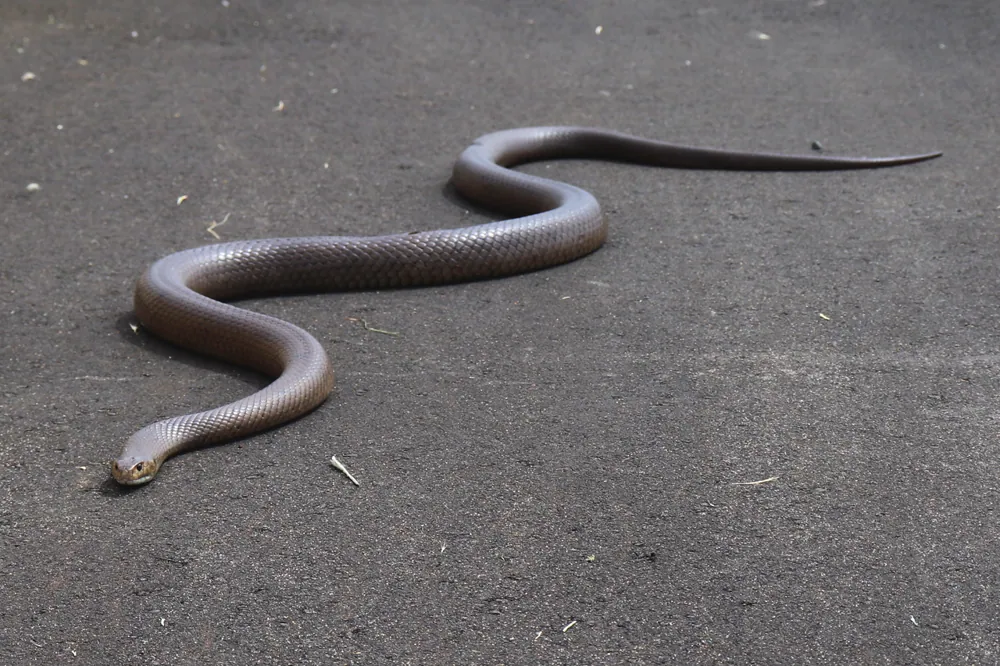
The dugite is a highly venomous snake found in southern Western Australia and in remote coastal parts of western South Australia. Its venom is potentially one of the most lethal in the world, so it is a snake to treat with great respect. It is common in and around Perth, where it often shelters near buildings.1



 Kā to atpazīt
- Coloured grey, green or brown, but the colours vary widely between individuals, so colour alone is not a reliable guide.1
- Black scales may be scattered over the body.1
- Relatively large scales with a semi-glossy look.1
- The head is rather small and not clearly separate from the neck.1
- Long and slender body, typically about 1.5 metres in total length.1
Indes spēks
Inde iznāk caur ilkņiem vai zobiem, kad tas iekož.
Ko nodara tā inde?
The venom has coagulopathic and procoagulant effects, meaning it disturbs the way blood clots. It is potentially one of the most lethal venoms in the world. In a 2011 case, a boy bitten by a dugite was temporarily paralysed, showing that the venom can affect the nerves and muscles as well as the blood.1
Cik bīstams tas ir cilvēkiem?
Bīstamība cilvēkiem: Ļoti bīstamsTas var nogalināt cilvēku, kurš nesaņem ārstēšanu.Dugites are potentially lethal. They generally avoid biting people, but the risk of encounters rises during the mating season in October and November. The last recorded human death attributed to a dugite was in August 2015 in South Fremantle. In 2011 a seven-year-old boy was bitten and temporarily paralysed, and he made a full recovery.1
 Labas ziņas: ārstiem pret šo ir zāles (pretinde) vai ārstēšana.1
Ko tas dara, kad ir nobijies?
When disturbed they are very shy and often slither away, but they will defend themselves if cornered.1
 Ja tas iekož
- Prompt medical attention is essential after a bite. In a December 2020 case, a three-year-old girl bitten by a snake believed to be a dugite was quickly immobilised by her grandmother, who wrapped her legs in pressure bandages. She was treated with antivenom in hospital and made a full recovery.1
- Spiedošā imobilizācija: aptin stingru elastīgo saiti ap koduma vietu un tad augšup pa visu ekstremitāti, fiksē to ar šinu un turi cilvēku pilnīgi nekustīgu, līdz ierodas palīdzība.
- Nemazgā kodumu: slimnīcā var pārbaudīt uz ādas palikušo indi, lai izvēlētos pareizo pretindi.
Vienmēr vispirms zvani uz savu ārkārtas numuru (112, 000, 911). Tie ir vispārīgi pirmās palīdzības padomi, nevis medicīniska konsultācija. Pirmās palīdzības pamati
 Esi drošībā
- Nekad neaiztiec, neķer un neķircini savvaļas dzīvnieku, pat mazu, un pat ja tas izskatās aizmidzis vai miris.
- Dod tam vietu. Ja tādu satiec, saglabā mieru, lēnām atkāpies un ļauj tam iet savu ceļu.
- Ja tāds tev iekož: saglabā mieru, nekusties, zvani uz savu ārkārtas numuru (112, 000, 911) vai ātri dodies uz slimnīcu. Atceries, kā tas izskatījās, foto palīdz.
Tas nav nolēmis tevi medīt. Tas izmanto indi, lai noķertu barību vai aizsargātos, un daudz labprātāk paslēptos. Vairāk par drošību
Cik tas ir liels?
Cik tas ir garš?
 tikpat garš kā 4 mājas kaķi no deguna līdz astei
 tikpat garš kā 11 banāni rindā viens aiz otra
 varētu noskriet 100 metrus 46 sekundēs (ātrākajam cilvēkam vajag 9,6)
Cik liels ir Dugite salīdzinājumā ar TEVI?
Tikai matemātika tavā pārlūkā. Nekas netiek saglabāts vai kaut kur nosūtīts.
Cik tas ir ātrs?


Fakti
Its venom is potentially one of the most lethal in the world.1
Dugites have become more common because of the house mouse, which is one of their main foods.1
Dugites can lay two clutches of eggs in the same season when conditions are good.1
The Irish activist John Boyle O'Reilly wrote a poem called The Dukite Snake, published in his 1878 collection Songs, Legends and Ballads, based on a bushman's myth.1
In winter, dugites burrow.1
Mītu grāvējs
Mīts: Dugites are aggressive and will chase people.
Patiesība: Dugites are very shy and usually slither away when disturbed. They generally avoid biting people, but they will defend themselves if cornered.1
Indes ekspertiem
- Zinātniskais nosaukums
- Pseudonaja affinis
- Grupa
- Austrālijas čūskas
- Ģimene
- Elapidae2
- Secība
- Squamata
- Kontinenti
- Austrālija un Okeānija
- Mazuļi
- Dugites lay eggs, typically around 30 at a time, and leave them to hatch on their own after about 65 days. Under good conditions, they can lay two clutches in one season.1
- Bīstamība cilvēkiem
- 4 / 5: Ļoti bīstams3
No kurienes nāk fakti
- Dugite (Wikipedia (CC BY-SA 4.0))
- Pseudonaja affinis (iNaturalist): nosaukumi un klasifikācija.
- Venom Wiki: bīstamības līmenis, tipiskais izmērs un ātruma minējums ir mūsu pašu. Paskaties, kā mēs tos aprēķinām: Kā mēs vērtējam bīstamību.
Katram faktam šajā lapā ir numurs, kas norāda uz tā avotu. Ja mēs kaut ko esam sajaukuši, piedod, mēs esam dzīvnieku fani, nevis zinātnisks žurnāls. Uzraksti mums uz [email protected], un mēs to izlabosim.
 Skorpions ir izsalcis! Venom Wiki ir viena cilvēka projekts: bezmaksas, bez reklāmām un bez izsekotājiem. Neliels ziedojums palīdz to uzturēt tiešsaistē.Pabaro skorpionu
Vairāk no tās pašas grupas: Austrālijas čūskas
 Coastal taipan
 Common death adder
 Eastern brown snake
 Iekšzemes taipans
 Tīģerčūska
 Collett's snake
.png)
Dzīvo arī: Austrālija un Okeānija
 Sydney funnel-web spiderTarantulas un piltuvtīklu zirnekļiNāvējošs
 Redback spiderZirnekļiVajag ārstu
 Brown tree snakeMugurzobu čūskasTikai sāp
 Hooded pitohuiCiti toksiski dzīvniekiTikai sāpNeaiztikt
 PlatypusIndīgie zīdītājiTikai sāp
 Northern tree-dwelling funnel-web spiderTarantulas un piltuvtīklu zirnekļiNāvējošs