
 Āfrika
 Āzija
Āzija Eiropa
 Dienvidamerika
 Austrālija un Okeānija
 Antarktīda
 Klusais okeāns
 Atlantijas okeāns
 Indijas okeāns
 Ziemeļu Ledus okeāns
 Vidusjūra
 Sarkanā jūra
 Karību jūra
 Koraļļu jūra
 Dienvidķīnas jūra
 Filipīnu jūra
 Andamanu jūra
 Ziemeļjūra
 Timoras jūra un Arafuras jūra
 Bengālijas līcis
 Kalifornijas līcis
Masked hunter
 Kodumi
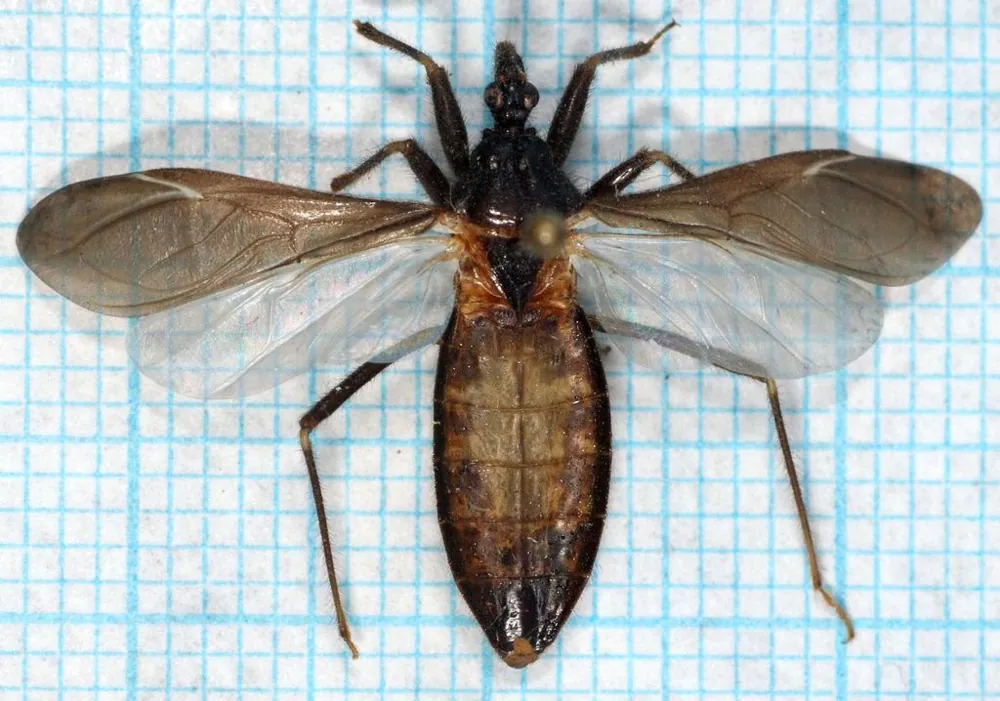
The masked hunter is a dark brown to black insect from the assassin bug family. It hunts small creatures such as bed bugs, woodlice and termites, and it is often found in homes. Its nymphs hide by covering their bodies with dust and debris.1

 Kā to atpazīt
- Adults are uniformly dark brown to black and measure 17–22 mm in length.1
- The head is elongated, with a short, three-segmented beak and long, slender antennae.1
- The abdomen is wide and extends beyond the wings in the middle, showing the edges of its abdominal segments.1
- Nymphs look like small adults but are often grey or light-coloured, because a sticky body coat collects dust, lint and small particles.1
Bieži jauc ar: Masked hunters are sometimes mistaken for the kissing bug. Unlike the kissing bug, masked hunters do not carry Chagas disease.1
Indes spēks
Inde iznāk caur ilkņiem vai zobiem, kad tas iekož.
Cik bīstams tas ir cilvēkiem?
Bīstamība cilvēkiem: SāpīgsTas var ļoti sāpēt, bet gandrīz nekad nav nopietni.A handled or trapped masked hunter can deliver a rostral stab, which is painful and comparable to a bee's sting. The swelling can last for about a week. They do not feed on human blood.1
Ko tas dara, kad ir nobijies?
When handled or trapped, it defends itself by delivering a stab with its beak.1
 Ja tas iekož
- Dzeļošu kāpuru matiņiem: noņem tos ar līmlenti, tad nomazgā ādu. Neberzē.
- Kodumiem: nomazgā un atvēsini. Meklē medicīnisko palīdzību, ja cilvēks jūtas slikti vai viegli asiņo.
Vienmēr vispirms zvani uz savu ārkārtas numuru (112, 000, 911). Tie ir vispārīgi pirmās palīdzības padomi, nevis medicīniska konsultācija. Pirmās palīdzības pamati
 Esi drošībā
- Nekad neaiztiec, neķer un neķircini savvaļas dzīvnieku, pat mazu, un pat ja tas izskatās aizmidzis vai miris.
- Dod tam vietu. Ja tādu satiec, saglabā mieru, lēnām atkāpies un ļauj tam iet savu ceļu.
- Ja tāds tev iekož: saglabā mieru, nekusties, zvani uz savu ārkārtas numuru (112, 000, 911) vai ātri dodies uz slimnīcu. Atceries, kā tas izskatījās, foto palīdz.
Tas nav nolēmis tevi medīt. Tas izmanto indi, lai noķertu barību vai aizsargātos, un daudz labprātāk paslēptos. Vairāk par drošību
Cik tas ir liels?
Cik tas ir garš?
 apmēram tikpat garš kā saspraude
Cik liels ir Masked hunter salīdzinājumā ar TEVI?
Tikai matemātika tavā pārlūkā. Nekas netiek saglabāts vai kaut kur nosūtīts.
Cik tas ir ātrs?


Fakti
Nymphs build two layers of camouflage on their bodies, an inner layer of fine particles and an outer layer of coarser ones, using their hind legs and a tarsal fan.1
Their sticky body coat catches dust, lint and other small particles, which hides them from both predators and prey.1
Because they hunt bed bugs, a masked hunter in the home can be a sign of a bed bug problem, and controlling the bed bugs usually deals with the hunters too.1
Masked hunters were probably introduced to North America by accident in the late 1800s to early 1900s. They were first found in Canada in 1905 and in the United States in 1917.1
Mītu grāvējs
Mīts: Masked hunters are kissing bugs and carry Chagas disease.
Patiesība: Masked hunters are sometimes mistaken for kissing bugs, but they do not carry Chagas disease. Their stab is painful, but it does not spread that disease.1
No kurienes nāk fakti
- Reduvius personatus (Wikipedia (CC BY-SA 4.0))
- Reduvius personatus (iNaturalist): nosaukumi un klasifikācija.
- Venom Wiki: bīstamības līmenis, tipiskais izmērs un ātruma minējums ir mūsu pašu. Paskaties, kā mēs tos aprēķinām: Kā mēs vērtējam bīstamību.
Katram faktam šajā lapā ir numurs, kas norāda uz tā avotu. Ja mēs kaut ko esam sajaukuši, piedod, mēs esam dzīvnieku fani, nevis zinātnisks žurnāls. Uzraksti mums uz [email protected], un mēs to izlabosim.
 Skorpions ir izsalcis! Venom Wiki ir viena cilvēka projekts: bezmaksas, bez reklāmām un bez izsekotājiem. Neliels ziedojums palīdz to uzturēt tiešsaistē.Pabaro skorpionu
Vairāk no tās pašas grupas: Kāpuri un kukaiņi
 Oak processionaryKāpuri un kukaiņiTikai sāpNeaiztikt
 Pine processionaryKāpuri un kukaiņiTikai sāpNeaiztikt
 Common bombardier beetleKāpuri un kukaiņiNekaitīgs
 Asian giant water bugKāpuri un kukaiņiTikai sāp
 Blue-striped nettle grubKāpuri un kukaiņiTikai sāpNeaiztikt
 Brown-tail mothKāpuri un kukaiņiTikai sāpNeaiztikt
Dzīvo arī: Eiropa
 Common European adderOdzes un vīperasVajag ārstu
 Spanish flyCiti toksiski dzīvniekiVajag ārstuNeaiztikt
 Common waspBites, lapsenes un sirseņiTikai sāp
 European hornetBites, lapsenes un sirseņiTikai sāp
 Fire salamanderIndesvardes, krupji un tritoniTikai sāpNeaiztikt
 Western honey beeBites, lapsenes un sirseņiTikai sāp