
 आफ्रिका
 आशिया
आशिया युरोप
युरोप दक्षिण अमेरिका
 ऑस्ट्रेलिया आणि ओशनिया
 अंटार्क्टिका
 प्रशांत महासागर
 अटलांटिक महासागर
 हिंदी महासागर
 आर्क्टिक महासागर
 भूमध्य समुद्र
 तांबडा समुद्र
 कॅरिबियन समुद्र
 कोरल समुद्र
 दक्षिण चीन समुद्र
 फिलिपीन समुद्र
 अंदमान समुद्र
 उत्तर समुद्र
 तिमोर आणि अराफुरा समुद्र
 बंगालचा उपसागर
 कॅलिफोर्नियाचे आखात
Blue blubber jellyfish
 डंख मारणारे तंतू
The blue blubber jellyfish is a large, rounded jellyfish that lives along the coast of Eastern Australia. It is blue to purple and pulses slowly as it swims. Its arms carry stings, and it can form huge blooms in estuaries and shallow bays.1


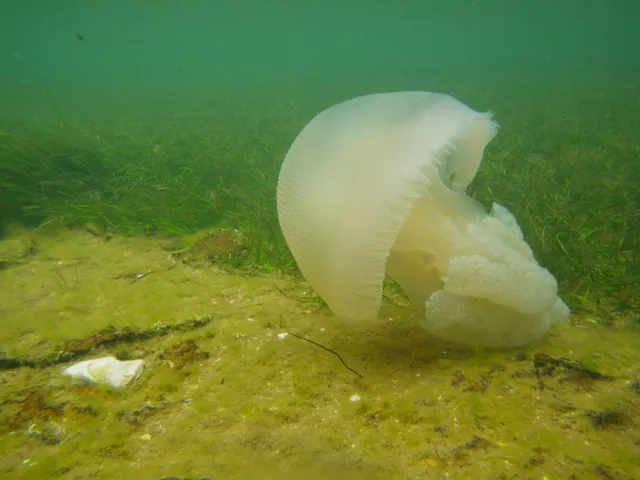
 त्याला कसं ओळखायचं
- Colour ranges from light blue to dark blue or purple.1
- Large, rounded bell, about 25 to 30 cm across.1
- The bell pulses in a rapid, staccato rhythm.1
- Found along the Eastern Australian coast, often in large numbers.1
अनेकदा याच्याशी गल्लत होते: Two forms are recognised on the Eastern Australian coast. Catostylus mosaicus mosaicus, found in New South Wales and southern Queensland, has small or no papillae (small projections) and a larger bell. Catostylus mosaicus conservitus, found in the Bass Strait, has clear papillae, is blue or white, and has a smaller bell.1
विषाची ताकद
कशाचाही स्पर्श होताच हजारो इवल्याशा डंख मारणाऱ्या पेशी सुटतात.
त्याच्या दंशातलं विष काय करतं?
Its arms carry stinging cells and can produce a mild but irritating sting. The sting is described as mild, and no further effects on the body are described.1
तो माणसांसाठी किती धोकादायक आहे?
माणसांना धोका: वेदनादायकखूप दुखू शकतं, पण जवळजवळ कधीच गंभीर नसतं.Its sting is described as mild but irritating. The main problem is the large blooms, which can interrupt recreation in coastal areas.1
घाबरल्यावर तो काय करतो?
Its stinging cells on the arms are used to defend it from threats.1
 जर त्याने डंख मारला तर
- पाण्याबाहेर ये आणि चिकटलेले सगळे तंतू (टेंटॅकल्स) काढून टाक (हातमोजे किंवा कापड वापरून).
- उष्ण कटिबंधातील बॉक्स जेलीफिशसाठी: डंखांवर किमान 30 सेकंद व्हिनेगर ओत, मदतीसाठी हाक मार आणि CPR द्यायला तयार राहा. ब्लूबॉटल आणि इतर बहुतेकांसाठी: समुद्राच्या पाण्याने धू, मग वेदनेसाठी गरम पाणी वापर.
नेहमी आधी तुझा आपत्कालीन क्रमांक (112, 000, 911) लाव. ही प्रथमोपचाराची सर्वसाधारण माहिती आहे, वैद्यकीय सल्ला नाही. प्रथमोपचाराच्या मूलभूत गोष्टी
 सुरक्षित राहा
- जंगली प्राण्याला कधीही हात लावू नकोस, पकडू नकोस किंवा छेडू नकोस, अगदी लहान असला तरी, आणि झोपलेला किंवा मेलेला दिसत असला तरी.
- त्याला जागा दे. तो समोर आला तर शांत राहा, हळूहळू मागे हो आणि त्याला त्याच्या वाटेने जाऊ दे.
- जर एखाद्याने तुला डंख मारला: शांत राहा, हालचाल करू नकोस, तुझा आपत्कालीन क्रमांक (112, 000, 911) लाव किंवा पटकन रुग्णालयात पोहोच. तो कसा दिसत होता ते लक्षात ठेव, फोटो उपयोगी पडतो.
तो तुझ्या मागे लागलेला नाही. तो विषाचा वापर अन्न पकडण्यासाठी किंवा स्वतःच्या बचावासाठी करतो, आणि त्याला लपून राहणंच जास्त आवडतं. सुरक्षित राहण्याबद्दल आणखी
जगात कुठे?
तो किती मोठा आहे?
तो किती लांब आहे?
 रांगेत ठेवलेल्या 9 खेळण्यातल्या ठोकळ्यांइतका लांब
Blue blubber jellyfish तुझ्या तुलनेत किती मोठा आहे?
तुझ्या ब्राउझरमधलं फक्त गणित. काहीही सेव्ह होत नाही किंवा कुठेही पाठवलं जात नाही.
तो किती वेगवान आहे?


माहिती
Its stinging venom is being studied for possible anticancer effects against lung cancer cells in laboratory research.1
It is harvested for food and is considered a delicacy in some countries, including China and Japan.1
A small copepod lives on its oral arms and is thought to feed on mucus the jellyfish produces.1
Blooms can be very dense, and they can take food away from other animals such as fish.1
Sea turtles and jellyfish-eating fish, including tuna, butterfish, sunfish and spiny dogfish, prey on it.1
It has a partnership with photosynthetic algae, though it has less of these algae than many other jellyfish.1
विषतज्ज्ञांसाठी
- शास्त्रीय नाव
- Catostylus mosaicus
- गट
- जेलीफिश आणि डंख मारणारे समुद्री जीव
- कुटुंब
- Catostylidae2
- क्रम
- Rhizostomeae
- खंड
- हिंदी महासागर, प्रशांत महासागर, कोरल समुद्र, महासागर
- पिल्लं
- Fertilised eggs develop into free-swimming planula larvae, which settle on the seabed and grow into a polyp stage. The polyp then produces young jellyfish (ephyrae), which mature into the free-swimming medusa.1
- माणसांना धोका
- 2 / 5: वेदनादायक3
माहिती कुठून येते
- Jelly blubber (Wikipedia (CC BY-SA 4.0))
- Catostylus mosaicus (iNaturalist): नावे आणि वर्गीकरण.
- Venom Wiki: धोक्याची पातळी, सामान्य आकार आणि वेगाचा अंदाज हे आमचे स्वतःचे आहेत. आम्ही ते कसे ठरवतो ते बघ: आम्ही धोका कसा ठरवतो.
या पानावरच्या प्रत्येक माहितीसोबत एक क्रमांक आहे जो तिच्या स्रोताकडे निर्देश करतो. आमचं काही चुकलं असेल तर माफ कर, आम्ही प्राणीप्रेमी आहोत, विज्ञान नियतकालिक नाही. आम्हाला [email protected] वर कळव, आम्ही दुरुस्त करू.
 विंचवाला भूक लागली आहे! Venom Wiki हा एका माणसाचा प्रकल्प आहे: मोफत, जाहिराती नाहीत आणि ट्रॅकर नाहीत. एक छोटीशी टिप तो ऑनलाइन ठेवायला मदत करते.विंचवाला खायला दे
याच गटातले आणखी: जेलीफिश आणि डंख मारणारे समुद्री जीव
 Australian box jellyfishजेलीफिश आणि डंख मारणारे समुद्री जीवप्राणघातकहात लावू नकोस
 Irukandji jellyfishजेलीफिश आणि डंख मारणारे समुद्री जीवजीव घेऊ शकतोहात लावू नकोस
 Portuguese man o' warजेलीफिश आणि डंख मारणारे समुद्री जीवडॉक्टरची गरजहात लावू नकोस
 Lion's mane jellyfishजेलीफिश आणि डंख मारणारे समुद्री जीवफक्त दुखतंहात लावू नकोस
 Moon jellyfishजेलीफिश आणि डंख मारणारे समुद्री जीवनिरुपद्रवी
 Common kingslayerजेलीफिश आणि डंख मारणारे समुद्री जीवजीव घेऊ शकतोहात लावू नकोस
इथेही राहतो: हिंदी महासागर
 Geography coneकोन शंख आणि ऑक्टोपसप्राणघातक
 Greater blue-ringed octopusकोन शंख आणि ऑक्टोपसप्राणघातक
 Southern blue-ringed octopusकोन शंख आणि ऑक्टोपसप्राणघातक
 Hawksbill sea turtleइतर विषयुक्त प्राणीजीव घेऊ शकतो
 Reef stonefishविषारी मासेजीव घेऊ शकतोहात लावू नकोस
 Crown-of-thorns starfishसमुद्री अर्चिन, तारामासे आणि वर्मडॉक्टरची गरजहात लावू नकोस