
 Afrika
 Asia
Asia Eropah
 Amerika Selatan
 Australia & Oceania
 Antartika
 Lautan Pasifik
 Lautan Atlantik
 Lautan Hindi
 Lautan Artik
 Laut Mediterranean
 Laut Merah
 Laut Caribbean
 Laut Karang
 Laut China Selatan
 Laut Filipina
 Laut Andaman
 Laut Utara
 Laut Timor & Laut Arafura
 Teluk Benggala
 Teluk California
Common lancehead
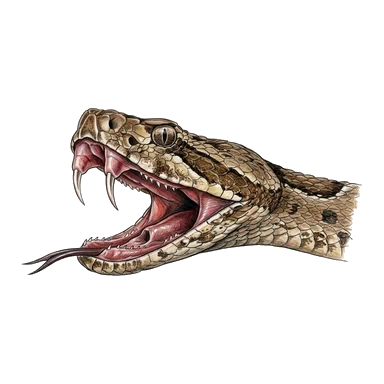 Gigitan
The common lancehead is a highly venomous pit viper that lives in the tropical lowlands of northern South America and on the Caribbean island of Trinidad. It is one of the most common pit vipers in its range and is not endangered. Its venom disrupts blood clotting, which makes its bite especially serious.1
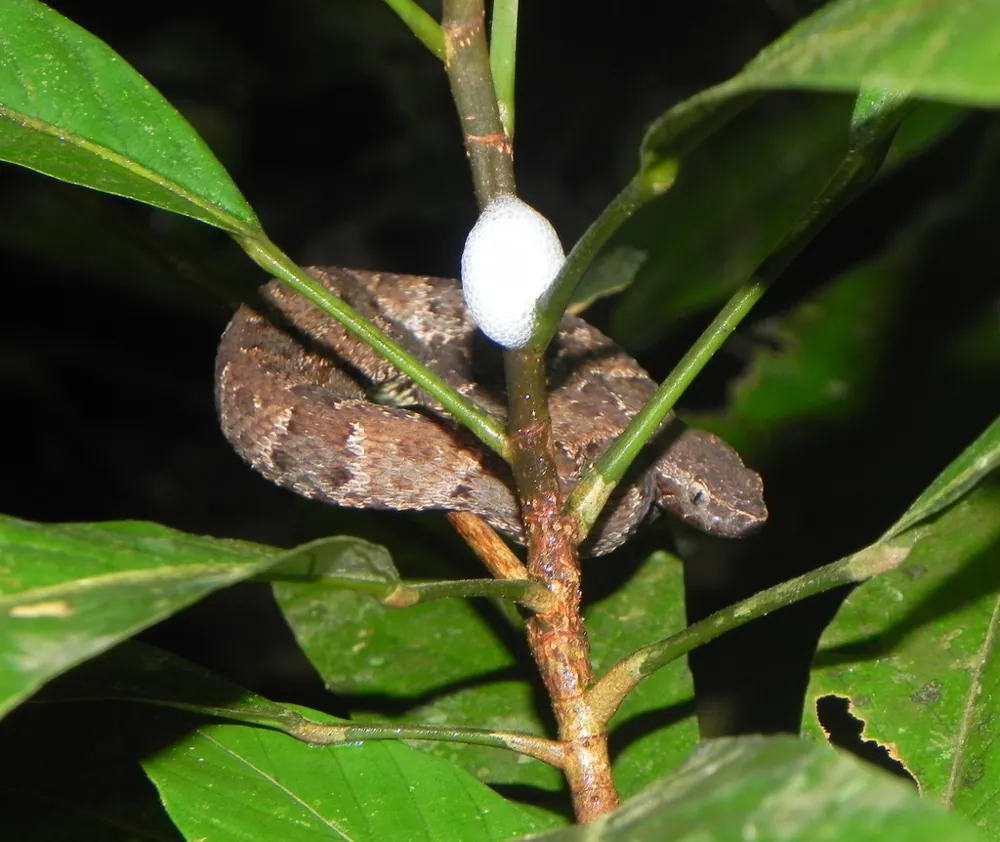
 Cara mengenalinya
- Ground colour is olive, brown, tan, grey or yellow, and rarely rusty.1
- The body pattern is a series of blotches that often fuse into bands. The markings are X-like, which is why some local names refer to the letter X.1
- The chin is pale yellow, and a dark stripe runs from behind the eye to the corner of the mouth.1
- The irises are gold or bronze, and the tongue is black.1
- Adults usually measure 75 to 125 cm in total length and are moderately heavy-bodied.1
Sering dikelirukan dengan: It is often confused with Bothrops asper, which was once included in this species. Most authorities now consider B. asper to be a separate species. This confusion also makes reports of its maximum size unclear.1
Kuasa bisa
Bisa keluar melalui taring atau giginya apabila ia menggigit.
Apa kesan bisanya?
Its venom is haemorrhagic, meaning it damages the lining of blood vessels and uses up the substances that allow blood to clot. Symptoms can include severe bleeding, kidney failure, abnormal clotting, blisters and necrosis (death of body tissue). Bleeding in the brain can also occur. Recovery from the clotting problem has been seen 14 to 30 hours after a bite.1
Berapa bahaya ia kepada manusia?
Bahaya kepada manusia: Membawa mautAntara haiwan paling berbahaya di dunia.The bite is serious and can be fatal. Plantation workers are often bitten. Juvenile snakes have more lethal venom that kills more quickly, and people bitten by young snakes are more likely to develop the clotting problem. In a case reported in the Brazilian Amazon, the patient died of a stroke even after antivenom was given. A Mexican polyvalent antivenom tested against it had no effect on the clotting problem.1
Apa yang ia buat apabila takut?
It is easily agitated, and it can lie camouflaged for hours, nearly undetectable, then strike at high speed.1
 Jika ia menggigit
- Pastikan orang itu tidak bergerak dan tenang, letakkan anggota yang digigit pada paras jantung, tanggalkan cincin dan barang yang ketat, dan pergi ke hospital dengan segera.
Sentiasa hubungi nombor kecemasan dahulu (112, 000, 911). Ini panduan pertolongan cemas umum, bukan nasihat perubatan. Asas pertolongan cemas
 Kekal selamat
- Jangan sesekali sentuh, tangkap atau usik haiwan liar, walaupun yang kecil, dan walaupun ia nampak tidur atau mati.
- Beri ia ruang. Jika kamu terjumpa, bertenang, undur perlahan-lahan dan biarkan ia pergi.
- Jika ia menggigit kamu: bertenang, jangan bergerak, hubungi nombor kecemasan (112, 000, 911) atau pergi ke hospital dengan segera. Ingat rupanya, gambar boleh membantu.
Ia bukan mahu memburu kamu. Ia guna bisanya untuk menangkap makanan atau melindungi diri, dan ia lebih suka bersembunyi. Lagi tentang keselamatan
Di mana di dunia?
Berapa besar ia?
Berapa panjang ia?
 sepanjang 3 ekor kucing rumah dari hidung ke ekor
 sepanjang 9 biji pisang disusun hujung ke hujung
 boleh melepasi 100 meter dalam 92 saat (manusia paling laju perlukan 9.6)
Berapa besar Common lancehead berbanding KAMU?
Hanya matematik dalam pelayar kamu. Tiada apa yang disimpan atau dihantar ke mana-mana.
Berapa laju ia?


Fakta
An enzyme called reptilase, or batroxobin, is taken from its venom and used in modern medical laboratories to measure fibrinogen levels and blood clotting. The enzyme is not affected by heparin.1
Although it is mostly terrestrial, it is an excellent swimmer and will climb trees when needed to reach prey.1
Females with developing embryos move in and out of sunlight to keep themselves and the embryos at a constant temperature.1
Venom yield averages 124 milligrams, but can reach 342 milligrams.1
Despite the large-scale destruction of rainforests, it is among the most numerous and common of pit vipers.1
Untuk pakar bisa
- Nama saintifik
- Bothrops atrox
- Kumpulan
- Ular kapak
- Keluarga
- Viperidae2
- Susunan
- Squamata
- Benua-benua
- Amerika Selatan
- Anak
- It gives birth to live young, up to 80 at once, with an average of about 60 per litter in equatorial regions after a gestation of three to four months.1
- Keadaannya di alam liar
- Not endangered1
- Bahaya kepada manusia
- 5 / 5: Membawa maut3
Dari mana fakta datang
- Bothrops atrox (Wikipedia (CC BY-SA 4.0))
- Bothrops atrox (iNaturalist): nama dan pengelasan.
- Venom Wiki: tahap bahaya, saiz biasa dan anggaran kelajuan adalah penilaian kami sendiri. Lihat cara kami mengiranya: Cara kami menilai bahaya.
Setiap fakta di halaman ini ada nombor yang menunjuk kepada sumbernya. Jika kami tersilap, maaf, kami peminat haiwan, bukan jurnal sains. Beritahu kami di [email protected] dan kami akan betulkan.
 Kala jengking lapar! Venom Wiki ialah projek seorang lelaki: percuma, tanpa iklan dan tanpa penjejak. Sedikit sumbangan membantu memastikannya terus dalam talian.Beri kala jengking makan
Lagi dari kumpulan yang sama: Ular kapak
 Terciopelo
 Eyelash viper
 Golden lancehead
 South American bushmaster
 Jararaca
 Jararacussu
Juga hidup di: Amerika Selatan
 Golden poison frogKatak beracun, katak puru & newtMembawa mautJangan sentuh
 Brazilian wandering spiderLabah-labahBoleh membunuh
 Cane toadKatak beracun, katak puru & newtPerlu jumpa doktorJangan sentuh
 Peruvian giant centipedeLipanPerlu jumpa doktor
 Bullet antSemutSakit sahaja
 Common vampire batMamalia berbisaSakit sahaja