
 Afrika
 Azië
Azië Europa
 Zuid-Amerika
 Australië & Oceanië
 Antarctica
 Grote Oceaan
 Atlantische Oceaan
 Indische Oceaan
 Noordelijke IJszee
 Middellandse Zee
 Rode Zee
 Caribische Zee
 Koraalzee
 Zuid-Chinese Zee
 Filipijnenzee
 Andamanse Zee
 Noordzee
 Timorzee & Arafurazee
 Golf van Bengalen
 Golf van Californië
Brown bullhead
 Giftige stekels
The brown bullhead is a catfish with a sharp, venomous spine on its fins. It lives in lakes, ponds and slow streams across North America, and it is important to the Ojibwe people, who see it as one of their clan symbols.1



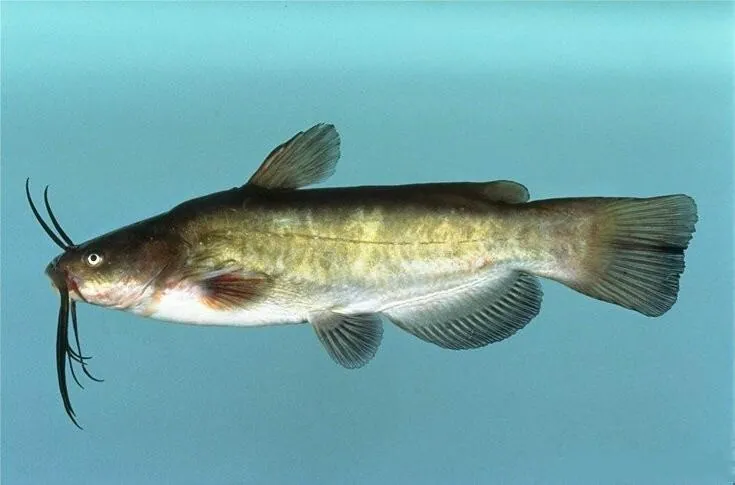
 Zo herken je het
- Dark brown-green back that becomes lighter green and yellow towards the belly, which is off-white or cream1
- Dark brown-black speckles over the whole body1
- No scales1
- Eight barbels (whisker-like feelers) around the mouth, with black to yellowish brown barbels on the chin1
- Adults usually measure 20 to 50 cm and weigh 0.5 to 3.6 kg1
Vaak verward met: The black bullhead and yellow bullhead are similar. The brown bullhead has yellow-black chin barbels, no pale bar at the base of the tail (which the black bullhead has), and 21 to 24 rays in its anal fin. The flathead catfish lacks the brown bullhead's tooth patch on the upper jaw.1
Gifkracht
Scherpe stekels bevatten het gif. Erop stappen of het vastpakken doet pijn.
Wat doet zijn gif als het bijt of steekt?
When attacked, the bullhead stiffens the sharp spine on the front edge of its dorsal and pectoral fins. While doing this, it releases venom that stings and burns the predator.1
Hoe gevaarlijk is het voor mensen?
Gevaar voor mensen: PijnlijkHet kan echt pijn doen, maar het is bijna nooit ernstig.Its fin spines can sting and burn, which is its main defence against predators. Treat any caught fish with care and avoid handling its spines.1
Wat doet het als het bang is?
When attacked, it stiffens its fin spines to make it harder for a predator to swallow it, and releases venom to sting and burn.1
 Als zijn stekels je prikken
- Houd de wond in heet water, zo heet als de persoon kan verdragen zonder zich te verbranden (test het met je eigen hand), 30 tot 90 minuten lang. Haal medische hulp, vooral bij steenvissen en pijlstaartroggen.
Bel altijd eerst je alarmnummer (112, 000, 911). Dit is algemene EHBO-informatie, geen medisch advies. EHBO-basis
 Blijf veilig
- Raak een wild dier nooit aan, vang het niet en pest het niet, ook geen kleintje, en ook niet als het lijkt te slapen of dood lijkt.
- Geef het de ruimte. Kom je er een tegen, blijf rustig, stap langzaam achteruit en laat het zijn eigen weg gaan.
- Als zijn stekels je prikken: blijf rustig, beweeg niet, bel je alarmnummer (112, 000, 911) of ga snel naar een ziekenhuis. Onthoud hoe het eruitzag, een foto helpt.
Het is niet op jou uit. Het gebruikt zijn gif om voedsel te vangen of zichzelf te beschermen, en verstopt zich veel liever. Meer over veilig blijven
Waar ter wereld?
Hoe groot is het?
Hoe lang is het?
Hoe zwaar is het?
 zo lang als 3 bananen achter elkaar
 zo lang als 17 speelgoedbouwsteentjes op een rij
 ongeveer zo zwaar als een huiskat
 zou de lengte van een groot zwembad (50 m) in 30 seconden kunnen zwemmen
Hoe groot is Brown bullhead vergeleken met JOU?
Alleen rekenwerk in je browser. Er wordt niets opgeslagen of verstuurd.
Hoe snel is het?
Feiten
It can survive very low oxygen levels, down to 0.2 ppm, and even heavily polluted water.1
Its spines can produce venom, which is unusual for a catfish species that is otherwise common and widely eaten.1
The brown bullhead is one of six beings in Ojibwe tradition that came out of the sea to form the original clans.1
Both males and females are known to eat their own eggs at times.1
Voor gifexperts
- Wetenschappelijke naam
- Ameiurus nebulosus
- Groep
- Giftige vissen
- Familie
- Ictaluridae2
- Orde
- Siluriformes
- Continenten
- Noord-Amerika
- Baby's
- The female lays eggs in dark places, such as under rocks or inside logs, and clusters can hold 50 to 10,000 eggs. The eggs usually hatch in six days, and parents look after the young for about five more days.1
- Levensduur
- ongeveer 8 jaar1
- Hoe het in het wild gaat
- No special status under the IUCN, the US Endangered Species Program or CITES. It is a Species of Conservation Concern in Missouri.1
- Gevaar voor mensen
- 2 / 5: Pijnlijk3
Waar de feiten vandaan komen
- Brown bullhead (Wikipedia (CC BY-SA 4.0))
- Ameiurus nebulosus (iNaturalist): namen en indeling.
- Venom Wiki: het gevarenniveau, de typische grootte en de geschatte snelheid zijn van onszelf. Zo berekenen we ze: Hoe we gevaar beoordelen.
Elk feit op deze pagina heeft een nummer dat naar de bron wijst. Hebben we iets fout? Sorry, we zijn dierenfans, geen wetenschappelijk tijdschrift. Laat het ons weten via [email protected] en we passen het aan.
 De schorpioen heeft honger! Venom Wiki is een eenmansproject: gratis, zonder reclame en zonder trackers. Een kleine fooi helpt om het online te houden.Voer de schorpioen
Meer uit dezelfde groep: Giftige vissen
 Channel catfishGiftige vissenDoet alleen pijnNiet aanraken
 Carolina madtomGiftige vissenDoet alleen pijnNiet aanraken
 Margined madtomGiftige vissenDoet alleen pijnNiet aanraken
 StonecatGiftige vissenDoet alleen pijnNiet aanraken
 Tadpole madtomGiftige vissenDoet alleen pijnNiet aanraken
 Reef stonefishGiftige vissenKan dodenNiet aanraken
 Terciopelo
 Eastern coral snake
 Eastern diamondback rattlesnake
 Eyelash viper
 Timber rattlesnake
 Western diamondback rattlesnake