
 Afrika
 Azië
Azië Europa
 Zuid-Amerika
 Australië & Oceanië
 Antarctica
 Grote Oceaan
 Atlantische Oceaan
 Indische Oceaan
 Noordelijke IJszee
 Middellandse Zee
 Rode Zee
 Caribische Zee
 Koraalzee
 Zuid-Chinese Zee
 Filipijnenzee
 Andamanse Zee
 Noordzee
 Timorzee & Arafurazee
 Golf van Bengalen
 Golf van Californië
Rhodnius kissing bug
 Beten
BetenThe Rhodnius kissing bug is a blood-feeding insect that feeds on the skin around people's mouths while they sleep. It lives in northern South America and Central America, and it matters because it spreads the parasite that causes Chagas disease.1



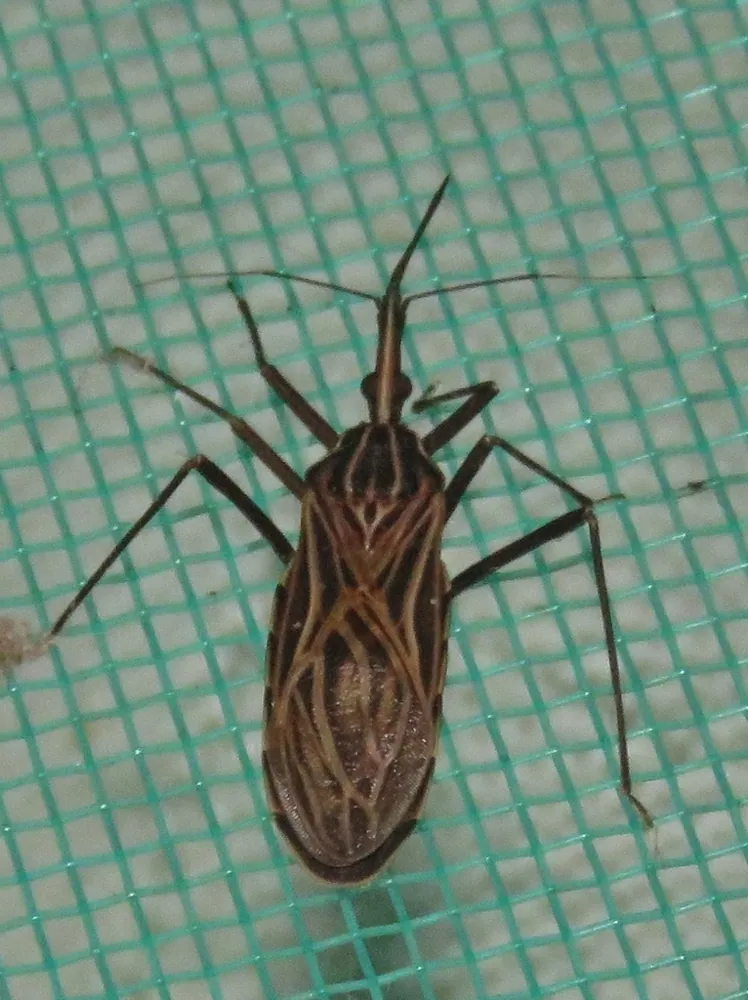
 Zo herken je het
Gifkracht
Het gif komt naar buiten via de giftanden of tanden als het bijt.
Hoe gevaarlijk is het voor mensen?
Gevaar voor mensen: ErnstigMet een beet moet je naar de dokter. Sterfgevallen zijn heel zeldzaam.It is the main carrier of the parasite that causes Chagas disease in northern South America, and the only carrier in Central America. The parasite is passed in the bug's faeces straight after a blood meal. People can become infected when they scratch the bite and rub the faeces into it, through a blood transfusion, or by eating food contaminated with the bug's faeces.1
 Als het bijt
- Bij brandharen van rupsen: haal ze eraf met plakband en was daarna de huid. Niet wrijven.
- Bij beten: wassen en koelen. Haal medische hulp als de persoon zich niet goed voelt of makkelijk bloedt.
Bel altijd eerst je alarmnummer (112, 000, 911). Dit is algemene EHBO-informatie, geen medisch advies. EHBO-basis
 Blijf veilig
- Raak een wild dier nooit aan, vang het niet en pest het niet, ook geen kleintje, en ook niet als het lijkt te slapen of dood lijkt.
- Geef het de ruimte. Kom je er een tegen, blijf rustig, stap langzaam achteruit en laat het zijn eigen weg gaan.
- Als er een je bijt: blijf rustig, beweeg niet, bel je alarmnummer (112, 000, 911) of ga snel naar een ziekenhuis. Onthoud hoe het eruitzag, een foto helpt.
Het is niet op jou uit. Het gebruikt zijn gif om voedsel te vangen of zichzelf te beschermen, en verstopt zich veel liever. Meer over veilig blijven
Waar ter wereld?
Hoe groot is het?
Hoe lang is het?
 ongeveer zo lang als een paperclip
Hoe groot is Rhodnius kissing bug vergeleken met JOU?
Alleen rekenwerk in je browser. Er wordt niets opgeslagen of verstuurd.
Hoe snel is het?


Feiten
Its saliva contains lipocalins, which bind the chemical serotonin. This helps stop the host's blood vessels from narrowing while the bug feeds.1
Sir Vincent Wigglesworth used this bug to study insect hormones. He showed that removing the head during a larval stage makes the insect develop into an adult early.1
Specimens from Venezuela escaped from a research laboratory in San Salvador in 1915 and then spread through Central America, probably helped by travellers carrying them.1
Its wild populations have been linked to the transfer of transposons, which are pieces of DNA that move around, between the bug and some of its hosts, such as squirrel monkeys and opossums.1
The insect goes through five larval stages, and each one ends in a moult about 12 to 15 days after a large blood meal.1
Waar de feiten vandaan komen
- Rhodnius prolixus (Wikipedia (CC BY-SA 4.0))
- Rhodnius prolixus (iNaturalist): namen en indeling.
- Venom Wiki: het gevarenniveau, de typische grootte en de geschatte snelheid zijn van onszelf. Zo berekenen we ze: Hoe we gevaar beoordelen.
Elk feit op deze pagina heeft een nummer dat naar de bron wijst. Hebben we iets fout? Sorry, we zijn dierenfans, geen wetenschappelijk tijdschrift. Laat het ons weten via [email protected] en we passen het aan.
 De schorpioen heeft honger! Venom Wiki is een eenmansproject: gratis, zonder reclame en zonder trackers. Een kleine fooi helpt om het online te houden.Voer de schorpioen
Meer uit dezelfde groep: Rupsen & beestjes
 Giant silkworm moth caterpillarRupsen & beestjesKan dodenNiet aanraken
 Vinchuca kissing bugRupsen & beestjesMoet naar de dokter
 Giant water bugRupsen & beestjesDoet alleen pijn
 Puss caterpillarRupsen & beestjesDoet alleen pijnNiet aanraken
 Saddleback caterpillarRupsen & beestjesDoet alleen pijnNiet aanraken
 Wheel bugRupsen & beestjesDoet alleen pijn
 Terciopelo
 Eastern coral snake
 Eastern diamondback rattlesnake
 Eyelash viper
 Timber rattlesnake
 Western diamondback rattlesnake