
 Afryka
 Azja
Azja Europa
 Ameryka Południowa
 Australia i Oceania
 Antarktyda
 Ocean Spokojny
 Ocean Atlantycki
 Ocean Indyjski
 Ocean Arktyczny
 Morze Śródziemne
 Morze Czerwone
 Morze Karaibskie
 Morze Koralowe
 Morze Południowochińskie
 Morze Filipińskie
 Morze Andamańskie
 Morze Północne
 Morze Timor i Morze Arafura
 Zatoka Bengalska
 Zatoka Kalifornijska
Aerial yellowjacket
 Użądlenia
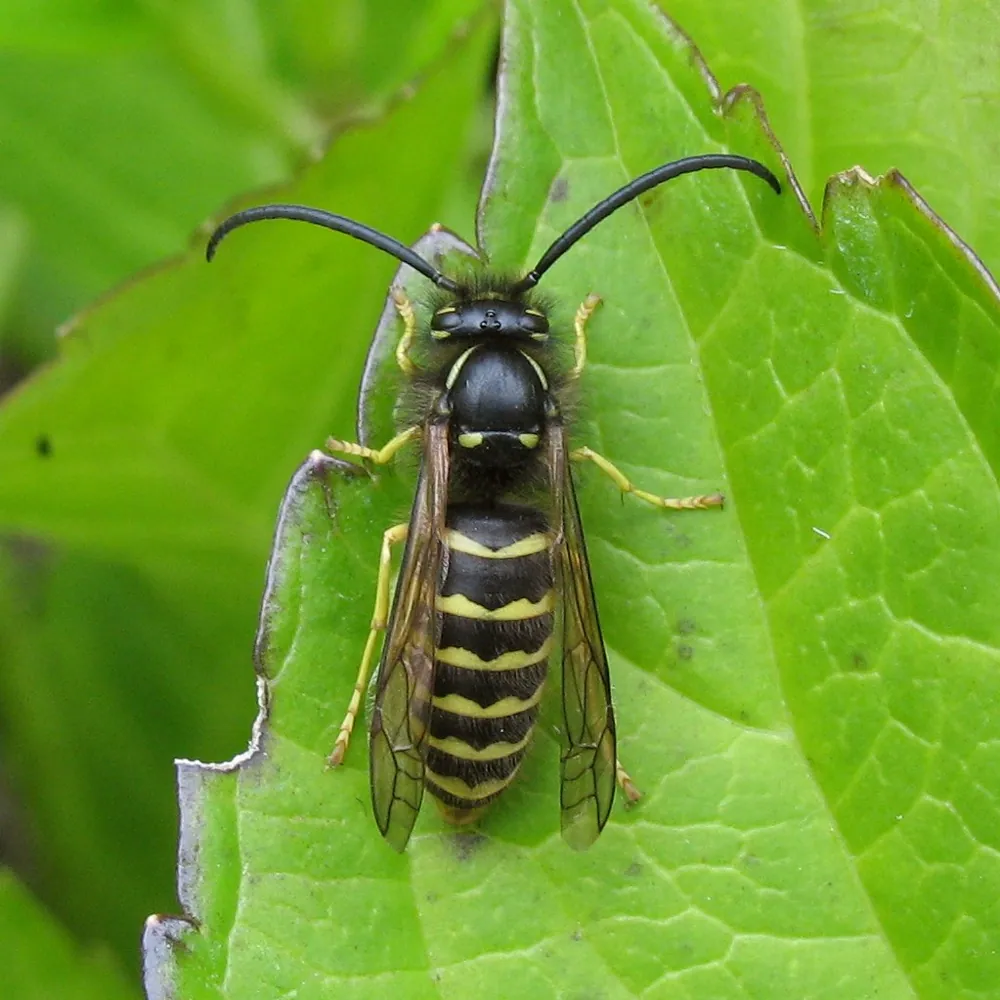
The aerial yellowjacket is a yellow and black wasp that lives across Canada and the United States. It builds grey paper nests, often high in trees, and it can deliver a sting. Its nests can be found on buildings in towns and cities.1



 Jak je rozpoznać
- Yellow in colour, with bands on the abdomen (the rear part of the body)1
- No black markings on the ocular sinus (the area of the face around the eye)1
- Queens have large black spots on the abdomen, with smaller spots towards the front1
- Males have larger antennae and an abdomen that ends in a flat, fuzzy tip instead of a pointed sting1
- Nests are made of dull grey paper, with 1 to 6 combs1
Często mylone z: It is often confused with other yellow wasps in its genus, such as Dolichovespula adulterina. The aerial yellowjacket can be told apart by the lack of black markings in the ocular sinus.1
Siła jadu
Jad wydostaje się przez żądło.
Jak bardzo jest niebezpieczne dla ludzi?
Zagrożenie dla ludzi: BolesneMoże naprawdę boleć, ale prawie nigdy nie jest groźne.Co robi, gdy się boi?
When a nest is threatened, workers can spray venom out of their sting, which releases an alarm pheromone that draws other wasps into attack.1
 Jeśli użądli
- Wyskrob żądło pszczoły i schłodź to miejsce.
- Jeśli poszkodowany ma trudności z oddychaniem, obrzęk twarzy lub gardła albo czuje, że mdleje, to nagły przypadek alergiczny: zadzwoń na numer alarmowy i użyj jego automatycznego wstrzykiwacza z adrenaliną, jeśli go ma.
Zawsze najpierw dzwoń na numer alarmowy (112, 000, 911). To ogólne wskazówki pierwszej pomocy, a nie porada medyczna. Podstawy pierwszej pomocy
 Uważaj na siebie
- Nigdy nie dotykaj, nie łap ani nie drażnij dzikiego zwierzęcia, nawet małego, i nawet jeśli wygląda, jakby spało albo było martwe.
- Zostaw mu miejsce. Jeśli je spotkasz, zachowaj spokój, powoli się wycofaj i pozwól mu odejść.
- Jeśli cię użądli: zachowaj spokój, nie ruszaj się, zadzwoń na numer alarmowy (112, 000, 911) albo jak najszybciej dotrzyj do szpitala. Zapamiętaj, jak wyglądało, zdjęcie pomaga.
Nie poluje na ciebie. Używa jadu, żeby złapać jedzenie albo się bronić, i dużo bardziej woli się schować. Więcej o bezpieczeństwie
Jakie jest duże?
Jakie jest długie?
 krótsze niż twój mały palec
 przelot przez całe boisko piłkarskie w 16 s
Aerial yellowjacket: jak duże jest w porównaniu z TOBĄ?
Zwykła matematyka w twojej przeglądarce. Nic nie jest zapisywane ani nigdzie wysyłane.
Jak szybkie jest?


Fakty
Unlike many of its relatives, this wasp is known to spray venom out of its sting, a behaviour seen in workers from large colonies.1
Female bee moths (Aphomia sociella) sometimes lay their eggs in these nests, and their larvae can destroy large parts of the nest as they feed.1
Because nests are built high in trees, birds and other wasps are among the few predators that reach them. Skunks, opossums, raccoons and bears sometimes raid low or badly placed nests for the nutrient-rich larvae.1
Small colonies can behave unpredictably and erratically when defending their nest.1
Colonies usually last about a year before they die out as winter arrives.1
Dla znawców jadu
- Nazwa naukowa
- Dolichovespula arenaria
- Grupa
- Pszczoły, osy i szerszenie
- Rodzina
- Vespidae2
- Kolejność
- Hymenoptera
- Kontynenty
- Ameryka Północna
- Młode
- A queen starts a new colony each spring by building a small paper nest and laying eggs. The larvae grow into workers, and the colony peaks in summer.1
- Zagrożenie dla ludzi
- 2 / 5: Bolesne3
Skąd pochodzą fakty
- Dolichovespula arenaria (Wikipedia (CC BY-SA 4.0))
- Dolichovespula arenaria (iNaturalist): nazwy i klasyfikacja.
- Venom Wiki: poziom zagrożenia, typowy rozmiar i szacowana prędkość to nasze własne oceny. Zobacz, jak je ustalamy: Jak oceniamy zagrożenie.
Każdy fakt na tej stronie ma numer, który wskazuje jego źródło. Jeśli coś pomyliliśmy, przepraszamy, jesteśmy fanami zwierząt, a nie czasopismem naukowym. Napisz do nas na [email protected], a poprawimy to.
 Skorpion jest głodny! Venom Wiki to projekt jednej osoby: darmowy, bez reklam i bez śledzenia. Mały napiwek pomaga utrzymać go w sieci.Nakarm skorpiona
Więcej z tej samej grupy: Pszczoły, osy i szerszenie
 Tarantula hawkPszczoły, osy i szerszenieTylko boli
 Executioner waspPszczoły, osy i szerszenieWymaga lekarza
 Warrior waspPszczoły, osy i szerszenieWymaga lekarza
 Bald-faced hornetPszczoły, osy i szerszenieTylko boli
 Cow killer velvet antPszczoły, osy i szerszenieTylko boli
 Eastern cicada killerPszczoły, osy i szerszenieNieszkodliwe
 Terciopelo
 Eastern coral snake
 Eastern diamondback rattlesnake
 Eyelash viper
 Timber rattlesnake
 Western diamondback rattlesnake
.jpg)