
 Afryka
 Azja
Azja Europa
 Ameryka Południowa
 Australia i Oceania
 Antarktyda
 Ocean Spokojny
 Ocean Atlantycki
 Ocean Indyjski
 Ocean Arktyczny
 Morze Śródziemne
 Morze Czerwone
 Morze Karaibskie
 Morze Koralowe
 Morze Południowochińskie
 Morze Filipińskie
 Morze Andamańskie
 Morze Północne
 Morze Timor i Morze Arafura
 Zatoka Bengalska
 Zatoka Kalifornijska
Timber rattlesnake
 Ugryzienia
The timber rattlesnake is a venomous pit viper that lives in forests and rocky land in the eastern United States. It is the only rattlesnake in most of the crowded northeastern states, and it is one of the most northerly venomous snakes in North America.1



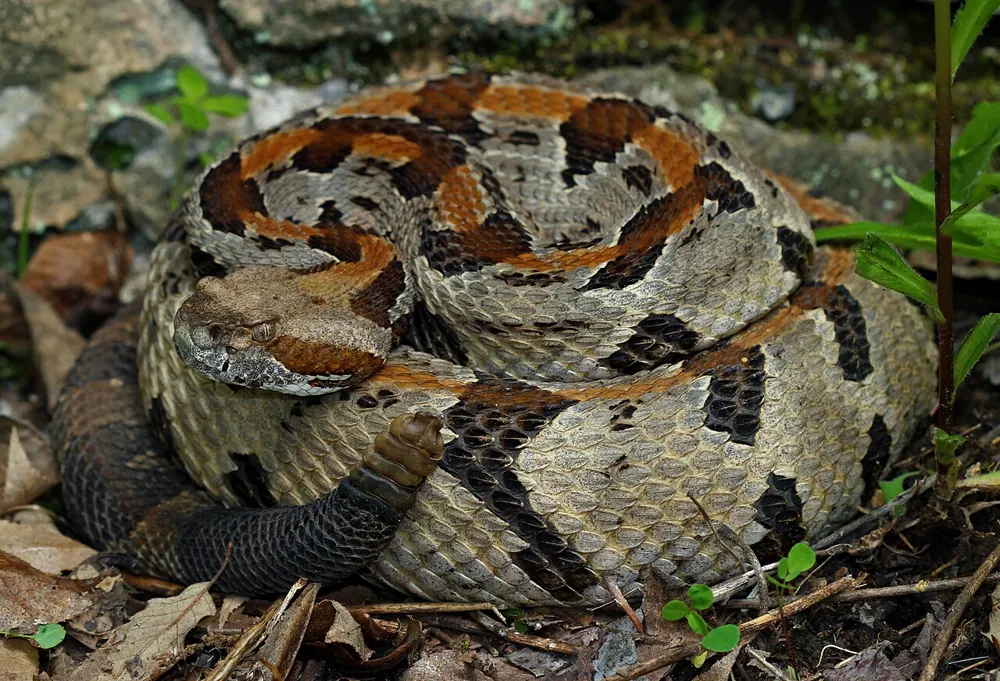
 Jak je rozpoznać
- Dark brown or black crossbands on a yellowish-brown or greyish background1
- The crossbands have irregular zig-zag edges and may be V- or M-shaped1
- A rust-coloured stripe often runs down the middle of the back1
- The tail is black and looks 'velvety'1
- Melanism (very dark colouring) is common, and some individuals are almost solid black1
Siła jadu
Jad wydostaje się przez kły lub zęby, gdy zwierzę gryzie.
Jak działa jego jad?
Its venom is extremely potent and can be haemorrhagic (damaging blood vessels and causing bleeding) or neurotoxic (attacking the nerves), depending on the population and location. Its long fangs, large size and high venom yield make it potentially one of North America's most dangerous snakes. Venom-induced incapacitation can progress rapidly.1
Jak bardzo jest niebezpieczne dla ludzi?
Zagrożenie dla ludzi: Bardzo niebezpieczneMoże zabić człowieka, który nie dostanie leczenia.It is potentially one of North America's most dangerous snakes, but it is usually shy and calm. It will retreat if it can and attacks mainly when cornered. Over many years in western Pennsylvania, one naturalist heard of only one death from its bite. Bites are widespread in some areas of Iowa's forests. Its remote, wooded habitat can make emergency medical care difficult or even impossible.1
Co robi, gdy się boi?
It rattles and feints a good deal before striking, and it will try to retreat first if it feels threatened.1
 Jeśli ugryzie
- Trzymaj poszkodowanego w bezruchu i spokoju, trzymaj ugryzioną kończynę na wysokości serca, zdejmij pierścionki i to, co ciasne, i jak najszybciej dotrzyj do szpitala.
Zawsze najpierw dzwoń na numer alarmowy (112, 000, 911). To ogólne wskazówki pierwszej pomocy, a nie porada medyczna. Podstawy pierwszej pomocy
 Uważaj na siebie
- Nigdy nie dotykaj, nie łap ani nie drażnij dzikiego zwierzęcia, nawet małego, i nawet jeśli wygląda, jakby spało albo było martwe.
- Zostaw mu miejsce. Jeśli je spotkasz, zachowaj spokój, powoli się wycofaj i pozwól mu odejść.
- Jeśli cię ugryzie: zachowaj spokój, nie ruszaj się, zadzwoń na numer alarmowy (112, 000, 911) albo jak najszybciej dotrzyj do szpitala. Zapamiętaj, jak wyglądało, zdjęcie pomaga.
Nie poluje na ciebie. Używa jadu, żeby złapać jedzenie albo się bronić, i dużo bardziej woli się schować. Więcej o bezpieczeństwie
Jakie jest duże?
Jakie jest długie?
Ile waży?
 długie jak 4 kotów domowych od nosa do ogona
 długie jak 11 bananów ułożonych jeden za drugimważy mniej więcej tyle co kot domowy
 100 metrów w 95 s (najszybszy człowiek potrzebuje 9,6)
Timber rattlesnake: jak duże jest w porównaniu z TOBĄ?
Zwykła matematyka w twojej przeglądarce. Nic nie jest zapisywane ani nigdzie wysyłane.
Jak szybkie jest?


Fakty
Timber rattlesnakes return to the same winter den each year, and juveniles can track chemical cues to find relatives in it.1
Female timber rattlesnakes bask in the sun on open rocky areas called basking knolls before they give birth.1
They share winter dens with copperheads and rat snakes.1
It is the only rattlesnake in most of the populous Northeastern United States, and one of the most northerly venomous snakes in North America.1
Males often mate farther from the winter dens than females do.1
Pogromca mitów
Mit: Rattlesnakes attack people as soon as they see them.
Prawda: Timber rattlesnakes are shy and will try to retreat from danger first. They attack mainly when they are cornered, so leaving them alone keeps people safe.1
Dla znawców jadu
- Nazwa naukowa
- Crotalus horridus
- Grupa
- Grzechotniki
- Rodzina
- Viperidae2
- Kolejność
- Squamata
- Kontynenty
- Ameryka Północna
- Młode
- Females first reproduce at a mean age of 9.6 years and average 7.7 offspring per litter. Most females reproduce only once in their lifetime.1
- Jak sobie radzi na wolności
- Extirpated in Canada, as listed under the Canadian Species at Risk Act in May 2001.1
- Zagrożenie dla ludzi
- 4 / 5: Bardzo niebezpieczne3
Skąd pochodzą fakty
- Timber rattlesnake (Wikipedia (CC BY-SA 4.0))
- Crotalus horridus (iNaturalist): nazwy i klasyfikacja.
- Venom Wiki: poziom zagrożenia, typowy rozmiar i szacowana prędkość to nasze własne oceny. Zobacz, jak je ustalamy: Jak oceniamy zagrożenie.
Każdy fakt na tej stronie ma numer, który wskazuje jego źródło. Jeśli coś pomyliliśmy, przepraszamy, jesteśmy fanami zwierząt, a nie czasopismem naukowym. Napisz do nas na [email protected], a poprawimy to.
 Skorpion jest głodny! Venom Wiki to projekt jednej osoby: darmowy, bez reklam i bez śledzenia. Mały napiwek pomaga utrzymać go w sieci.Nakarm skorpiona
 Eastern diamondback rattlesnake
 Western diamondback rattlesnake
 Sidewinder
 Mojave rattlesnake
 Aruba rattlesnake
 Black-tailed rattlesnake
 Żararaka szorstka
 Eastern coral snake
 Eyelash viper
 Arizona bark scorpion
 Brown recluse
 Cane toad
_-_Flickr_-_2ndPeter.jpg)