
 Afryka
 Azja
Azja Europa
 Ameryka Południowa
 Australia i Oceania
 Antarktyda
 Ocean Spokojny
 Ocean Atlantycki
 Ocean Indyjski
 Ocean Arktyczny
 Morze Śródziemne
 Morze Czerwone
 Morze Karaibskie
 Morze Koralowe
 Morze Południowochińskie
 Morze Filipińskie
 Morze Andamańskie
 Morze Północne
 Morze Timor i Morze Arafura
 Zatoka Bengalska
 Zatoka Kalifornijska
Brown tree snake
 Ugryzienia
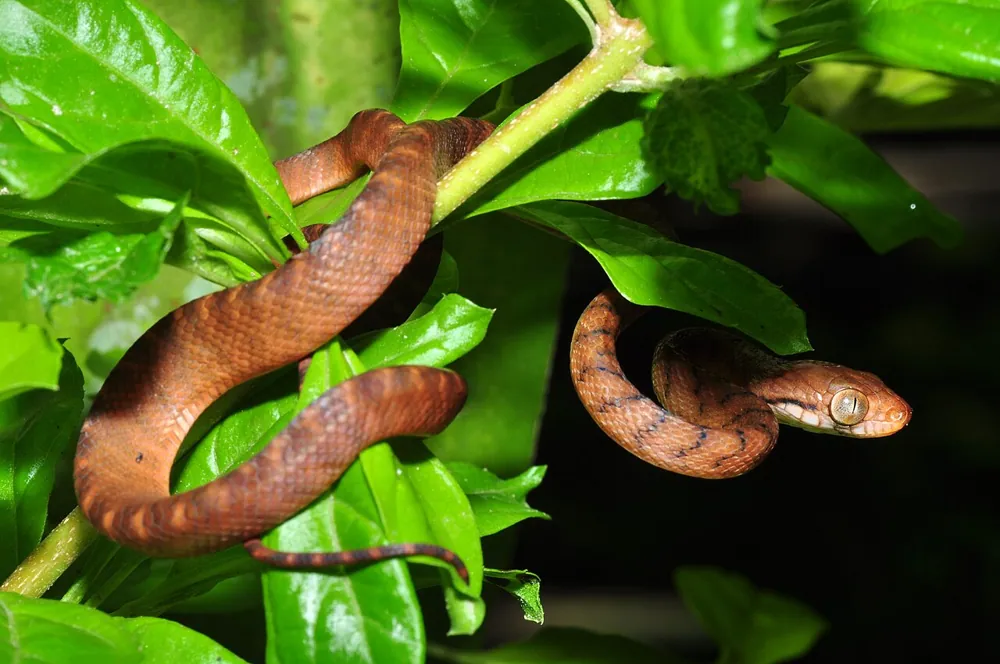
The brown tree snake is a slender, night-active snake that climbs well and hunts in trees and on the ground. It lives in coastal northern and eastern Australia, eastern Indonesia, Papua New Guinea and nearby islands. It is famous for harming wildlife on the island of Guam, where it was introduced by accident.1



 Jak je rozpoznać
Siła jadu
Jad wydostaje się przez kły lub zęby, gdy zwierzę gryzie.
Jak działa jego jad?
It has two small, grooved fangs at the back of the mouth, so venom flows into the bite slowly rather than being injected in one go. The venom is weakly neurotoxic, meaning it affects the nerves, and may also damage cells locally. Its effects are trivial for adults, and it is mainly used to subdue lizards.1
Jak bardzo jest niebezpieczne dla ludzi?
Zagrożenie dla ludzi: BolesneMoże naprawdę boleć, ale prawie nigdy nie jest groźne.The snake is considered aggressive when threatened but not dangerous to adult humans. Serious medical consequences have been limited to children, who are more affected because of their low body mass. On Guam, it has caused widespread power outages, pet losses and emotional distress to residents.1
Co robi, gdy się boi?
When threatened it is highly aggressive, lunging and striking at the attacker repeatedly.1
 Jeśli ugryzie
- Umyj miejsce ugryzienia, uspokój poszkodowanego i szukaj pomocy medycznej. Niektóre gatunki (np. boomslang) mogą być śmiertelnie groźne po kilku godzinach.
Zawsze najpierw dzwoń na numer alarmowy (112, 000, 911). To ogólne wskazówki pierwszej pomocy, a nie porada medyczna. Podstawy pierwszej pomocy
 Uważaj na siebie
- Nigdy nie dotykaj, nie łap ani nie drażnij dzikiego zwierzęcia, nawet małego, i nawet jeśli wygląda, jakby spało albo było martwe.
- Zostaw mu miejsce. Jeśli je spotkasz, zachowaj spokój, powoli się wycofaj i pozwól mu odejść.
- Jeśli cię ugryzie: zachowaj spokój, nie ruszaj się, zadzwoń na numer alarmowy (112, 000, 911) albo jak najszybciej dotrzyj do szpitala. Zapamiętaj, jak wyglądało, zdjęcie pomaga.
Nie poluje na ciebie. Używa jadu, żeby złapać jedzenie albo się bronić, i dużo bardziej woli się schować. Więcej o bezpieczeństwie
Jakie jest duże?
Jakie jest długie?
 długie jak 4 kotów domowych od nosa do ogona
 długie jak 11 bananów ułożonych jeden za drugim
 100 metrów w 60 s (najszybszy człowiek potrzebuje 9,6)
Brown tree snake: jak duże jest w porównaniu z TOBĄ?
Zwykła matematyka w twojej przeglądarce. Nic nie jest zapisywane ani nigdzie wysyłane.
Jak szybkie jest?


Fakty
Snakes on Guam have been seen moving up large smooth cylinders using a method called 'lasso locomotion', which had not been recorded in snakes before. It is tiring, so they move slowly and stop often.1
On Guam, where prey is plentiful and there are few predators, the snakes have grown to 3 m, much longer than their typical 1 to 2 m in their native range.1
Shortly after World War II, the snake reached Guam by accident, probably as a stowaway in ship cargo or in aircraft landing gear. Its numbers then grew to unprecedented levels.1
Trained dogs are used on Guam to find and remove snakes before cargo and transport vessels leave the island.1
Female brown tree snakes have been seen performing courtship behaviours normally used by males, such as tongue-flicking and head-jerking.1
Brown tree snakes can survive for long periods without food.1
Pogromca mitów
Mit: The brown tree snake is a deadly snake that is dangerous to adults.
Prawda: It is not considered dangerous to adult humans. Its venom is weak and serious effects have mainly been seen in young children.1
Dla znawców jadu
Skąd pochodzą fakty
- Brown tree snake (Wikipedia (CC BY-SA 4.0))
- Boiga irregularis (iNaturalist): nazwy i klasyfikacja.
- Venom Wiki: poziom zagrożenia, typowy rozmiar i szacowana prędkość to nasze własne oceny. Zobacz, jak je ustalamy: Jak oceniamy zagrożenie.
Każdy fakt na tej stronie ma numer, który wskazuje jego źródło. Jeśli coś pomyliliśmy, przepraszamy, jesteśmy fanami zwierząt, a nie czasopismem naukowym. Napisz do nas na [email protected], a poprawimy to.
 Skorpion jest głodny! Venom Wiki to projekt jednej osoby: darmowy, bez reklam i bez śledzenia. Mały napiwek pomaga utrzymać go w sieci.Nakarm skorpiona
 Tiger keelback
 Red-necked keelback
 Green cat snake
 Mangrove snake
 Asian vine snake
 Golden tree snake
 Deathstalker
 Indian cobra
 Indian saw-scaled viper
 King cobra
 Puff adder
 Żmija Russella
_(8387580552).jpg)