
 Afryka
 Azja
Azja Europa
 Ameryka Południowa
 Australia i Oceania
 Antarktyda
 Ocean Spokojny
 Ocean Atlantycki
 Ocean Indyjski
 Ocean Arktyczny
 Morze Śródziemne
 Morze Czerwone
 Morze Karaibskie
 Morze Koralowe
 Morze Południowochińskie
 Morze Filipińskie
 Morze Andamańskie
 Morze Północne
 Morze Timor i Morze Arafura
 Zatoka Bengalska
 Zatoka Kalifornijska
Golden tree snake
 Ugryzienia
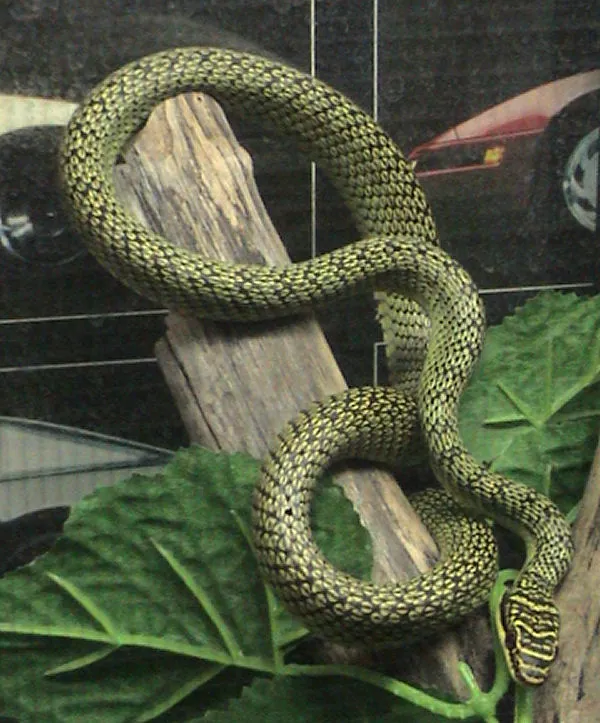
The golden tree snake is a slim, green snake with gold and black markings that lives in trees across South and Southeast Asia. It is famous for its ability to glide from tree to tree, which it does by launching itself into the air and steering with its body. It is mildly venomous, but it is not considered dangerous to people.1



 Jak je rozpoznać
- Usually green, with black cross-hatching and yellow or gold accents1
- Slender body with a flattened head, a blunt nose and large eyes with round pupils1
- In Sri Lanka and southern India it is mainly greenish yellow or pale green, often with reddish or orange flower-shaped spots on its back1
- In Southeast Asia it lacks the reddish spots and has less prominent black crossbars1
- Nervous and fast-moving, it climbs trees and vertical rock faces in graceful curves1
Często mylone z: The paradise flying snake (C. paradisi) is a close relative that also glides. Its gliding is more impressive than that of the golden tree snake, which is still able to move easily from tree to tree.1
Siła jadu
Jad wydostaje się przez kły lub zęby, gdy zwierzę gryzie.
Jak działa jego jad?
It is mildly venomous. Its two small fangs are at the back of the upper jaw, so it must chew to get venom into prey. The venom is meant to subdue fast-moving tree-living animals and is not considered dangerous to humans.1
Jak bardzo jest niebezpieczne dla ludzi?
Zagrożenie dla ludzi: ŁagodneJak użądlenie pszczoły albo słabiej. W zasadzie nieszkodliwe dla ludzi.It is not considered dangerous to humans and is not of medical importance. It generally does not hesitate to bite if handled.1
Co robi, gdy się boi?
When disturbed it tries to flee, and it can glide away from predators such as birds or other reptiles.1
 Jeśli ugryzie
- Umyj miejsce ugryzienia, uspokój poszkodowanego i szukaj pomocy medycznej. Niektóre gatunki (np. boomslang) mogą być śmiertelnie groźne po kilku godzinach.
Zawsze najpierw dzwoń na numer alarmowy (112, 000, 911). To ogólne wskazówki pierwszej pomocy, a nie porada medyczna. Podstawy pierwszej pomocy
 Uważaj na siebie
- Nigdy nie dotykaj, nie łap ani nie drażnij dzikiego zwierzęcia, nawet małego, i nawet jeśli wygląda, jakby spało albo było martwe.
- Zostaw mu miejsce. Jeśli je spotkasz, zachowaj spokój, powoli się wycofaj i pozwól mu odejść.
- Jeśli cię ugryzie: zachowaj spokój, nie ruszaj się, zadzwoń na numer alarmowy (112, 000, 911) albo jak najszybciej dotrzyj do szpitala. Zapamiętaj, jak wyglądało, zdjęcie pomaga.
Nie poluje na ciebie. Używa jadu, żeby złapać jedzenie albo się bronić, i dużo bardziej woli się schować. Więcej o bezpieczeństwie
Jakie jest duże?
Jakie jest długie?
 długie jak 2,5 kotów domowych od nosa do ogona
 długie jak 7 bananów ułożonych jeden za drugim
 100 metrów w 64 s (najszybszy człowiek potrzebuje 9,6)
Golden tree snake: jak duże jest w porównaniu z TOBĄ?
Zwykła matematyka w twojej przeglądarce. Nic nie jest zapisywane ani nigdzie wysyłane.
Jak szybkie jest?


Fakty
It can glide, or parachute, across distances of as much as 100 m from tree to tree.1
To glide, it curves its belly into a U-shape that acts like a parachute, then undulates through the air like it is swimming.1
It balances in the air by twisting its tail from side to side, with the tail held rigidly upwards.1
Its striking looks and gliding have made it a sought-after choice for captivity, though it often struggles in captivity.1
It is sometimes cooked for food.1
Pogromca mitów
Mit: Many locals assume that all snakes are venomous and kill them on sight.
Prawda: The golden tree snake is only mildly venomous and is not considered dangerous to humans.1
Dla znawców jadu
Skąd pochodzą fakty
- Chrysopelea ornata (Wikipedia (CC BY-SA 4.0))
- Chrysopelea ornata (iNaturalist): nazwy i klasyfikacja.
- Venom Wiki: poziom zagrożenia, typowy rozmiar i szacowana prędkość to nasze własne oceny. Zobacz, jak je ustalamy: Jak oceniamy zagrożenie.
Każdy fakt na tej stronie ma numer, który wskazuje jego źródło. Jeśli coś pomyliliśmy, przepraszamy, jesteśmy fanami zwierząt, a nie czasopismem naukowym. Napisz do nas na [email protected], a poprawimy to.
 Skorpion jest głodny! Venom Wiki to projekt jednej osoby: darmowy, bez reklam i bez śledzenia. Mały napiwek pomaga utrzymać go w sieci.Nakarm skorpiona
 Brown tree snake
 Tiger keelback
 Red-necked keelback
 Green cat snake
 Mangrove snake
 Asian vine snake
 Skorpion żółty
 Kobra indyjska
 Efa piaskowa
 Kobra królewska
 Żmija sykliwa
 Żmija Russella