
 Afryka
 Azja
Azja Europa
 Ameryka Południowa
 Australia i Oceania
 Antarktyda
 Ocean Spokojny
 Ocean Atlantycki
 Ocean Indyjski
 Ocean Arktyczny
 Morze Śródziemne
 Morze Czerwone
 Morze Karaibskie
 Morze Koralowe
 Morze Południowochińskie
 Morze Filipińskie
 Morze Andamańskie
 Morze Północne
 Morze Timor i Morze Arafura
 Zatoka Bengalska
 Zatoka Kalifornijska
Common house spider
 Ugryzienia
The common house spider is a small spider that lives in and around human homes. It spins messy three-dimensional webs in dark corners and catches household insects. It is found in many parts of the world, and its bite is not known to be dangerous to people.1



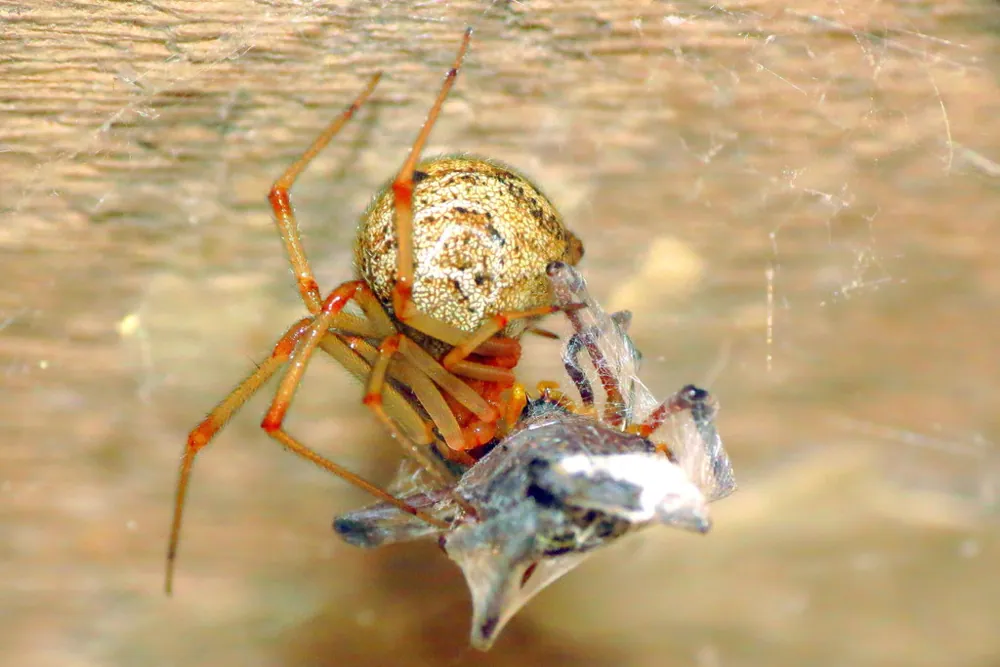
 Jak je rozpoznać
- Its colour varies from tan to nearly black, often with patterns of different shades on the body.1
- Females are usually 5 to 6 mm long, and males are usually 3.8 to 4.7 mm long.1
- With legs outspread, it can measure 2.5 cm or more across.1
- Its webs are three-dimensional and built in dark corners.1
Często mylone z: Its body shape is similar to that of widow spiders. Males have a less bulbous (rounded) abdomen than females.1
Siła jadu
Jad wydostaje się przez kły lub zęby, gdy zwierzę gryzie.
Jak działa jego jad?
It has neurotoxic venom, which attacks the nerves. Its bites are less severe than those of other theridiids (a family of cobweb spiders).1
Jak bardzo jest niebezpieczne dla ludzi?
Zagrożenie dla ludzi: ŁagodneJak użądlenie pszczoły albo słabiej. W zasadzie nieszkodliwe dla ludzi.Its bites are not known to be dangerous to humans. It bites people only in self-defence, when it is grabbed and squeezed.1
Co robi, gdy się boi?
It runs to a secure hiding place when it senses movement, and if cornered it plays dead as a last resort.1
 Jeśli ugryzie
- Umyj miejsce ugryzienia i przyłóż okład z lodu na ból. Szukaj pomocy medycznej, jeśli ból jest silny, rozszerza się albo poszkodowany źle się czuje.
Zawsze najpierw dzwoń na numer alarmowy (112, 000, 911). To ogólne wskazówki pierwszej pomocy, a nie porada medyczna. Podstawy pierwszej pomocy
 Uważaj na siebie
- Nigdy nie dotykaj, nie łap ani nie drażnij dzikiego zwierzęcia, nawet małego, i nawet jeśli wygląda, jakby spało albo było martwe.
- Zostaw mu miejsce. Jeśli je spotkasz, zachowaj spokój, powoli się wycofaj i pozwól mu odejść.
- Jeśli cię ugryzie: zachowaj spokój, nie ruszaj się, zadzwoń na numer alarmowy (112, 000, 911) albo jak najszybciej dotrzyj do szpitala. Zapamiętaj, jak wyglądało, zdjęcie pomaga.
Nie poluje na ciebie. Używa jadu, żeby złapać jedzenie albo się bronić, i dużo bardziej woli się schować. Więcej o bezpieczeństwie
Jakie jest duże?
Jakie jest długie?
 tak małe, że zmieści się na twoim paznokciu
Common house spider: jak duże jest w porównaniu z TOBĄ?
Zwykła matematyka w twojej przeglądarce. Nic nie jest zapisywane ani nigdzie wysyłane.
Jak szybkie jest?


Fakty
The assassin bug Stenolemus lanipes apparently feeds only on its young, though it can also eat adults.1
When food dries out, it usually drops it to the floor to free up space in its web, rather than rebuilding the web.1
It has poor eyesight and cannot detect movement more than three to four inches away.1
Males and females often share the same web for long periods, though females sometimes fight when they meet.1
Pogromca mitów
Mit: Common house spiders are dangerous to people.
Prawda: Their venom is neurotoxic, but their bites are not known to be dangerous to humans. They bite only when grabbed and squeezed.1
Dla znawców jadu
- Nazwa naukowa
- Parasteatoda tepidariorum
- Grupa
- Pająki
- Rodzina
- Theridiidae2
- Kolejność
- Araneae
- Kontynenty
- Ameryka Północna, Ameryka Południowa
- Młode
- Females hang their spherical egg sacs in their webs, with clutches averaging 149 eggs. The young stay in the mother's web for several days after hatching.1
- Zagrożenie dla ludzi
- 1 / 5: Łagodne3
Skąd pochodzą fakty
- Parasteatoda tepidariorum (Wikipedia (CC BY-SA 4.0))
- Parasteatoda tepidariorum (iNaturalist): nazwy i klasyfikacja.
- Venom Wiki: poziom zagrożenia, typowy rozmiar i szacowana prędkość to nasze własne oceny. Zobacz, jak je ustalamy: Jak oceniamy zagrożenie.
Każdy fakt na tej stronie ma numer, który wskazuje jego źródło. Jeśli coś pomyliliśmy, przepraszamy, jesteśmy fanami zwierząt, a nie czasopismem naukowym. Napisz do nas na [email protected], a poprawimy to.
 Skorpion jest głodny! Venom Wiki to projekt jednej osoby: darmowy, bez reklam i bez śledzenia. Mały napiwek pomaga utrzymać go w sieci.Nakarm skorpiona
 Brazilian wandering spider
 Brown recluse
 Southern black widow
 Amazon wandering spider
 Chilean recluse
 Northern black widow
 Terciopelo
 Eastern coral snake
 Eastern diamondback rattlesnake
 Eyelash viper
 Timber rattlesnake
 Western diamondback rattlesnake