
 Afryka
 Azja
Azja Europa
 Ameryka Południowa
 Australia i Oceania
 Antarktyda
 Ocean Spokojny
 Ocean Atlantycki
 Ocean Indyjski
 Ocean Arktyczny
 Morze Śródziemne
 Morze Czerwone
 Morze Karaibskie
 Morze Koralowe
 Morze Południowochińskie
 Morze Filipińskie
 Morze Andamańskie
 Morze Północne
 Morze Timor i Morze Arafura
 Zatoka Bengalska
 Zatoka Kalifornijska
Dog-toothed cat snake
 Ugryzienia
The dog-toothed cat snake is a large, nocturnal snake that is active at night. It lives across Southeast Asia, from southern Thailand to the Philippines and Indonesia, and it is often found in gardens, plantations and towns as well as forests. It is a rear-fanged snake, so its venom is delivered through teeth at the back of its mouth.1


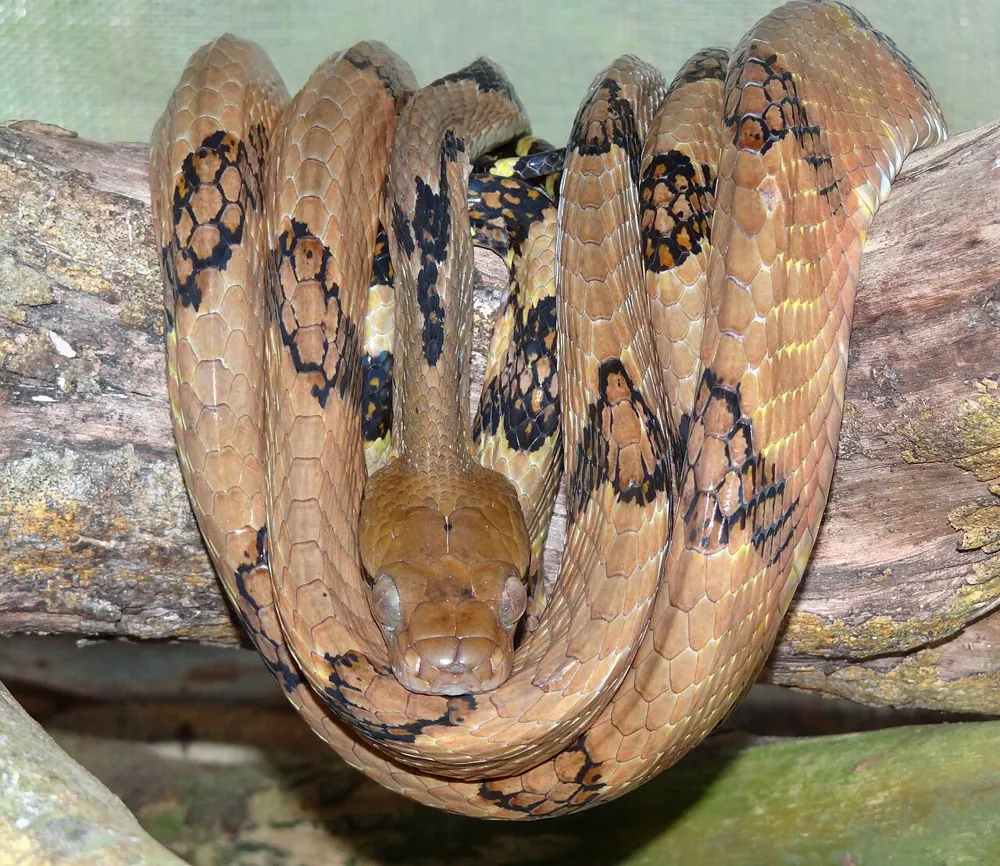
 Jak je rozpoznać
- A slender, large snake that can reach more than 2 m in total length1
- Yellowish or pale reddish-brown back with dark brown or black crossbars or spots1
- A wavy or irregular dark stripe behind each eye, with a dark streak on each side of the head1
- Yellowish belly, sometimes plain or marbled with brown1
- Strongly enlarged front teeth in the upper and lower jaws. Indonesian populations include black individuals.1
Często mylone z: Other similar snakes have a more even or nearly even upper and lower line behind the eye, while this species has a distinctly wavy or irregular one. The closely related Boiga hoeseli is found in the Lesser Sundas east of Bali, including Sumbawa and Flores, and not where this species lives.1
Siła jadu
Jad wydostaje się przez kły lub zęby, gdy zwierzę gryzie.
Jak działa jego jad?
It may have a potent neurotoxic venom, which attacks the nerves. Its effects have been shown to be reversible with neostigmine, a drug that affects nerve signalling, so envenoming from this species can be treated with anticholinesterase therapy.1
Jak bardzo jest niebezpieczne dla ludzi?
Zagrożenie dla ludzi: BolesneMoże naprawdę boleć, ale prawie nigdy nie jest groźne.Its venom may be potent, so any bite should be taken seriously. The effects of the venom have been shown to be reversible with treatment.1
 Jeśli ugryzie
- Envenoming from this species is said to be treatable with anticholinesterase therapy, which is a medical treatment.1
- Umyj miejsce ugryzienia, uspokój poszkodowanego i szukaj pomocy medycznej. Niektóre gatunki (np. boomslang) mogą być śmiertelnie groźne po kilku godzinach.
Zawsze najpierw dzwoń na numer alarmowy (112, 000, 911). To ogólne wskazówki pierwszej pomocy, a nie porada medyczna. Podstawy pierwszej pomocy
 Uważaj na siebie
- Nigdy nie dotykaj, nie łap ani nie drażnij dzikiego zwierzęcia, nawet małego, i nawet jeśli wygląda, jakby spało albo było martwe.
- Zostaw mu miejsce. Jeśli je spotkasz, zachowaj spokój, powoli się wycofaj i pozwól mu odejść.
- Jeśli cię ugryzie: zachowaj spokój, nie ruszaj się, zadzwoń na numer alarmowy (112, 000, 911) albo jak najszybciej dotrzyj do szpitala. Zapamiętaj, jak wyglądało, zdjęcie pomaga.
Nie poluje na ciebie. Używa jadu, żeby złapać jedzenie albo się bronić, i dużo bardziej woli się schować. Więcej o bezpieczeństwie
Jakie jest duże?
Jakie jest długie?
 długie jak 4 kotów domowych od nosa do ogona
 długie jak 11 bananów ułożonych jeden za drugim
 100 metrów w 54 s (najszybszy człowiek potrzebuje 9,6)
Dog-toothed cat snake: jak duże jest w porównaniu z TOBĄ?
Zwykła matematyka w twojej przeglądarce. Nic nie jest zapisywane ani nigdzie wysyłane.
Jak szybkie jest?


Fakty
Its venom is neurotoxic, but its effects have been shown to be reversible with a drug called neostigmine.1
It is known to live high in the forest canopy, where it hunts birds, lizards and small bats.1
The eggs often stick together in a clutch, and the young cut a slit from inside the egg about one day before they hatch.1
The black spitting cobra (Naja sumatrana) is known to prey on this snake.1
Dla znawców jadu
- Nazwa naukowa
- Boiga cynodon
- Grupa
- Węże tylnobruzdowe
- Rodzina
- Colubridae2
- Kolejność
- Squamata
- Kontynenty
- Azja
- Młode
- It is egg-laying (oviparous). Females lay 6 to 12 eggs per clutch, and the eggs are about 52 mm long and 24.6 mm wide on average.1
- Jak sobie radzi na wolności
- Least concern1
- Zagrożenie dla ludzi
- 2 / 5: Bolesne3
Skąd pochodzą fakty
- Boiga cynodon (Wikipedia (CC BY-SA 4.0))
- Boiga cynodon (iNaturalist): nazwy i klasyfikacja.
- Venom Wiki: poziom zagrożenia, typowy rozmiar i szacowana prędkość to nasze własne oceny. Zobacz, jak je ustalamy: Jak oceniamy zagrożenie.
Każdy fakt na tej stronie ma numer, który wskazuje jego źródło. Jeśli coś pomyliliśmy, przepraszamy, jesteśmy fanami zwierząt, a nie czasopismem naukowym. Napisz do nas na [email protected], a poprawimy to.
 Skorpion jest głodny! Venom Wiki to projekt jednej osoby: darmowy, bez reklam i bez śledzenia. Mały napiwek pomaga utrzymać go w sieci.Nakarm skorpiona
 Brown tree snake
 Tiger keelback
 Red-necked keelback
 Green cat snake
 Mangrove snake
 Asian vine snake
 Skorpion żółty
 Kobra indyjska
 Efa piaskowa
 Kobra królewska
 Żmija sykliwa
 Żmija Russella