
 Afryka
 Azja
Azja Europa
 Ameryka Południowa
 Australia i Oceania
 Antarktyda
 Ocean Spokojny
 Ocean Atlantycki
 Ocean Indyjski
 Ocean Arktyczny
 Morze Śródziemne
 Morze Czerwone
 Morze Karaibskie
 Morze Koralowe
 Morze Południowochińskie
 Morze Filipińskie
 Morze Andamańskie
 Morze Północne
 Morze Timor i Morze Arafura
 Zatoka Bengalska
 Zatoka Kalifornijska
Mexican fireleg tarantula
 Ugryzienia
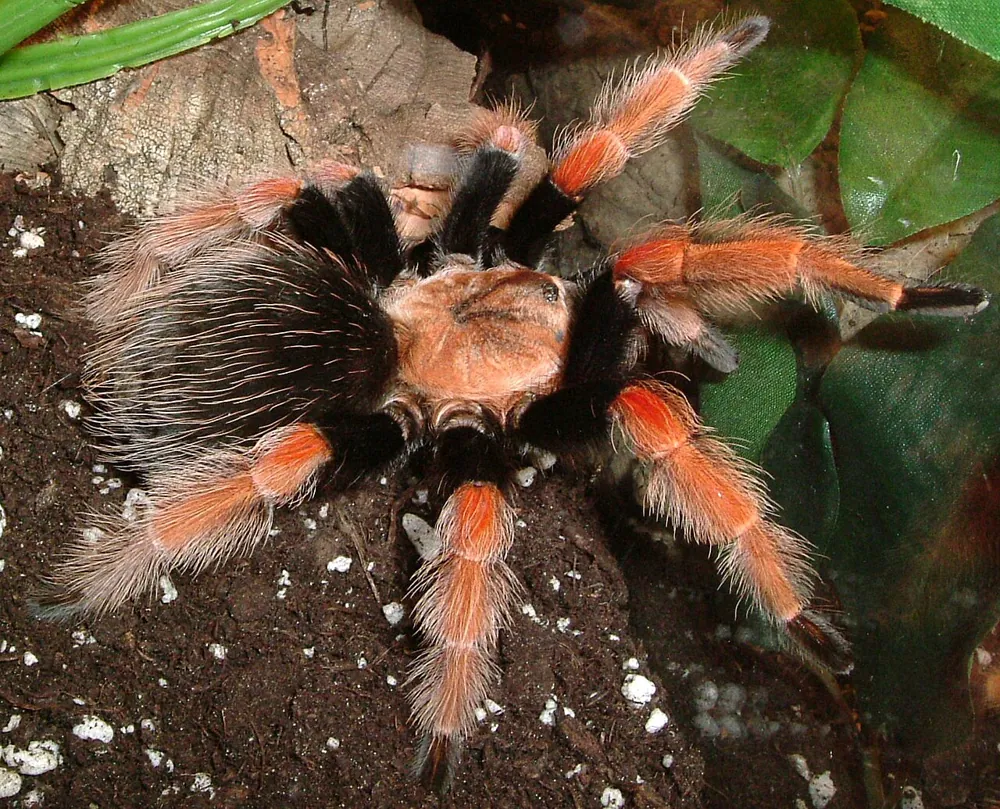
The Mexican fireleg tarantula is a large, long-lived spider with bright orange and black colouring. It lives in dry scrubland in western Guerrero state, Mexico, where it hides in burrows. It is popular in the pet trade, which has put pressure on wild numbers.1



 Jak je rozpoznać
- Dramatic orange and black colouring.1
- Orange carapace (the upper body shell) with a dark black band on the upper legs (femora).1
- Bright, fiery red knees (patellae) that fade to a paler orange further down the leg.1
- Black tips on the feet (tarsi).1
- Adults are 12.7 to 15.2 cm across, converted from 5 to 6 inches.1
Często mylone z: It resembles the Mexican redknee tarantula (Brachypelma hamorii). The main difference is the legs: the knees of the Mexican fireleg are bright red, while the joints of the redknee are orange.1
Siła jadu
Jad wydostaje się przez kły lub zęby, gdy zwierzę gryzie.
Jak bardzo jest niebezpieczne dla ludzi?
Zagrożenie dla ludzi: ŁagodneJak użądlenie pszczoły albo słabiej. W zasadzie nieszkodliwe dla ludzi.The spider is not particularly defensive. Its main defence is its urticating hairs, which it can flick when threatened. Some individuals may have a nervous temperament.1
Co robi, gdy się boi?
When it feels threatened, it flicks urticating hairs at the attacker.1
 Jeśli ugryzie
- Umyj miejsce ugryzienia i je schłódź. Szukaj pomocy medycznej, jeśli ból jest silny albo poszkodowany źle się czuje.
Zawsze najpierw dzwoń na numer alarmowy (112, 000, 911). To ogólne wskazówki pierwszej pomocy, a nie porada medyczna. Podstawy pierwszej pomocy
 Uważaj na siebie
- Nigdy nie dotykaj, nie łap ani nie drażnij dzikiego zwierzęcia, nawet małego, i nawet jeśli wygląda, jakby spało albo było martwe.
- Zostaw mu miejsce. Jeśli je spotkasz, zachowaj spokój, powoli się wycofaj i pozwól mu odejść.
- Jeśli cię ugryzie: zachowaj spokój, nie ruszaj się, zadzwoń na numer alarmowy (112, 000, 911) albo jak najszybciej dotrzyj do szpitala. Zapamiętaj, jak wyglądało, zdjęcie pomaga.
Nie poluje na ciebie. Używa jadu, żeby złapać jedzenie albo się bronić, i dużo bardziej woli się schować. Więcej o bezpieczeństwie
Jakie jest duże?
Jakie jest długie?
 długie jak 5 klocków ułożonych w rzędzie
 100 metrów w 210 s (najszybszy człowiek potrzebuje 9,6)
Mexican fireleg tarantula: jak duże jest w porównaniu z TOBĄ?
Zwykła matematyka w twojej przeglądarce. Nic nie jest zapisywane ani nigdzie wysyłane.
Jak szybkie jest?


Fakty
Tarantulas of this genus are long-lived. Females may live about ten years after reaching maturity, while males usually live only up to a year after their final moult.1
It is commonly kept as a pet and is regarded as suitable for beginners, which has led to heavy collection from the wild.1
It is mostly active after dark, but can sometimes be active during the day, especially in the morning and evening.1
Adults moult at the end of the dry season, between November and June. Males then begin searching for mates.1
Dla znawców jadu
- Nazwa naukowa
- Brachypelma boehmei
- Grupa
- Ptaszniki i atraksy
- Rodzina
- Theraphosidae2
- Kolejność
- Araneae
- Kontynenty
- Ameryka Północna
- Młode
- Mated females produce an egg sac. If it succeeds, the eggs generally hatch three to four weeks before the rainy season begins.1
- Jak sobie radzi na wolności
- Listed on CITES Appendix II, which regulates international trade. Ongoing habitat destruction, illegal pet trade and high mortality before maturity are a considerable concern for its future.1
- Zagrożenie dla ludzi
- 1 / 5: Łagodne3
Skąd pochodzą fakty
- Brachypelma boehmei (Wikipedia (CC BY-SA 4.0))
- Brachypelma boehmei (iNaturalist): nazwy i klasyfikacja.
- Venom Wiki: poziom zagrożenia, typowy rozmiar i szacowana prędkość to nasze własne oceny. Zobacz, jak je ustalamy: Jak oceniamy zagrożenie.
Każdy fakt na tej stronie ma numer, który wskazuje jego źródło. Jeśli coś pomyliliśmy, przepraszamy, jesteśmy fanami zwierząt, a nie czasopismem naukowym. Napisz do nas na [email protected], a poprawimy to.
 Skorpion jest głodny! Venom Wiki to projekt jednej osoby: darmowy, bez reklam i bez śledzenia. Mały napiwek pomaga utrzymać go w sieci.Nakarm skorpiona
Więcej z tej samej grupy: Ptaszniki i atraksy
 Mexican redknee tarantulaPtaszniki i atraksyNieszkodliwe
 Arizona blond tarantulaPtaszniki i atraksyNieszkodliwe
 Ravine trapdoor spiderPtaszniki i atraksyNieszkodliwe
 Trinidad chevron tarantulaPtaszniki i atraksyTylko boli
 Antilles pinktoe tarantulaPtaszniki i atraksyNieszkodliwe
 California trapdoor spiderPtaszniki i atraksyNieszkodliwe
 Żararaka szorstka
 Eastern coral snake
 Eastern diamondback rattlesnake
 Eyelash viper
 Timber rattlesnake
 Western diamondback rattlesnake