
 Afryka
 Azja
Azja Europa
 Ameryka Południowa
 Australia i Oceania
 Antarktyda
 Ocean Spokojny
 Ocean Atlantycki
 Ocean Indyjski
 Ocean Arktyczny
 Morze Śródziemne
 Morze Czerwone
 Morze Karaibskie
 Morze Koralowe
 Morze Południowochińskie
 Morze Filipińskie
 Morze Andamańskie
 Morze Północne
 Morze Timor i Morze Arafura
 Zatoka Bengalska
 Zatoka Kalifornijska
Oriental fire-bellied toad
 Trucizna w skórze
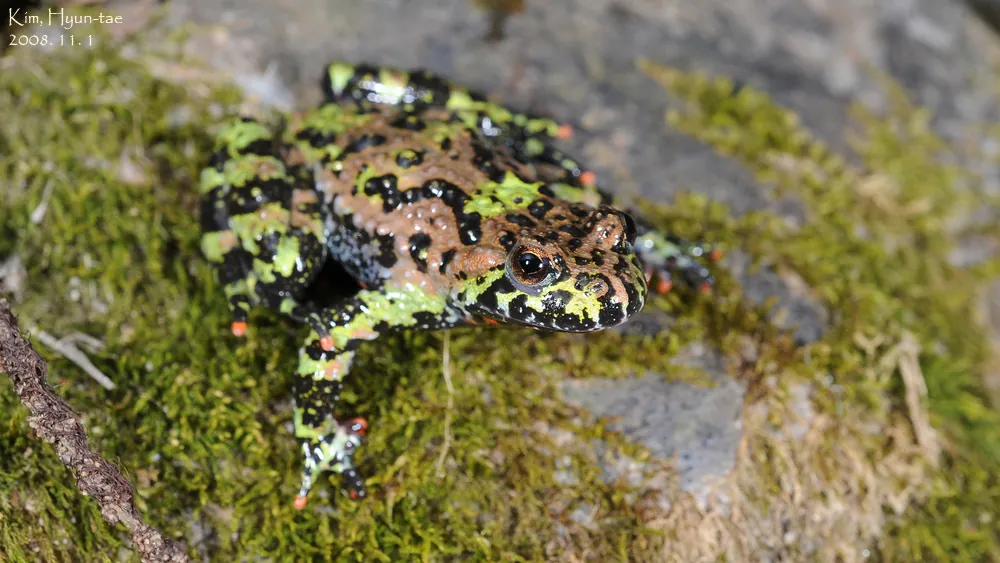
The Oriental fire-bellied toad is a small frog that lives in northeastern Asia, mostly near slow streams, ponds and forests. Its bright belly is a warning: when it is disturbed, it gives off a mild toxin through its skin. It is common across much of its range.1



 Jak je rozpoznać
- Bright grey, brownish or green upper skin with black mottling.1
- Bright yellow, red or orange-red belly, mottled with dark spots.1
- Red finger and toe tips are usually present.1
- Skin on the upper side is covered in small bumps called tubercles, which give it a toad-like look.1
- Adults are about 3.8 to 5.1 cm long.1
Często mylone z: It is often mistaken for a toad, but it is not a true toad. Compared with other Bombina frogs, it has no gular sacs (throat pouches), its belly is usually more red than yellow, and it has bright finger tips.1
Siła trucizny
Jego skóra jest trująca. Niebezpiecznie jest jej dotykać, lizać ją albo ją jeść.
Jak działa jego trucizna?
The toad's skin releases a milky, mildly toxic substance when it is disturbed or frightened, mostly from the hind legs and sometimes the belly. Its toxins are described as mild, and the toxin does not pose a significant threat to human health. Captive toads are generally less toxic than wild ones, because their diet in the wild adds to their toxicity.1
Jak bardzo jest niebezpieczne dla ludzi?
Zagrożenie dla ludzi: ŁagodneJak użądlenie pszczoły albo słabiej. W zasadzie nieszkodliwe dla ludzi.The toxin does not pose a significant threat to human health, but its skin mucus can cause discomfort to the mouth and eyes if the toad is handled.1
Co robi, gdy się boi?
When threatened, it releases toxin from its skin, lies on its back to show its brightly coloured belly, and arches its head and holds up its limbs as a warning.1
 Jeśli ktoś je dotknął lub zjadł
- Jeśli ktoś go dotknął: dokładnie umyj ręce i nie dotykaj oczu ani ust. Jeśli dziecko lub zwierzę domowe je polizało albo zjadło: zadzwoń do ośrodka toksykologicznego albo na numer alarmowy.
Zawsze najpierw dzwoń na numer alarmowy (112, 000, 911). To ogólne wskazówki pierwszej pomocy, a nie porada medyczna. Podstawy pierwszej pomocy
 Uważaj na siebie
- Nigdy nie dotykaj, nie łap ani nie drażnij dzikiego zwierzęcia, nawet małego, i nawet jeśli wygląda, jakby spało albo było martwe.
- Zostaw mu miejsce. Jeśli je spotkasz, zachowaj spokój, powoli się wycofaj i pozwól mu odejść.
- Po dotknięciu lub zjedzeniu: nie trzyj oczu ani ust, umyj ręce i szukaj pomocy medycznej.
Nie poluje na ciebie. Jego trucizna jest tylko po to, żeby nikt go nie zjadł. Więcej o bezpieczeństwie
Jakie jest duże?
Jakie jest długie?
Ile waży?
 krótsze niż twój mały palec
 100 metrów w 180 s (najszybszy człowiek potrzebuje 9,6)
Oriental fire-bellied toad: jak duże jest w porównaniu z TOBĄ?
Zwykła matematyka w twojej przeglądarce. Nic nie jest zapisywane ani nigdzie wysyłane.
Jak szybkie jest?


Fakty
Unusually for a frog, this species has no eardrum or resonator, and it makes its calls by inhaling.1
In experiments, these toads learned to solve mazes using water as a reward, which other frog types did not manage.1
Its skin contains bombesin, a peptide that affects stomach function in mammals. It was first found in its relative, the European fire-bellied toad.1
Males call to females with a light sound that is compared to a musical triangle.1
Grass snakes and other water-dwelling snakes are known to eat these toads without any ill effect.1
In captivity they often live for around 12 years, and some have lived up to 30 years.1
Pogromca mitów
Mit: It is a true toad.
Prawda: It is not a true toad, although its bumpy skin gives it a toad-like appearance.1
Dla znawców jadu
Skąd pochodzą fakty
- Oriental fire-bellied toad (Wikipedia (CC BY-SA 4.0))
- Bombina orientalis (iNaturalist): nazwy i klasyfikacja.
- Venom Wiki: poziom zagrożenia, typowy rozmiar i szacowana prędkość to nasze własne oceny. Zobacz, jak je ustalamy: Jak oceniamy zagrożenie.
Każdy fakt na tej stronie ma numer, który wskazuje jego źródło. Jeśli coś pomyliliśmy, przepraszamy, jesteśmy fanami zwierząt, a nie czasopismem naukowym. Napisz do nas na [email protected], a poprawimy to.
 Skorpion jest głodny! Venom Wiki to projekt jednej osoby: darmowy, bez reklam i bez śledzenia. Mały napiwek pomaga utrzymać go w sieci.Nakarm skorpiona
Więcej z tej samej grupy: Drzewołazy, ropuchy i traszki
 Japanese fire-bellied newtDrzewołazy, ropuchy i traszkiWymaga lekarzaNie dotykaj
 Common toadDrzewołazy, ropuchy i traszkiTylko boliNie dotykaj
 Asian common toadDrzewołazy, ropuchy i traszkiWymaga lekarzaNie dotykaj
 Asiatic toadDrzewołazy, ropuchy i traszkiTylko boliNie dotykaj
 Emperor newtDrzewołazy, ropuchy i traszkiTylko boliNie dotykaj
 Himalayan newtDrzewołazy, ropuchy i traszkiTylko boliNie dotykaj
 Skorpion żółty
 Kobra indyjska
 Efa piaskowa
 Kobra królewska
 Żmija sykliwa
 Żmija Russella