
 Afryka
 Azja
Azja Europa
 Ameryka Południowa
 Australia i Oceania
 Antarktyda
 Ocean Spokojny
 Ocean Atlantycki
 Ocean Indyjski
 Ocean Arktyczny
 Morze Śródziemne
 Morze Czerwone
 Morze Karaibskie
 Morze Koralowe
 Morze Południowochińskie
 Morze Filipińskie
 Morze Andamańskie
 Morze Północne
 Morze Timor i Morze Arafura
 Zatoka Bengalska
 Zatoka Kalifornijska
Common toad
 Trucizna w skórze
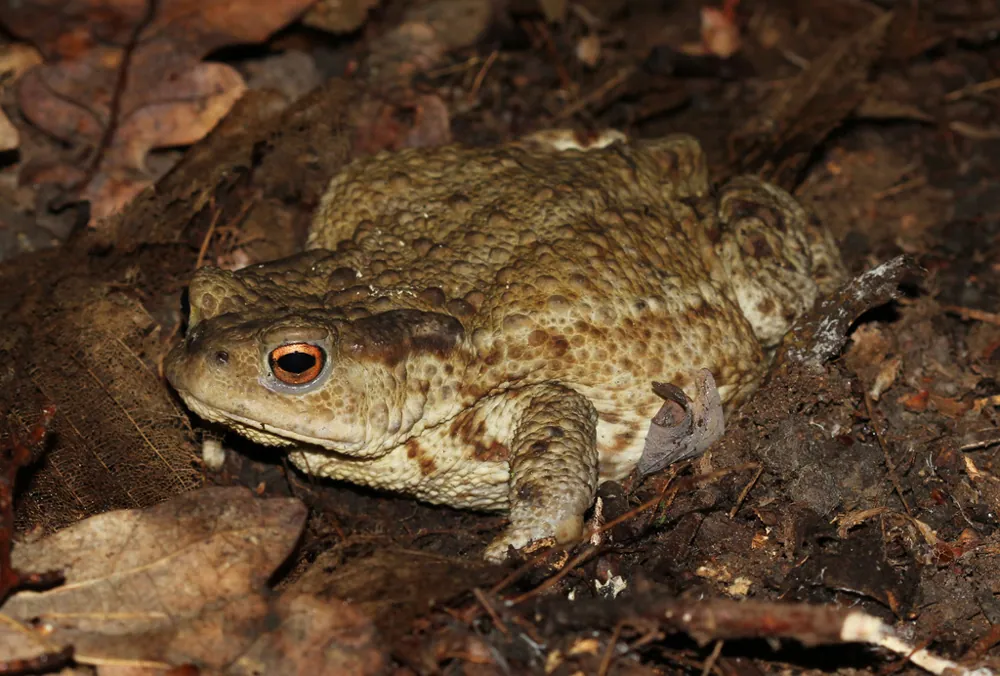
The common toad is a stout, warty toad that lives across most of Europe, in western North Asia and in a small part of northwest Africa. It hides under stones and leaves by day and hunts slugs, beetles and worms at night. Its skin releases a foul-tasting toxin that helps protect it from predators.1
 Jak je rozpoznać
- Greyish-brown, olive-brown or brown skin covered in small, wart-like lumps1
- Bulging paratoid glands just behind the eyes, which are a clear sign of a toad1
- Yellow or copper-coloured eyes with horizontal, slit-shaped pupils1
- No tail, no teeth, and no neck visible between the head and body1
- Walks slowly or makes short shuffling hops, rather than leaping1
Często mylone z: The natterjack toad is usually smaller and has a yellow band down its back. The European green toad has a distinctive mottled pattern. The paratoid glands of both of these run parallel to each other, not slanting as in the common toad. The common frog has a less rounded snout, damp smooth skin, and usually leaps.1
Siła trucizny
Jego skóra jest trująca. Niebezpiecznie jest jej dotykać, lizać ją albo ją jeść.
Jak działa jego trucizna?
The toad is poisonous rather than venomous, so it does not inject venom. Its paratoid glands and other skin glands secrete a noxious, foul-tasting substance containing bufotoxin, which is enough to deter many predators. Grass snakes seem to be unaffected by it.1
Jak bardzo jest niebezpieczne dla ludzi?
Zagrożenie dla ludzi: BolesneMoże naprawdę boleć, ale prawie nigdy nie jest groźne.Co robi, gdy się boi?
When attacked, it inflates its body and stands with its hindquarters raised and its head lowered.1
 Jeśli ktoś je dotknął lub zjadł
- Jeśli ktoś go dotknął: dokładnie umyj ręce i nie dotykaj oczu ani ust. Jeśli dziecko lub zwierzę domowe je polizało albo zjadło: zadzwoń do ośrodka toksykologicznego albo na numer alarmowy.
Zawsze najpierw dzwoń na numer alarmowy (112, 000, 911). To ogólne wskazówki pierwszej pomocy, a nie porada medyczna. Podstawy pierwszej pomocy
 Uważaj na siebie
- Nigdy nie dotykaj, nie łap ani nie drażnij dzikiego zwierzęcia, nawet małego, i nawet jeśli wygląda, jakby spało albo było martwe.
- Zostaw mu miejsce. Jeśli je spotkasz, zachowaj spokój, powoli się wycofaj i pozwól mu odejść.
- Po dotknięciu lub zjedzeniu: nie trzyj oczu ani ust, umyj ręce i szukaj pomocy medycznej.
Nie poluje na ciebie. Jego trucizna jest tylko po to, żeby nikt go nie zjadł. Więcej o bezpieczeństwie
Jakie jest duże?
Jakie jest długie?
 długie jak 5 klocków ułożonych w rzędzie
 100 metrów w 180 s (najszybszy człowiek potrzebuje 9,6)
Common toad: jak duże jest w porównaniu z TOBĄ?
Zwykła matematyka w twojej przeglądarce. Nic nie jest zapisywane ani nigdzie wysyłane.
Jak szybkie jest?


Fakty
Common toads have been recorded at depths of about 99 m in Loch Ness, Scotland, which surprised researchers because it is an air-breathing animal.1
Crows have been seen puncturing the toad's skin and pecking out its liver to avoid the toxin.1
They can live for about ten to twelve years in the wild and have survived for fifty years in captivity.1
Toads can see prey in low light where humans cannot see anything.1
Adults often return to the same breeding pond year after year, and over 80% of males marked as juveniles were found to return to the pond where they were spawned.1
Dla znawców jadu
- Nazwa naukowa
- Bufo bufo
- Grupa
- Drzewołazy, ropuchy i traszki
- Rodzina
- Bufonidae2
- Kolejność
- Anura
- Kontynenty
- Europa, Azja
- Młode
- The female lays eggs in gelatinous strings in the water. These hatch into tadpoles, which take several months to grow and sprout limbs before becoming tiny toads.1
- Długość życia
- około 10 lat1
- Jak sobie radzi na wolności
- Least Concern1
- Zagrożenie dla ludzi
- 2 / 5: Bolesne3
Skąd pochodzą fakty
- Common toad (Wikipedia (CC BY-SA 4.0))
- Bufo bufo (iNaturalist): nazwy i klasyfikacja.
- Venom Wiki: poziom zagrożenia, typowy rozmiar i szacowana prędkość to nasze własne oceny. Zobacz, jak je ustalamy: Jak oceniamy zagrożenie.
Każdy fakt na tej stronie ma numer, który wskazuje jego źródło. Jeśli coś pomyliliśmy, przepraszamy, jesteśmy fanami zwierząt, a nie czasopismem naukowym. Napisz do nas na [email protected], a poprawimy to.
 Skorpion jest głodny! Venom Wiki to projekt jednej osoby: darmowy, bez reklam i bez śledzenia. Mały napiwek pomaga utrzymać go w sieci.Nakarm skorpiona
Więcej z tej samej grupy: Drzewołazy, ropuchy i traszki
 Fire salamanderDrzewołazy, ropuchy i traszkiTylko boliNie dotykaj
 Japanese fire-bellied newtDrzewołazy, ropuchy i traszkiWymaga lekarzaNie dotykaj
 European fire-bellied toadDrzewołazy, ropuchy i traszkiNieszkodliwe
 Iberian ribbed newtDrzewołazy, ropuchy i traszkiNieszkodliwe
 Natterjack toadDrzewołazy, ropuchy i traszkiNieszkodliwe
 Oriental fire-bellied toadDrzewołazy, ropuchy i traszkiNieszkodliwe
 Common European adder
 Spanish fly
 Common wasp
 European hornet
 Western honey bee
 Blunt-nosed viper