
 Afryka
 Azja
Azja Europa
 Ameryka Południowa
 Australia i Oceania
 Antarktyda
 Ocean Spokojny
 Ocean Atlantycki
 Ocean Indyjski
 Ocean Arktyczny
 Morze Śródziemne
 Morze Czerwone
 Morze Karaibskie
 Morze Koralowe
 Morze Południowochińskie
 Morze Filipińskie
 Morze Andamańskie
 Morze Północne
 Morze Timor i Morze Arafura
 Zatoka Bengalska
 Zatoka Kalifornijska
Red-bellied newt
 Trucizna w skórze
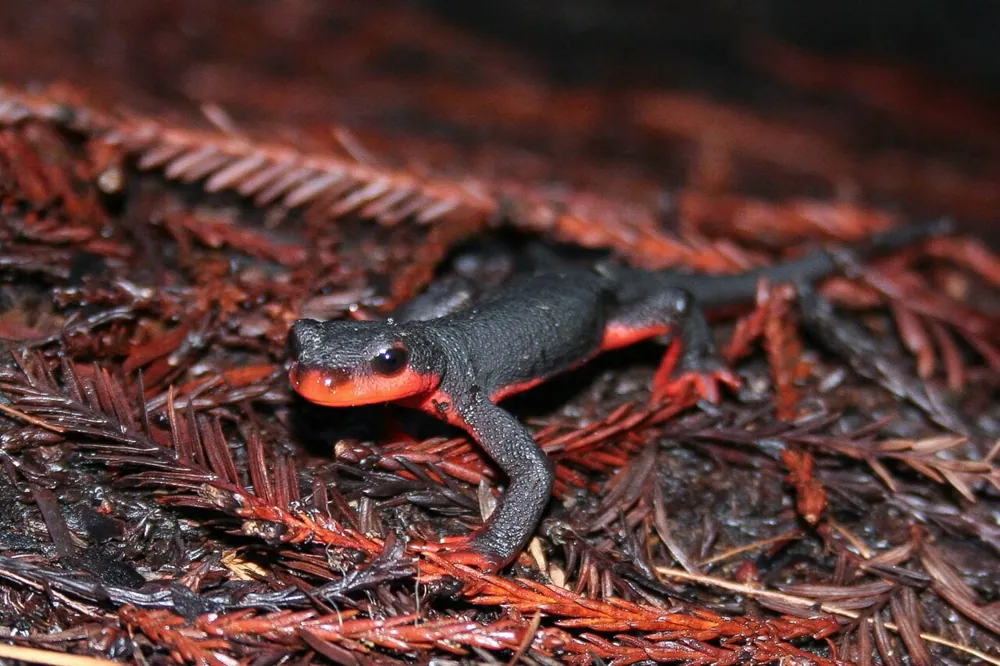
The red-bellied newt is a small amphibian with a brownish-black back and a bright red belly. It lives in coastal woodlands in northern California, mostly on land. Its skin is poisonous, so it is important to leave it alone.1
 Jak je rozpoznać
- Brownish-black upper body with grainy skin1
- Tomato-red underbelly1
- Length of about 7 to 9 cm from nose to vent, and 14 to 19 cm including the tail1
- Males often have a dark, broad patch across the vent; females do not1
- Breeding males have smooth skin and a flattened tail1
Często mylone z: Other coastal newts are similar in shape. The red-bellied newt can be told apart by its red belly and by the lack of yellow in its eyes.1
Siła trucizny
Jego skóra jest trująca. Niebezpiecznie jest jej dotykać, lizać ją albo ją jeść.
Jak działa jego trucizna?
The red-bellied newt is poisonous rather than venomous, so it does not bite or sting. Its skin, eggs and embryos contain tetrodotoxin, a neurotoxin, which is a poison that attacks the nerves. There is enough of it to potentially kill an adult human.1
Jak bardzo jest niebezpieczne dla ludzi?
Zagrożenie dla ludzi: GroźneJeśli ktoś dotknie lub zje to zwierzę, trzeba iść do lekarza. Zgony są bardzo rzadkie.The newt's skin is poisonous to touch and to eat. Its toxin is strong enough to potentially kill an adult human. It is also nearly inedible, and few animals eat it.1
Co robi, gdy się boi?
When disturbed, it pulls its head and tail back to show its bright-red underside, which warns predators that it is poisonous.1
 Jeśli ktoś je dotknął lub zjadł
- Jeśli ktoś go dotknął: dokładnie umyj ręce i nie dotykaj oczu ani ust. Jeśli dziecko lub zwierzę domowe je polizało albo zjadło: zadzwoń do ośrodka toksykologicznego albo na numer alarmowy.
Zawsze najpierw dzwoń na numer alarmowy (112, 000, 911). To ogólne wskazówki pierwszej pomocy, a nie porada medyczna. Podstawy pierwszej pomocy
 Uważaj na siebie
- Nigdy nie dotykaj, nie łap ani nie drażnij dzikiego zwierzęcia, nawet małego, i nawet jeśli wygląda, jakby spało albo było martwe.
- Zostaw mu miejsce. Jeśli je spotkasz, zachowaj spokój, powoli się wycofaj i pozwól mu odejść.
- Po dotknięciu lub zjedzeniu: nie trzyj oczu ani ust, umyj ręce i szukaj pomocy medycznej.
Nie poluje na ciebie. Jego trucizna jest tylko po to, żeby nikt go nie zjadł. Więcej o bezpieczeństwie
Jakie jest duże?
Jakie jest długie?
 długie jak 6 klocków ułożonych w rzędzie
Red-bellied newt: jak duże jest w porównaniu z TOBĄ?
Zwykła matematyka w twojej przeglądarce. Nic nie jest zapisywane ani nigdzie wysyłane.
Jak szybkie jest?


Fakty
Like other newts, they can regrow several body parts, including their limbs, eyes, hearts, intestines, jaws and damaged spinal cords.1
They can find their way back to the same spot in a stream over several miles of rugged terrain, probably by using their sense of smell.1
Red-bellied newts can live for 20 to 30 years.1
Adults leave the water and live underground until they are ready to breed, which usually happens after four to six years.1
Females do not breed every year, unlike the males.1
Dla znawców jadu
- Nazwa naukowa
- Taricha rivularis
- Grupa
- Drzewołazy, ropuchy i traszki
- Rodzina
- Salamandridae2
- Kolejność
- Caudata
- Kontynenty
- Ameryka Północna
- Młode
- Newts start life as aquatic larvae, similar to tadpoles, with external gills. Females lay their eggs in about 12 clusters, with six to 16 eggs in each cluster.1
- Długość życia
- około 30 lat1
- Zagrożenie dla ludzi
- 3 / 5: Groźne3
Skąd pochodzą fakty
- Red-bellied newt (Wikipedia (CC BY-SA 4.0))
- Taricha rivularis (iNaturalist): nazwy i klasyfikacja.
- Venom Wiki: poziom zagrożenia, typowy rozmiar i szacowana prędkość to nasze własne oceny. Zobacz, jak je ustalamy: Jak oceniamy zagrożenie.
Każdy fakt na tej stronie ma numer, który wskazuje jego źródło. Jeśli coś pomyliliśmy, przepraszamy, jesteśmy fanami zwierząt, a nie czasopismem naukowym. Napisz do nas na [email protected], a poprawimy to.
 Skorpion jest głodny! Venom Wiki to projekt jednej osoby: darmowy, bez reklam i bez śledzenia. Mały napiwek pomaga utrzymać go w sieci.Nakarm skorpiona
Więcej z tej samej grupy: Drzewołazy, ropuchy i traszki
 Cane toadDrzewołazy, ropuchy i traszkiWymaga lekarzaNie dotykaj
 Strawberry poison-dart frogDrzewołazy, ropuchy i traszkiTylko boliNie dotykaj
 California newtDrzewołazy, ropuchy i traszkiMoże zabićNie dotykaj
 Rough-skinned newtDrzewołazy, ropuchy i traszkiMoże zabićNie dotykaj
 Colorado River toadDrzewołazy, ropuchy i traszkiWymaga lekarzaNie dotykaj
 Panamanian golden frogDrzewołazy, ropuchy i traszkiWymaga lekarzaNie dotykaj
 Żararaka szorstka
 Eastern coral snake
 Eastern diamondback rattlesnake
 Eyelash viper
 Timber rattlesnake
 Western diamondback rattlesnake
.jpg)