
 Afryka
 Azja
Azja Europa
 Ameryka Południowa
 Australia i Oceania
 Antarktyda
 Ocean Spokojny
 Ocean Atlantycki
 Ocean Indyjski
 Ocean Arktyczny
 Morze Śródziemne
 Morze Czerwone
 Morze Karaibskie
 Morze Koralowe
 Morze Południowochińskie
 Morze Filipińskie
 Morze Andamańskie
 Morze Północne
 Morze Timor i Morze Arafura
 Zatoka Bengalska
 Zatoka Kalifornijska
Rhinoceros viper
 Ugryzienia
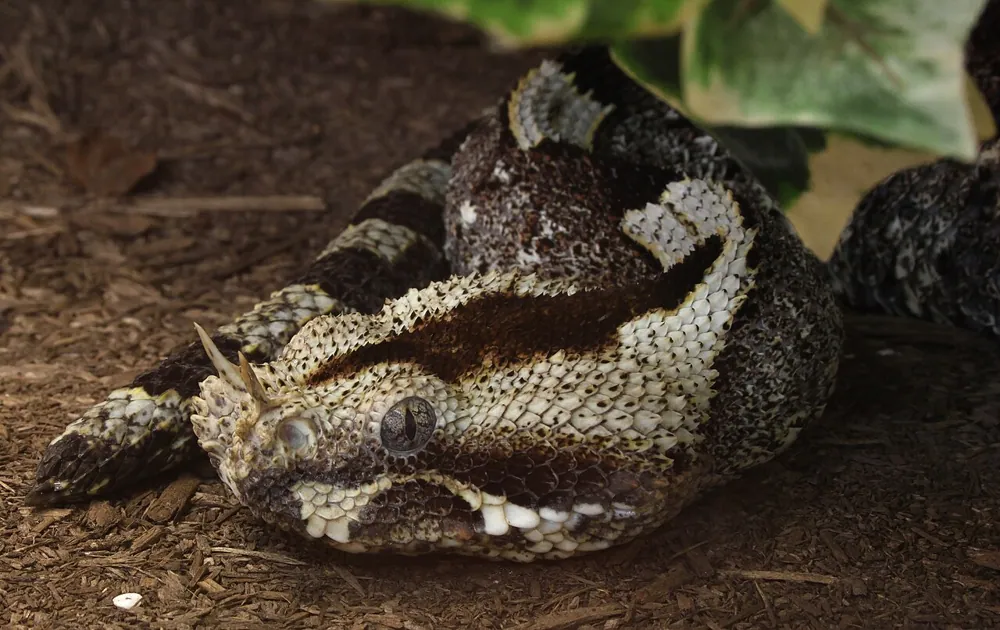
The rhinoceros viper is a large, stout snake with bright colours and two or three horn-like scales on its nose. It lives in forests across West and Central Africa. It is venomous, and its venom is mainly hemotoxic, meaning it attacks the blood and circulation.1



 Jak je rozpoznać
- Large and stout, with rough, heavily keeled scales1
- Two or three horn-like scales on the end of the nose, the front pair often long1
- Series of blue or blue-green oblong markings, each with a lemon-yellow line down the centre, set within black blotches1
- Dark crimson triangles down the flanks, bordered with green or blue1
- Top of the head blue or green, with a black arrow mark1
Często mylone z: The name horned puff adder is also used for Bitis caudalis (horned adder), which is a different species. Because of this, names can cause confusion, so the name butterfly viper is preferred.1
Siła jadu
Jad wydostaje się przez kły lub zęby, gdy zwierzę gryzie.
Jak działa jego jad?
Its venom is mainly hemotoxic, which attacks the circulatory system, destroying tissue and blood vessels and causing internal bleeding. It also has a neurotoxic component, which attacks the nerves. Small doses of the venom can be deadly. In the few detailed reports of human bites, massive swelling was described, which may lead to necrosis (death of tissue).1
Jak bardzo jest niebezpieczne dla ludzi?
Zagrożenie dla ludzi: Bardzo niebezpieczneMoże zabić człowieka, który nie dostanie leczenia.Because its range is restricted, few bites have been reported and no statistics are available. In 2003 a man in Dayton, Ohio, who kept one as a pet, was bitten and died.1
 Dobra wiadomość: lekarze mają na to lek (surowicę przeciwjadową) albo leczenie.1
Co robi, gdy się boi?
When approached it often reveals its presence with a very loud hiss, almost a shriek, and it can strike quickly forwards or sideways without coiling first or giving a warning.1
 Jeśli ugryzie
- Trzymaj poszkodowanego w bezruchu i spokoju, trzymaj ugryzioną kończynę na wysokości serca, zdejmij pierścionki i to, co ciasne, i jak najszybciej dotrzyj do szpitala.
Zawsze najpierw dzwoń na numer alarmowy (112, 000, 911). To ogólne wskazówki pierwszej pomocy, a nie porada medyczna. Podstawy pierwszej pomocy
 Uważaj na siebie
- Nigdy nie dotykaj, nie łap ani nie drażnij dzikiego zwierzęcia, nawet małego, i nawet jeśli wygląda, jakby spało albo było martwe.
- Zostaw mu miejsce. Jeśli je spotkasz, zachowaj spokój, powoli się wycofaj i pozwól mu odejść.
- Jeśli cię ugryzie: zachowaj spokój, nie ruszaj się, zadzwoń na numer alarmowy (112, 000, 911) albo jak najszybciej dotrzyj do szpitala. Zapamiętaj, jak wyglądało, zdjęcie pomaga.
Nie poluje na ciebie. Używa jadu, żeby złapać jedzenie albo się bronić, i dużo bardziej woli się schować. Więcej o bezpieczeństwie
Jakie jest duże?
Jakie jest długie?
 długie jak 2 kotów domowych od nosa do ogona
 długie jak 6 bananów ułożonych jeden za drugim
 100 metrów w 100 s (najszybszy człowiek potrzebuje 9,6)
Rhinoceros viper: jak duże jest w porównaniu z TOBĄ?
Zwykła matematyka w twojej przeglądarce. Nic nie jest zapisywane ani nigdzie wysyłane.
Jak szybkie jest?


Fakty
Its scales are so rough that they can cut people who handle a snake that is struggling.1
Its vivid colours break up its outline in the dappled light of the forest floor, so it is very hard to see.1
Its fangs are not large, rarely more than 1.5 cm long, and when not in use they fold up into the roof of its mouth.1
Its bright colours fade quickly after it sheds its skin, as silt from its moist habitat builds up on its rough scales.1
At least one antivenom, called India Antiserum Africa Polyvalent, protects specifically against bites from this species.1
Pogromca mitów
Mit: Its bright colours make it easy to spot in the forest.
Prawda: Its colours give it excellent camouflage in the dappled light of the forest floor, which can make it almost invisible.1
Skąd pochodzą fakty
- Bitis nasicornis (Wikipedia (CC BY-SA 4.0))
- Bitis nasicornis (iNaturalist): nazwy i klasyfikacja.
- Venom Wiki: poziom zagrożenia, typowy rozmiar i szacowana prędkość to nasze własne oceny. Zobacz, jak je ustalamy: Jak oceniamy zagrożenie.
Każdy fakt na tej stronie ma numer, który wskazuje jego źródło. Jeśli coś pomyliliśmy, przepraszamy, jesteśmy fanami zwierząt, a nie czasopismem naukowym. Napisz do nas na [email protected], a poprawimy to.
 Skorpion jest głodny! Venom Wiki to projekt jednej osoby: darmowy, bez reklam i bez śledzenia. Mały napiwek pomaga utrzymać go w sieci.Nakarm skorpiona
 Żmija sykliwa
 Gaboon viper
 Northeast African carpet viper
 West African carpet viper
 West African Gaboon viper
 Horned adder
 Mamba czarna
 Skorpion żółty
 Kobra egipska
 Boomslang
 Fat-tailed scorpion
 Western honey bee
.jpg)