
 Afryka
 Azja
Azja Europa
 Ameryka Południowa
 Australia i Oceania
 Antarktyda
 Ocean Spokojny
 Ocean Atlantycki
 Ocean Indyjski
 Ocean Arktyczny
 Morze Śródziemne
 Morze Czerwone
 Morze Karaibskie
 Morze Koralowe
 Morze Południowochińskie
 Morze Filipińskie
 Morze Andamańskie
 Morze Północne
 Morze Timor i Morze Arafura
 Zatoka Bengalska
 Zatoka Kalifornijska
Rusty-winged tarantula hawk
 Użądlenia
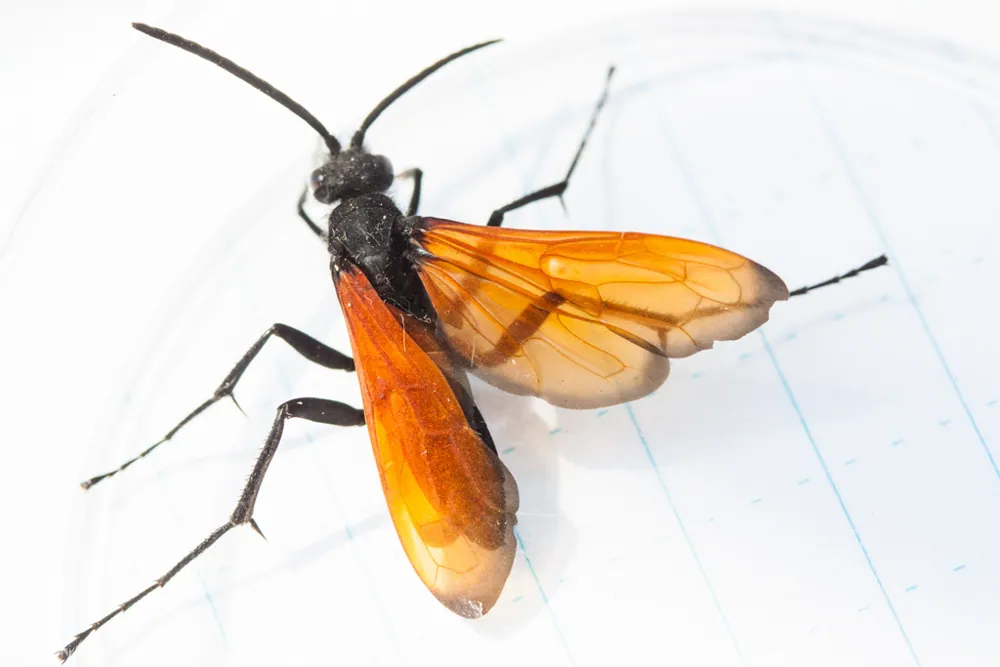
The rusty-winged tarantula hawk is a large wasp, with a matte black body and rust-orange wings. It lives in the dry Southwestern United States. Its sting is strong enough to paralyse a tarantula, which the wasp then uses to feed its young.1


 Jak je rozpoznać
- Matte black body with rust-orange wings1
- Grows up to 5 cm long, among the largest wasps of its order1
- Long legs, used to grapple with prey1
- Males are smaller and more slender than females, with a more vibrant wing colour1
- The antenna has twelve segments1
Często mylone z: Its relatives in the genus Pepsis look very similar. Pepsis wasps are more metallic black, with deep-blue striped patterns. The only reliable way to tell them apart is by the pattern of veins in their wings.1
Siła jadu
Jad wydostaje się przez żądło.
Jak działa jego jad?
Its sting paralyses a tarantula but keeps it alive, so the spider stays fresh food for the larva. The sting is described as powerful and debilitating. It is ranked among the most painful stings in the insect world on the Schmidt sting pain index.1
Jak bardzo jest niebezpieczne dla ludzi?
Zagrożenie dla ludzi: BolesneMoże naprawdę boleć, ale prawie nigdy nie jest groźne.Its sting is among the most painful known from insects and is described as debilitating. The sting deters nearly all predators, including birds and lizards.1
Co robi, gdy się boi?
Its painful sting deters nearly all predators.1
 Jeśli użądli
- Wyskrob żądło pszczoły i schłodź to miejsce.
- Jeśli poszkodowany ma trudności z oddychaniem, obrzęk twarzy lub gardła albo czuje, że mdleje, to nagły przypadek alergiczny: zadzwoń na numer alarmowy i użyj jego automatycznego wstrzykiwacza z adrenaliną, jeśli go ma.
Zawsze najpierw dzwoń na numer alarmowy (112, 000, 911). To ogólne wskazówki pierwszej pomocy, a nie porada medyczna. Podstawy pierwszej pomocy
 Uważaj na siebie
- Nigdy nie dotykaj, nie łap ani nie drażnij dzikiego zwierzęcia, nawet małego, i nawet jeśli wygląda, jakby spało albo było martwe.
- Zostaw mu miejsce. Jeśli je spotkasz, zachowaj spokój, powoli się wycofaj i pozwól mu odejść.
- Jeśli cię użądli: zachowaj spokój, nie ruszaj się, zadzwoń na numer alarmowy (112, 000, 911) albo jak najszybciej dotrzyj do szpitala. Zapamiętaj, jak wyglądało, zdjęcie pomaga.
Nie poluje na ciebie. Używa jadu, żeby złapać jedzenie albo się bronić, i dużo bardziej woli się schować. Więcej o bezpieczeństwie
Jakie jest duże?
Jakie jest długie?
 krótsze niż twój mały palec
 przelot przez całe boisko piłkarskie w 9 s
Rusty-winged tarantula hawk: jak duże jest w porównaniu z TOBĄ?
Zwykła matematyka w twojej przeglądarce. Nic nie jest zapisywane ani nigdzie wysyłane.
Jak szybkie jest?


Fakty
The larva eats its living host from the inside. It hollows out the tarantula until the spider dies, once feeding reaches the bases of its legs.1
After paralysing a tarantula, the female may drag it up to 100 m to a burrow or cavity, where she seals it in with her egg.1
Males fight for territory in mid-air. The two wasps clash wings and spiral upwards, and larger males usually win and push smaller males off the best perches.1
Males gather on mountain ridges in great numbers during the breeding season, while females are rarely seen.1
Adult wasps do not grow after they emerge, so smaller males are at a permanent disadvantage when competing with larger ones.1
Dla znawców jadu
- Nazwa naukowa
- Hemipepsis ustulata
- Grupa
- Pszczoły, osy i szerszenie
- Rodzina
- Pompilidae2
- Kolejność
- Hymenoptera
- Kontynenty
- Ameryka Północna
- Młode
- The female lays one egg on each tarantula she has paralysed. The egg is about 5 mm long, and the larva that hatches from it feeds on the spider.1
- Zagrożenie dla ludzi
- 2 / 5: Bolesne3
Skąd pochodzą fakty
- Hemipepsis ustulata (Wikipedia (CC BY-SA 4.0))
- Hemipepsis ustulata (iNaturalist): nazwy i klasyfikacja.
- Venom Wiki: poziom zagrożenia, typowy rozmiar i szacowana prędkość to nasze własne oceny. Zobacz, jak je ustalamy: Jak oceniamy zagrożenie.
Każdy fakt na tej stronie ma numer, który wskazuje jego źródło. Jeśli coś pomyliliśmy, przepraszamy, jesteśmy fanami zwierząt, a nie czasopismem naukowym. Napisz do nas na [email protected], a poprawimy to.
 Skorpion jest głodny! Venom Wiki to projekt jednej osoby: darmowy, bez reklam i bez śledzenia. Mały napiwek pomaga utrzymać go w sieci.Nakarm skorpiona
Więcej z tej samej grupy: Pszczoły, osy i szerszenie
 Tarantula hawkPszczoły, osy i szerszenieTylko boli
 Executioner waspPszczoły, osy i szerszenieWymaga lekarza
 Warrior waspPszczoły, osy i szerszenieWymaga lekarza
 Bald-faced hornetPszczoły, osy i szerszenieTylko boli
 Cow killer velvet antPszczoły, osy i szerszenieTylko boli
 Eastern cicada killerPszczoły, osy i szerszenieNieszkodliwe
 Żararaka szorstka
 Eastern coral snake
 Eastern diamondback rattlesnake
 Eyelash viper
 Timber rattlesnake
 Western diamondback rattlesnake