
 Afryka
 Azja
Azja Europa
 Ameryka Południowa
 Australia i Oceania
 Antarktyda
 Ocean Spokojny
 Ocean Atlantycki
 Ocean Indyjski
 Ocean Arktyczny
 Morze Śródziemne
 Morze Czerwone
 Morze Karaibskie
 Morze Koralowe
 Morze Południowochińskie
 Morze Filipińskie
 Morze Andamańskie
 Morze Północne
 Morze Timor i Morze Arafura
 Zatoka Bengalska
 Zatoka Kalifornijska
Saddleback caterpillar
 Parzące włoski
The saddleback caterpillar is the larva of a moth found in eastern North America and Mexico. It is green with a brown saddle-shaped marking on its back, and its spiny hairs can cause a painful rash. Gardeners who handle plants where it lives are most at risk of contact.1

 Jak je rozpoznać
- Primarily lime-green, with brown at both ends.1
- A dark brown centre marking, outlined in white and black, that looks like a saddle.1
- A pair of fleshy horns, called tentacles, at each end of the body, which are orange or black as the caterpillar grows.1
- Tufts of spines along the body, with a row of orange spines along the sides.1
- Some larvae have a false face at the rear, with two pale dots that look like large eyes.1
Siła jadu
Malutkie włoski lub szczecinki odłamują się w skórze i parzą.
Jak działa jego jad?
The hairs and spines contain an irritating venom that is released when they touch skin or are broken. Contact causes a painful, swollen rash and sometimes nausea. Severe reactions are possible and can include migraines, breathing trouble related to asthma, anaphylactic shock (a dangerous allergic reaction) and bleeding. Symptoms can last from a few hours to a few days, depending on how sensitive a person is.1
Jak bardzo jest niebezpieczne dla ludzi?
Zagrożenie dla ludzi: BolesneMoże naprawdę boleć, ale prawie nigdy nie jest groźne.This caterpillar has one of the strongest stings of its kind. Gardeners are most at risk because the caterpillar is common on ornamental plants. Symptoms vary from mild to severe, and the sensitivity of the person affected makes a difference.1
 Dobra wiadomość: lekarze mają na to lek (surowicę przeciwjadową) albo leczenie.1
Co robi, gdy się boi?
When threatened, the larva curls outwards so its spines are hard for a predator to avoid, and its bright colours warn of its toxicity.1
 Jeśli dotkniesz jego włosków
- Remove the spines from the skin immediately using adhesive tape over the affected area, with a new piece of tape for each treatment, to stop the venom spreading. Ice packs, corticosteroids and antihistamines (taken orally or applied to the skin) have been reported to help relieve pain. Symptoms are relieved with prescribed medication on a case-by-case basis.1
- Przy parzących włoskach gąsienic: zdejmij je taśmą klejącą, a potem umyj skórę. Nie pocieraj.
- Przy ugryzieniach: umyj i schłodź. Szukaj pomocy medycznej, jeśli poszkodowany źle się czuje albo łatwo krwawi.
Zawsze najpierw dzwoń na numer alarmowy (112, 000, 911). To ogólne wskazówki pierwszej pomocy, a nie porada medyczna. Podstawy pierwszej pomocy
 Uważaj na siebie
- Nigdy nie dotykaj, nie łap ani nie drażnij dzikiego zwierzęcia, nawet małego, i nawet jeśli wygląda, jakby spało albo było martwe.
- Zostaw mu miejsce. Jeśli je spotkasz, zachowaj spokój, powoli się wycofaj i pozwól mu odejść.
- Jeśli dotkniesz jego włosków: zachowaj spokój, nie ruszaj się, zadzwoń na numer alarmowy (112, 000, 911) albo jak najszybciej dotrzyj do szpitala. Zapamiętaj, jak wyglądało, zdjęcie pomaga.
Nie poluje na ciebie. Używa jadu, żeby złapać jedzenie albo się bronić, i dużo bardziej woli się schować. Więcej o bezpieczeństwie
Jakie jest duże?
Jakie jest długie?
 mniej więcej długości spinacza
 wolniejsze niż ślimak winniczek
Saddleback caterpillar: jak duże jest w porównaniu z TOBĄ?
Zwykła matematyka w twojej przeglądarce. Nic nie jest zapisywane ani nigdzie wysyłane.
Jak szybkie jest?

Fakty
The false face on the rear end is thought to confuse predators, which may attack the wrong end.1
Its cocoon is made of silk mixed with its stinging spines, which protect the pupa during metamorphosis.1
Braconid wasps often lay their eggs inside these caterpillars, and the wasp larvae feed from the inside and later emerge through holes in the body.1
Like other slug caterpillars, it moves on suckers and mucus, which help it roll and stick to surfaces.1
The adult moth has no sting and lives about 10 days on average.1
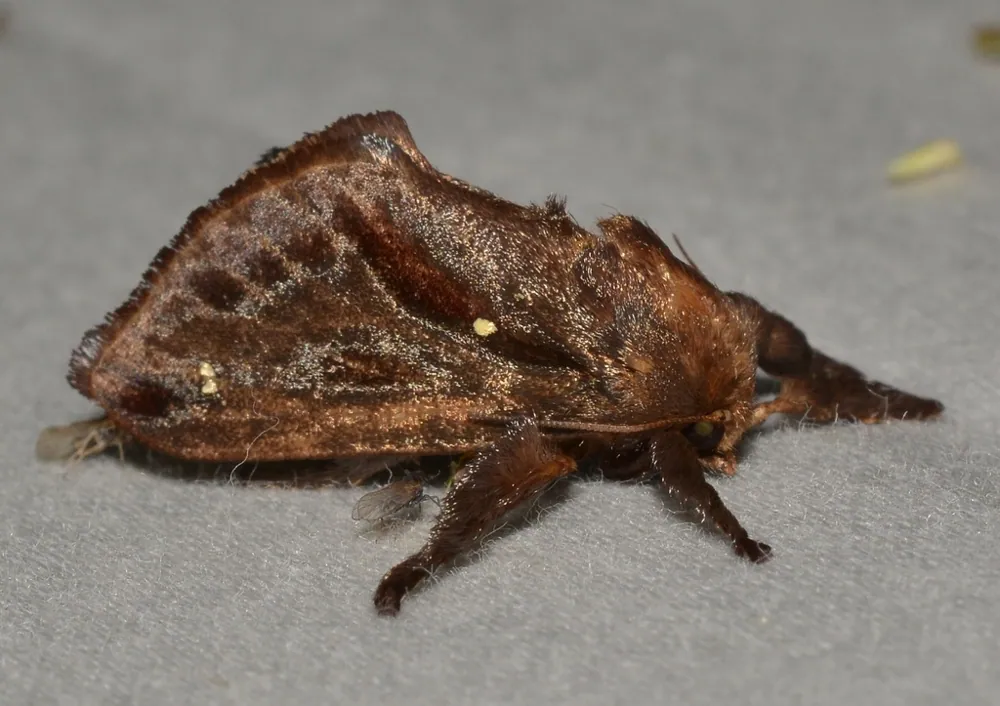
The adult moth loses the caterpillar's bright colours and has velvety dark brown forewings and cream hindwings.1
Skąd pochodzą fakty
- Saddleback caterpillar (Wikipedia (CC BY-SA 4.0))
- Acharia stimulea (iNaturalist): nazwy i klasyfikacja.
- Venom Wiki: poziom zagrożenia, typowy rozmiar i szacowana prędkość to nasze własne oceny. Zobacz, jak je ustalamy: Jak oceniamy zagrożenie.
Każdy fakt na tej stronie ma numer, który wskazuje jego źródło. Jeśli coś pomyliliśmy, przepraszamy, jesteśmy fanami zwierząt, a nie czasopismem naukowym. Napisz do nas na [email protected], a poprawimy to.
 Skorpion jest głodny! Venom Wiki to projekt jednej osoby: darmowy, bez reklam i bez śledzenia. Mały napiwek pomaga utrzymać go w sieci.Nakarm skorpiona
 Giant water bug
 Puss caterpillar
 Wheel bug
 Giant vinegaroon
 Rhodnius kissing bug
 Black-waved flannel moth
 Terciopelo
 Eastern coral snake
 Eastern diamondback rattlesnake
 Eyelash viper
 Timber rattlesnake
 Western diamondback rattlesnake