
 Afryka
 Azja
Azja Europa
 Ameryka Południowa
 Australia i Oceania
 Antarktyda
 Ocean Spokojny
 Ocean Atlantycki
 Ocean Indyjski
 Ocean Arktyczny
 Morze Śródziemne
 Morze Czerwone
 Morze Karaibskie
 Morze Koralowe
 Morze Południowochińskie
 Morze Filipińskie
 Morze Andamańskie
 Morze Północne
 Morze Timor i Morze Arafura
 Zatoka Bengalska
 Zatoka Kalifornijska
South American bushmaster
 Ugryzienia
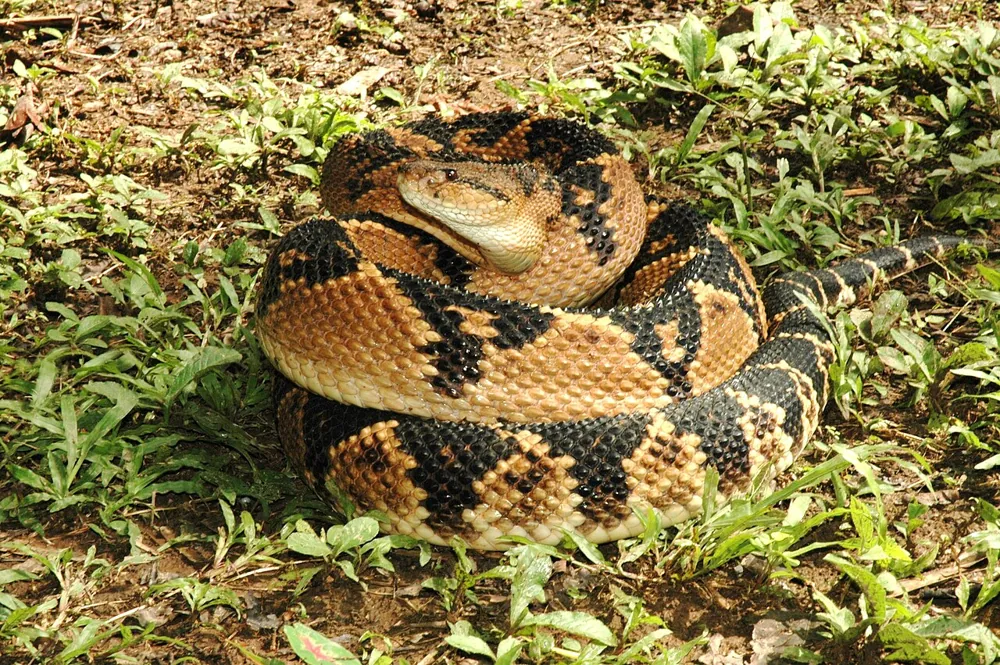
The South American bushmaster is one of the longest vipers in the world, and it is the longest venomous snake in the Western Hemisphere. It lives in the equatorial forests east of the Andes and on the island of Trinidad. Its bite is dangerous, so it is important to know what it looks like.1



 Jak je rozpoznać
- Its ground colour is yellowish, reddish or grey-brown.1
- Dark brown or black blotches run along the body, forming inverted triangles on the sides.1
- Adults are usually 2 to 2.5 m long, and 3 m is not unusual.1
- The head is broad and clearly separate from the narrow neck.1
- The tail is short and ends in a spine. When alarmed it vibrates the tail, which makes a loud rustling in undergrowth.1
Często mylone z: It is similar in appearance to rattlesnakes. It has no rattle, so its tail vibration sounds like rustling leaves rather than a rattle.1
Siła jadu
Jad wydostaje się przez kły lub zęby, gdy zwierzę gryzie.
Jak działa jego jad?
Its venom breaks down tissue, stops blood from clotting, and can cause bleeding. It also has effects on the nerves. At the bite there is pain, swelling, bruising, blisters and skin death. Whole-body effects include low blood pressure, dizziness, vision problems, a slow heartbeat, vomiting, diarrhoea and kidney failure.1
Jak bardzo jest niebezpieczne dla ludzi?
Zagrożenie dla ludzi: Bardzo niebezpieczneMoże zabić człowieka, który nie dostanie leczenia.Its bites are often fatal. Lab tests show its venom is weak, but the mortality rate of bite victims is high. In reported cases, a 7-year-old boy in Brazil died about 15 minutes after being bitten, and a 5-year-old child in Mato Grosso went into shock about 30 minutes after a bite and died within 90 minutes.1
Co robi, gdy się boi?
When threatened it vibrates its tail, which makes a loud rustling sound in the undergrowth.1
 Jeśli ugryzie
- Trzymaj poszkodowanego w bezruchu i spokoju, trzymaj ugryzioną kończynę na wysokości serca, zdejmij pierścionki i to, co ciasne, i jak najszybciej dotrzyj do szpitala.
Zawsze najpierw dzwoń na numer alarmowy (112, 000, 911). To ogólne wskazówki pierwszej pomocy, a nie porada medyczna. Podstawy pierwszej pomocy
 Uważaj na siebie
- Nigdy nie dotykaj, nie łap ani nie drażnij dzikiego zwierzęcia, nawet małego, i nawet jeśli wygląda, jakby spało albo było martwe.
- Zostaw mu miejsce. Jeśli je spotkasz, zachowaj spokój, powoli się wycofaj i pozwól mu odejść.
- Jeśli cię ugryzie: zachowaj spokój, nie ruszaj się, zadzwoń na numer alarmowy (112, 000, 911) albo jak najszybciej dotrzyj do szpitala. Zapamiętaj, jak wyglądało, zdjęcie pomaga.
Nie poluje na ciebie. Używa jadu, żeby złapać jedzenie albo się bronić, i dużo bardziej woli się schować. Więcej o bezpieczeństwie
Jakie jest duże?
Jakie jest długie?
Ile waży?
 długie jak 4 psów od nosa do ogona
 długie jak 20 bananów ułożonych jeden za drugim
 waży mniej więcej tyle co kot domowy
 100 metrów w 71 s (najszybszy człowiek potrzebuje 9,6)
South American bushmaster: jak duże jest w porównaniu z TOBĄ?
Zwykła matematyka w twojej przeglądarce. Nic nie jest zapisywane ani nigdzie wysyłane.
Jak szybkie jest?


Fakty
It is the longest viper in the world.1
It is the third longest venomous snake in the world, after the king cobra and the black mamba.1
Stress also lowers its venom yield. One specimen's yield fell from 233 mg to 64 mg while it was kept in captivity.1
Its name Lachesis comes from one of the three Fates of Greek mythology, who was said to decide how long a person would live.1
It rarely lives long in captivity, because stress makes it unwell.1
Pogromca mitów
Mit: Its venom is weak, so its bite is not very serious.
Prawda: Lab tests show low toxicity, but bite victims die at a high rate, so the bite is very dangerous.1
Skąd pochodzą fakty
- Lachesis muta (Wikipedia (CC BY-SA 4.0))
- Lachesis muta (iNaturalist): nazwy i klasyfikacja.
- Venom Wiki: poziom zagrożenia, typowy rozmiar i szacowana prędkość to nasze własne oceny. Zobacz, jak je ustalamy: Jak oceniamy zagrożenie.
Każdy fakt na tej stronie ma numer, który wskazuje jego źródło. Jeśli coś pomyliliśmy, przepraszamy, jesteśmy fanami zwierząt, a nie czasopismem naukowym. Napisz do nas na [email protected], a poprawimy to.
 Skorpion jest głodny! Venom Wiki to projekt jednej osoby: darmowy, bez reklam i bez śledzenia. Mały napiwek pomaga utrzymać go w sieci.Nakarm skorpiona
 Żararaka szorstka
 Eyelash viper
 Golden lancehead
 Common lancehead
 Jararaca
 Jararacussu
 Liściołaz żółty
 Brazilian wandering spider
 Cane toad
 Peruvian giant centipede
 Bullet ant
 Common vampire bat