
 Afryka
 Azja
Azja Europa
 Ameryka Południowa
 Australia i Oceania
 Antarktyda
 Ocean Spokojny
 Ocean Atlantycki
 Ocean Indyjski
 Ocean Arktyczny
 Morze Śródziemne
 Morze Czerwone
 Morze Karaibskie
 Morze Koralowe
 Morze Południowochińskie
 Morze Filipińskie
 Morze Andamańskie
 Morze Północne
 Morze Timor i Morze Arafura
 Zatoka Bengalska
 Zatoka Kalifornijska
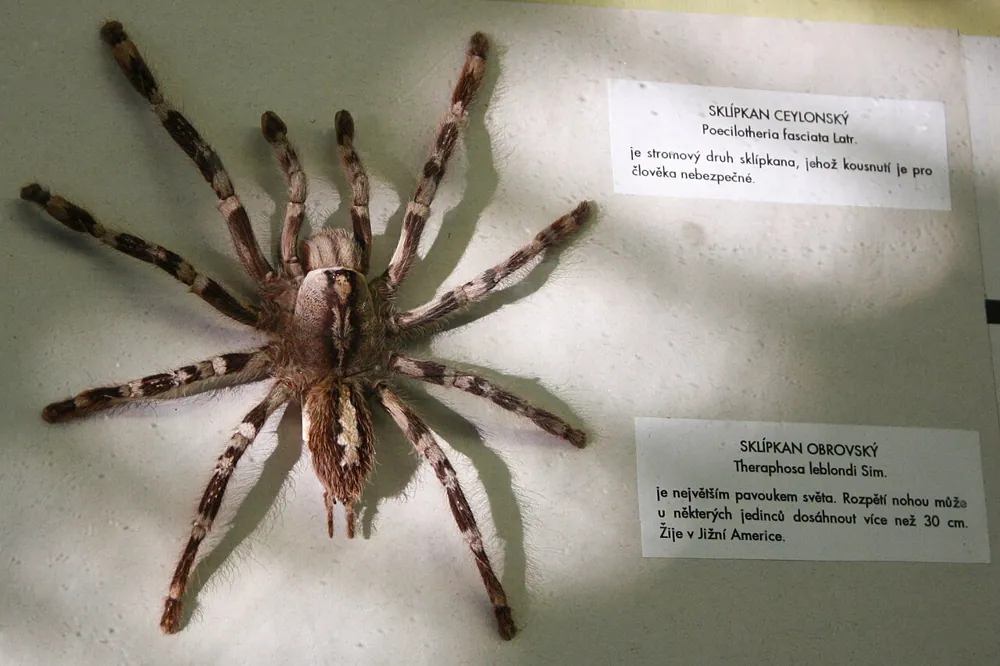
Sri Lankan ornamental tarantula
 Ugryzienia
The Sri Lankan ornamental tarantula is a large spider that lives in trees. It is found only in central Sri Lanka, in dry and intermediate zones of the island. It is special because it is rare: its small range has shrunk, and it is now listed as endangered.1
 Jak je rozpoznać
- Females are black, white and grey, with cryptic markings on the legs and body.1
- Females have a narrow dark band on the thigh (femur) of the first pair of legs, and a thin broken band on the thigh of the fourth pair.1
- Males are a uniform brown with less intense markings.1
- Males have a dark black line down the abdomen, divided by diamond-shaped chevrons.1
Często mylone z: It is often grouped with other tiger spiders. It can be told apart by the very narrow dark band on the thigh of the first pair of legs, and by the thin broken band on the thigh of the fourth pair.1
Siła jadu
Jad wydostaje się przez kły lub zęby, gdy zwierzę gryzie.
Jak bardzo jest niebezpieczne dla ludzi?
Zagrożenie dla ludzi: GroźneUgryzienie wymaga lekarza. Zgony są bardzo rzadkie.Co robi, gdy się boi?
When disturbed, it becomes very defensive and quick to move.1
 Jeśli ugryzie
- Umyj miejsce ugryzienia i je schłódź. Szukaj pomocy medycznej, jeśli ból jest silny albo poszkodowany źle się czuje.
Zawsze najpierw dzwoń na numer alarmowy (112, 000, 911). To ogólne wskazówki pierwszej pomocy, a nie porada medyczna. Podstawy pierwszej pomocy
 Uważaj na siebie
- Nigdy nie dotykaj, nie łap ani nie drażnij dzikiego zwierzęcia, nawet małego, i nawet jeśli wygląda, jakby spało albo było martwe.
- Zostaw mu miejsce. Jeśli je spotkasz, zachowaj spokój, powoli się wycofaj i pozwól mu odejść.
- Jeśli cię ugryzie: zachowaj spokój, nie ruszaj się, zadzwoń na numer alarmowy (112, 000, 911) albo jak najszybciej dotrzyj do szpitala. Zapamiętaj, jak wyglądało, zdjęcie pomaga.
Nie poluje na ciebie. Używa jadu, żeby złapać jedzenie albo się bronić, i dużo bardziej woli się schować. Więcej o bezpieczeństwie
Jakie jest duże?
Jakie jest długie?
 krótsze niż twój mały palec
 100 metrów w 180 s (najszybszy człowiek potrzebuje 9,6)
Sri Lankan ornamental tarantula: jak duże jest w porównaniu z TOBĄ?
Zwykła matematyka w twojej przeglądarce. Nic nie jest zapisywane ani nigdzie wysyłane.
Jak szybkie jest?


Fakty
Males are nomadic, moving from place to place, while females stay in one home.1
In 2018 it was listed as an endangered species under the U.S. Endangered Species Act.1
Habitat loss is the main threat, and collection for the pet trade, pesticides and killing out of fear add to the pressure.1
Females are larger than males, and only males wander.1
Its natural range is small, with less than 500 square kilometres of area occupied.1
Skąd pochodzą fakty
- Poecilotheria fasciata (Wikipedia (CC BY-SA 4.0))
- Poecilotheria fasciata (iNaturalist): nazwy i klasyfikacja.
- Venom Wiki: poziom zagrożenia, typowy rozmiar i szacowana prędkość to nasze własne oceny. Zobacz, jak je ustalamy: Jak oceniamy zagrożenie.
Każdy fakt na tej stronie ma numer, który wskazuje jego źródło. Jeśli coś pomyliliśmy, przepraszamy, jesteśmy fanami zwierząt, a nie czasopismem naukowym. Napisz do nas na [email protected], a poprawimy to.
 Skorpion jest głodny! Venom Wiki to projekt jednej osoby: darmowy, bez reklam i bez śledzenia. Mały napiwek pomaga utrzymać go w sieci.Nakarm skorpiona
Więcej z tej samej grupy: Ptaszniki i atraksy
 Gooty sapphire tarantulaPtaszniki i atraksyWymaga lekarza
 Indian ornamental tarantulaPtaszniki i atraksyWymaga lekarza
 Cobalt blue tarantulaPtaszniki i atraksyTylko boli
 Chinese bird spiderPtaszniki i atraksyWymaga lekarza
 Chinese black earth tiger tarantulaPtaszniki i atraksyWymaga lekarza
 Fringed ornamental tarantulaPtaszniki i atraksyWymaga lekarza
 Skorpion żółty
 Kobra indyjska
 Efa piaskowa
 Kobra królewska
 Żmija sykliwa
 Żmija Russella