
 Afryka
 Azja
Azja Europa
 Ameryka Południowa
 Australia i Oceania
 Antarktyda
 Ocean Spokojny
 Ocean Atlantycki
 Ocean Indyjski
 Ocean Arktyczny
 Morze Śródziemne
 Morze Czerwone
 Morze Karaibskie
 Morze Koralowe
 Morze Południowochińskie
 Morze Filipińskie
 Morze Andamańskie
 Morze Północne
 Morze Timor i Morze Arafura
 Zatoka Bengalska
 Zatoka Kalifornijska
Yellow-spotted monitor
 Ugryzienia
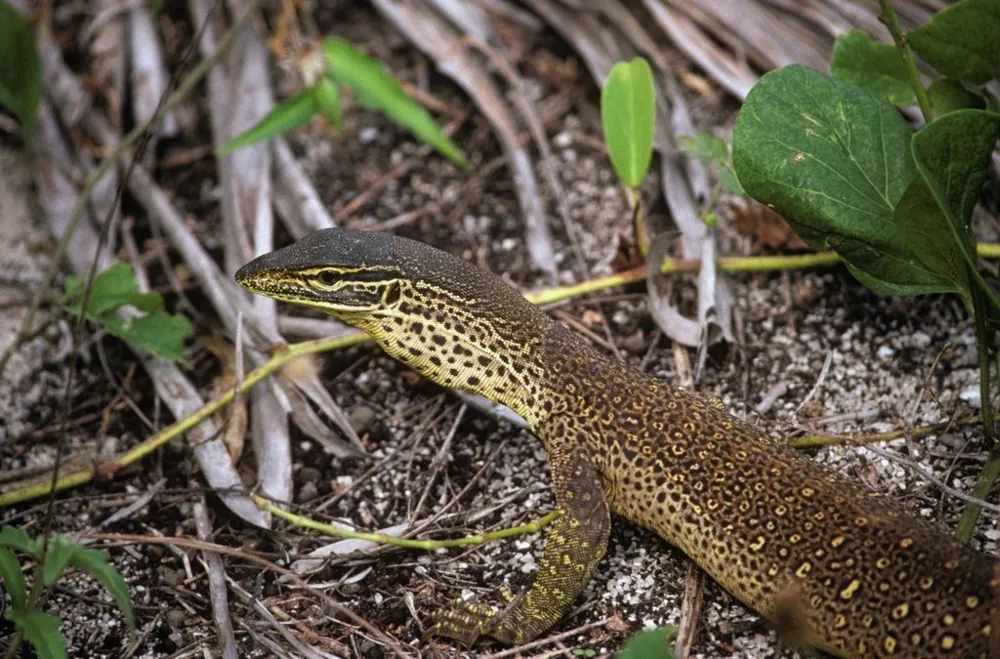
The yellow-spotted monitor is a large, fast lizard that lives in northern and western Australia and southern New Guinea. It is one of Australia's biggest lizards, and it plays an important part in its ecosystem as a predator. It can give a painful bite if it feels threatened.1



 Jak je rozpoznać
- Most individuals are yellow, with a brown or dark tan background.1
- Large, dark spots form rows along the back, and they are most distinct in the middle of the back.1
- Bands of colour appear toward the tip of the tail.1
- Adults are large: females average about 90 cm long and males about 120 to 150 cm.1
- Colour varies between individuals and places. The subspecies rubidus is reddish rather than brown.1
Często mylone z: The sand goanna (Varanus gouldii) somewhat resembles the yellow-spotted monitor.1
Siła jadu
Jad wydostaje się przez kły lub zęby, gdy zwierzę gryzie.
Jak bardzo jest niebezpieczne dla ludzi?
Zagrożenie dla ludzi: BolesneMoże naprawdę boleć, ale prawie nigdy nie jest groźne.Co robi, gdy się boi?
When threatened, it raises itself up on its hind legs and supports itself with its tail, which lets it watch for danger. It can also run up to 100 metres to a tree or burrow.1
 Jeśli ugryzie
- Umyj ranę, uspokój poszkodowanego i szukaj pomocy medycznej.
Zawsze najpierw dzwoń na numer alarmowy (112, 000, 911). To ogólne wskazówki pierwszej pomocy, a nie porada medyczna. Podstawy pierwszej pomocy
 Uważaj na siebie
- Nigdy nie dotykaj, nie łap ani nie drażnij dzikiego zwierzęcia, nawet małego, i nawet jeśli wygląda, jakby spało albo było martwe.
- Zostaw mu miejsce. Jeśli je spotkasz, zachowaj spokój, powoli się wycofaj i pozwól mu odejść.
- Jeśli cię ugryzie: zachowaj spokój, nie ruszaj się, zadzwoń na numer alarmowy (112, 000, 911) albo jak najszybciej dotrzyj do szpitala. Zapamiętaj, jak wyglądało, zdjęcie pomaga.
Nie poluje na ciebie. Używa jadu, żeby złapać jedzenie albo się bronić, i dużo bardziej woli się schować. Więcej o bezpieczeństwie
Jakie jest duże?
Jakie jest długie?
Ile waży?
 długie jak 3 kotów domowych od nosa do ogona
 długie jak 9 bananów ułożonych jeden za drugimważy mniej więcej tyle co kot domowy
 100 metrów w 24 s (najszybszy człowiek potrzebuje 9,6)
Yellow-spotted monitor: jak duże jest w porównaniu z TOBĄ?
Zwykła matematyka w twojej przeglądarce. Nic nie jest zapisywane ani nigdzie wysyłane.
Jak szybkie jest?

Fakty
The yellow-spotted monitor digs some of the deepest burrows known for any vertebrate, with an average depth of 2.6 m as of 2015.1
During the dry season, it has been recorded diving underwater to feed on freshwater mussels.1
Argus monitors can mature sexually in less than a year, which is much faster than most other large monitors, which usually take 2 or more years.1
Several individuals may share one interconnected system of burrows, called a warren. One study found at least 6 individuals using the same warren.1
It is the third largest lizard in Australia, after the perentie and the lace monitor.1
Its sense of smell is its sharpest sense, and it flicks its forked tongue to search for food, much as snakes do.1
Skąd pochodzą fakty
- Yellow-spotted monitor (Wikipedia (CC BY-SA 4.0))
- Varanus panoptes (iNaturalist): nazwy i klasyfikacja.
- Venom Wiki: poziom zagrożenia, typowy rozmiar i szacowana prędkość to nasze własne oceny. Zobacz, jak je ustalamy: Jak oceniamy zagrożenie.
Każdy fakt na tej stronie ma numer, który wskazuje jego źródło. Jeśli coś pomyliliśmy, przepraszamy, jesteśmy fanami zwierząt, a nie czasopismem naukowym. Napisz do nas na [email protected], a poprawimy to.
 Skorpion jest głodny! Venom Wiki to projekt jednej osoby: darmowy, bez reklam i bez śledzenia. Mały napiwek pomaga utrzymać go w sieci.Nakarm skorpiona
Więcej z tej samej grupy: Jadowite jaszczurki
 Lace monitor
 Perentie
 Spiny-tailed monitor
 Mitchell's water monitor
 Komodo dragon
 Gila monster
Żyje też w: Australia i Oceania
 Tajpan pospolityWęże AustraliiŚmiertelnie groźne
 Żmijowiec australijskiWęże AustraliiŚmiertelnie groźne
 Wschodni wąż brunatnyWęże AustraliiŚmiertelnie groźne
 Tajpan pustynnyWęże AustraliiŚmiertelnie groźne
 Pająk lejkowaty z SydneyPtaszniki i atraksyŚmiertelnie groźne
 Wąż tygrysiWęże AustraliiŚmiertelnie groźne