
 افریقا
 اسیا
اسیا اروپا
اروپا سویلي امریکا
 استرالیا او اوقیانوسیه
 انټارکټیکا
 ارام سمندر
 اطلس سمندر
 هند سمندر
 شمالي منجمد سمندر
 مدیترانه بحیره
 سره بحیره
 د کارائیب بحیره
 مرجاني بحیره
 د سویلي چین بحیره
 د فیلیپین بحیره
 د اندامان بحیره
 شمالي بحیره
 د تیمور او ارافورا بحیره
 د بنګال خلیج
 د کالیفورنیا خلیج
Blue-lined octopus
 چیچي
چیچيThe blue-lined octopus is a small sea creature, about the size of a golf ball, that lives in shallow reefs and rock pools in the Pacific Ocean. It is one of the most dangerous animals in the sea, because its bite contains venom that can be fatal to people. It is shy and usually hides, but its bright blue lines are a clear warning to leave it alone.1
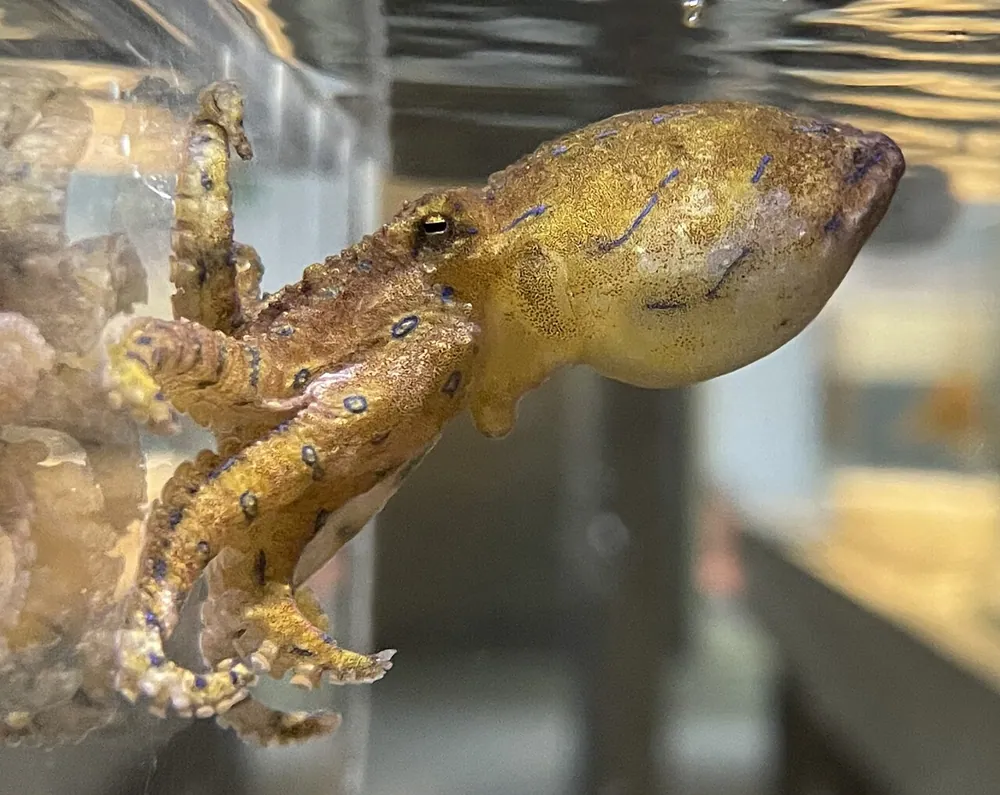
 څنګه یې وپېژنې
- At rest, its body is mottled yellow-brown with dark blue or black streaks, and its underside is paler.1
- When it feels threatened, it shows bright, iridescent blue lines across its body.1
- It is small, with a mantle (main body) up to 45 mm long, about the size of a golf ball.1
- Its blue markings are lines, not rings.1
- The visceral hump (the bulge behind the head) is regularly pointed.1
ډېر ځله ورسره ګډوډ کېږي: The greater blue-ringed octopus, southern blue-ringed octopus and blue-ringed octopus have circular blue rings rather than lines. The blue-lined octopus is also the smallest of the four species in its genus.1
د زهرو ځواک
کله چې چیچي، زهر یې له زهري غاښونو یا غاښونو راوځي.
زهر یې (چیچل یا نیش) څه کوي؟
Its venom is tetrodotoxin (TTX), a neurotoxic venom, which attacks the nerves. A bite may not be felt at first. After some time, symptoms include loss of feeling in the tongue and lips, muscle weakness or paralysis, respiratory failure (breathing failure), and unconsciousness, which can lead to death.1
انسانانو ته څومره خطرناک دی؟
انسانانو ته خطر: وژونکید نړۍ یو له تر ټولو خطرناکو ژویو څخه.It is regarded as one of the most dangerous animals in the sea, and its venom can be fatal to humans. At least three human deaths have been reported. The greatest risk is to people who pick it up or touch it.1
کله چې ډار شي څه کوي؟
When threatened, it displays bright blue warning lines to predators, and it is more likely to flee and hide in shelter than to fight.1
 که وچیچي
- د فشار سره بېحرکته کول: پر چیچل شوي ځای یو ټینګ کشدار بنداژ وتړه او بیا یې د لاس یا پښې پر ټوله اوږدوالي پورته وتړه، تخته (سپلینټ) ورته کېږده، او کس تر هغه بشپړ بېحرکته وساته چې مرسته راورسېږي.
- آبي کړۍ لرونکی اکټوپوس یا مخروطي حلزون کولای شي د یو چا ساه ودروي په داسې حال کې چې هغه لا په هوش وي: د مرستې لپاره زنګ ووهه او چمتو اوسه چې مصنوعي تنفس ورکړې تر هغه چې امبولانس راورسېږي او کار پر غاړه واخلي.
تل لومړی خپلې بیړنۍ شمېرې ته زنګ ووهه (112، 000، 911). دا د لومړنۍ مرستې عمومي لارښوونه ده، طبي مشوره نه ده. د لومړنۍ مرستې بنسټونه
 خوندي اوسه
- هېڅکله ځنګلی ژوی مه لمسوه، مه یې نیسه او مه یې ځوروه، حتی که کوچنی وي، او حتی که ویده یا مړ ښکاري.
- ورته ځای ورکړه. که له یوه سره مخ شوې، ارام اوسه، ورو ورو شاته شه او پرېږده چې خپله لار ولاړ شي.
- که یو دې وچیچي: ارام اوسه، بېحرکته پاتې شه، خپلې بیړنۍ شمېرې ته زنګ ووهه (112، 000، 911) یا ژر روغتون ته ورسېږه. په یاد ولره چې څه ډول ښکارېده، عکس مرسته کوي.
دا ستا پسې نه ګرځي. خپل زهر د خوراک نیولو یا د ځان ساتلو لپاره کاروي، او ډېر غوره ګڼي چې پټ شي. د خوندي پاتې کېدو په اړه نور
په نړۍ کې چېرته؟
څومره لوی دی؟
څومره اوږد دی؟
 ستا له کوچنۍ ګوتې لنډ
 کولای شي د یو لوی حوض (50 متره) اوږدوالی په 7.2 ثانیو کې لامبو ووهي
Blue-lined octopus ستا په پرتله څومره لوی دی؟
یوازې ستا په براوزر کې حساب کتاب. هېڅ شی نه خوندي کېږي او نه چېرته لېږل کېږي.
څومره چټک دی؟


حقیقتونه
A single 25-gram blue-lined octopus carries enough venom to kill about ten adults weighing 75 kilograms each, according to estimates.1
Male blue-lined octopuses bite the female's aorta during mating, injecting TTX. This paralyses her within about 8 minutes, which lets the male transfer his sperm packets safely.1
Hapalochlaena is the only octopus genus known to produce TTX, a toxin thought to have played an important role in the evolution of the species.1
The blue-lined octopus is the only one of the four blue-ringed species with lined blue markings instead of circular ones.1
Blue-lined octopuses are nocturnal hunters, while the greater blue-ringed octopus hunts during the day.1
Its range has been spreading across the Pacific. Warming ocean water may be shifting suitable habitat, and scientists monitor this for public health and safety.1
د افسانو ماتوونکی
افسانه: Because it is so shy, the blue-lined octopus is not really dangerous.
حقیقت: It is extremely shy and usually flees, but its venom can still be fatal to people, and at least three deaths have been reported.1
د زهرو د کارپوهانو لپاره
- علمي نوم
- Hapalochlaena fasciata
- ډله
- مخروطي حلزونونه او اکټوپوسونه
- کورنۍ
- Octopodidae2
- ترتیب
- Octopoda
- وچې
- هند سمندر, ارام سمندر, مرجاني بحیره, سمندرونه
- کوچني ماشومان
- A female lays 50 to 100 large eggs about 30 days after mating, hides them under her arms until they hatch, and then dies. The hatchlings take about two months to develop.1
- انسانانو ته خطر
- 5 / 5: وژونکی3
حقیقتونه له کومه راځي
- Blue-lined octopus (Wikipedia (CC BY-SA 4.0))
- Hapalochlaena fasciata (iNaturalist): نومونه او ډلبندي.
- Venom Wiki: د خطر کچه، عادي اندازه او د سرعت اټکل زموږ خپل دي. وګوره چې څنګه یې محاسبه کوو: موږ خطر څنګه اندازه کوو.
په دې پاڼه کې هر حقیقت یوه شمېره لري چې خپلې سرچینې ته اشاره کوي. که موږ څه غلط کړي وي، بښنه غواړو، موږ د ژویو مینهوال یو، نه علمي مجله. په [email protected] کې راته ووایه او موږ به یې سم کړو.
 لړم وږی دی! Venom Wiki د یو کس پروژه ده: وړیا، پرته له اعلانونو او تعقیبوونکو. یوه کوچنۍ ډالۍ یې په انټرنېټ کې ساتلو کې مرسته کوي.لړم ته خواړه ورکړه
له همدې ډلې نور: مخروطي حلزونونه او اکټوپوسونه
 Geography coneمخروطي حلزونونه او اکټوپوسونهوژونکی
 Greater blue-ringed octopusمخروطي حلزونونه او اکټوپوسونهوژونکی
 Southern blue-ringed octopusمخروطي حلزونونه او اکټوپوسونهوژونکی
 Blue sea dragonمخروطي حلزونونه او اکټوپوسونهیوازې درد کوي
 Common octopusمخروطي حلزونونه او اکټوپوسونهبېضرره
 Giant Pacific octopusمخروطي حلزونونه او اکټوپوسونهبېضرره
دلته هم اوسېږي: هند سمندر
 Australian box jellyfishجیليفشونه او سمندري نیش وهونکيوژونکیمه یې لمسوه
 Hawksbill sea turtleنور زهري ژويوژلای شي
 Irukandji jellyfishجیليفشونه او سمندري نیش وهونکيوژلای شيمه یې لمسوه
 Reef stonefishزهرجن کبانوژلای شيمه یې لمسوه
 Crown-of-thorns starfishسمندري شکونړي، سمندري ستوري او چینجيډاکټر ته اړتیا لريمه یې لمسوه
 Portuguese man o' warجیليفشونه او سمندري نیش وهونکيډاکټر ته اړتیا لريمه یې لمسوه