
 افریقا
 اسیا
اسیا اروپا
اروپا سویلي امریکا
 استرالیا او اوقیانوسیه
 انټارکټیکا
 ارام سمندر
 اطلس سمندر
 هند سمندر
 شمالي منجمد سمندر
 مدیترانه بحیره
 سره بحیره
 د کارائیب بحیره
 مرجاني بحیره
 د سویلي چین بحیره
 د فیلیپین بحیره
 د اندامان بحیره
 شمالي بحیره
 د تیمور او ارافورا بحیره
 د بنګال خلیج
 د کالیفورنیا خلیج
By-the-wind sailor
 نیش وهونکي تارونه
The by-the-wind sailor is a small, deep blue animal that floats on the surface of the open ocean. It is not a single creature but a colony of tiny linked animals, and it moves by catching the wind with a small stiff sail. Its stinging tentacles are generally harmless to people, but they can irritate the skin.1

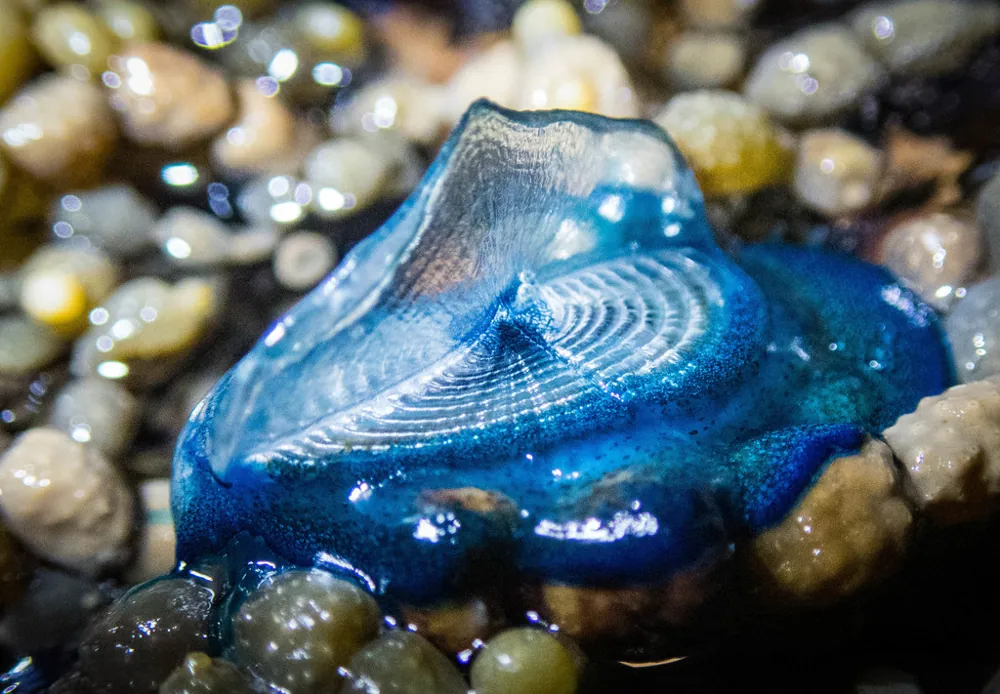
 څنګه یې وپېژنې
د زهرو ځواک
زرګونه کوچني نیش وهونکي حجرې هغه وخت ډزې کوي چې څه ورسره ولګېږي.
زهر یې (چیچل یا نیش) څه کوي؟
Its nematocysts contain toxins that are effective against its prey, which are mostly plankton. The nematocysts are relatively benign to humans, but each person may respond differently to the toxin. Contact may cause irritation to exposed skin.1
انسانانو ته څومره خطرناک دی؟
انسانانو ته خطر: سپکد مچۍ د نیش په اندازه یا تر هغې کم. انسانانو ته تقریباً بېضرره.It is relatively harmless to humans. Its main effect is possible skin irritation after contact. Mass strandings can leave large numbers of dying and rotting animals on beaches.1
 که نیش ووهي
- له اوبو ووځه او ټول نښتي تارونه (لاسکي) لرې کړه (د دستکشو یا ټوکر سره).
- د استوايي بکس جیليفش لپاره: لږ تر لږه 30 ثانیې پر نیش ځایونو سرکه واچوه، د مرستې لپاره زنګ ووهه او چمتو اوسه چې CPR (د زړه او سږو بیا ژوندي کول) وکړې. د بلوبوټل او نورو ډېرو لپاره: په سمندري اوبو یې ومینځه، بیا د درد لپاره ګرمې اوبه.
تل لومړی خپلې بیړنۍ شمېرې ته زنګ ووهه (112، 000، 911). دا د لومړنۍ مرستې عمومي لارښوونه ده، طبي مشوره نه ده. د لومړنۍ مرستې بنسټونه
 خوندي اوسه
- هېڅکله ځنګلی ژوی مه لمسوه، مه یې نیسه او مه یې ځوروه، حتی که کوچنی وي، او حتی که ویده یا مړ ښکاري.
- ورته ځای ورکړه. که له یوه سره مخ شوې، ارام اوسه، ورو ورو شاته شه او پرېږده چې خپله لار ولاړ شي.
- که یو نیش درکړي: ارام اوسه، بېحرکته پاتې شه، خپلې بیړنۍ شمېرې ته زنګ ووهه (112، 000، 911) یا ژر روغتون ته ورسېږه. په یاد ولره چې څه ډول ښکارېده، عکس مرسته کوي.
دا ستا پسې نه ګرځي. خپل زهر د خوراک نیولو یا د ځان ساتلو لپاره کاروي، او ډېر غوره ګڼي چې پټ شي. د خوندي پاتې کېدو په اړه نور
په نړۍ کې چېرته؟
څومره لوی دی؟
څومره اوږد دی؟
 د 2 لوبو خښتو هومره اوږد چې په یوه قطار کې وي
 کولای شي د یو لوی حوض (50 متره) اوږدوالی په 180 ثانیو کې لامبو ووهي
By-the-wind sailor ستا په پرتله څومره لوی دی؟
یوازې ستا په براوزر کې حساب کتاب. هېڅ شی نه خوندي کېږي او نه چېرته لېږل کېږي.
څومره چټک دی؟

حقیقتونه
Its floating colonies are mirror images of each other, either 'left-handed' or 'right-handed', and this affects where they drift. In the northern Pacific, one form tends to drift to North America and the other to eastern Asia, such as Japan.1
Each blue 'animal' with a sail is really a colony of linked polyps that share food through a canal system.1
Each colony is either all male or all female.1
Its sail is not a fin. It works like a sail, so the animal tends to drift downwind at a small angle to the wind.1
Its tiny jellyfish carry zooxanthellae, single-celled organisms that use sunlight to provide energy, a feature also found in corals.1
It has no means of moving other than its sail, so it depends on prevailing winds, and mass strandings on beaches happen in many parts of the world.1
د افسانو ماتوونکی
افسانه: Each blue sail is a single, simple animal.
حقیقت: Each apparent individual is a colony of many connected polyps that share food and divide the work between feeding, reproductive and protective polyps.1
د زهرو د کارپوهانو لپاره
- علمي نوم
- Velella velella
- ډله
- جیليفشونه او سمندري نیش وهونکي
- کورنۍ
- Porpitidae2
- ترتیب
- Anthoathecata
- وچې
- ارام سمندر, اطلس سمندر, هند سمندر, مدیترانه بحیره, سویلي سمندر, انټارکټیکا, سمندرونه
- کوچني ماشومان
- Each colony's feeding polyps (gonozooids) bud off thousands of tiny jellyfish, each about 1 mm wide, over several weeks. These develop into a free-swimming larva called a conaria, which grows into a new floating colony.1
- انسانانو ته خطر
- 1 / 5: سپک3
حقیقتونه له کومه راځي
- Velella (Wikipedia (CC BY-SA 4.0))
- Velella velella (iNaturalist): نومونه او ډلبندي.
- Venom Wiki: د خطر کچه، عادي اندازه او د سرعت اټکل زموږ خپل دي. وګوره چې څنګه یې محاسبه کوو: موږ خطر څنګه اندازه کوو.
په دې پاڼه کې هر حقیقت یوه شمېره لري چې خپلې سرچینې ته اشاره کوي. که موږ څه غلط کړي وي، بښنه غواړو، موږ د ژویو مینهوال یو، نه علمي مجله. په [email protected] کې راته ووایه او موږ به یې سم کړو.
 لړم وږی دی! Venom Wiki د یو کس پروژه ده: وړیا، پرته له اعلانونو او تعقیبوونکو. یوه کوچنۍ ډالۍ یې په انټرنېټ کې ساتلو کې مرسته کوي.لړم ته خواړه ورکړه
له همدې ډلې نور: جیليفشونه او سمندري نیش وهونکي
 Australian box jellyfishجیليفشونه او سمندري نیش وهونکيوژونکیمه یې لمسوه
 Irukandji jellyfishجیليفشونه او سمندري نیش وهونکيوژلای شيمه یې لمسوه
 Portuguese man o' warجیليفشونه او سمندري نیش وهونکيډاکټر ته اړتیا لريمه یې لمسوه
 Lion's mane jellyfishجیليفشونه او سمندري نیش وهونکيیوازې درد کويمه یې لمسوه
 Moon jellyfishجیليفشونه او سمندري نیش وهونکيبېضرره
 Common kingslayerجیليفشونه او سمندري نیش وهونکيوژلای شيمه یې لمسوه
 Geography cone
 Greater blue-ringed octopus
 Japanese pufferfish
 Southern blue-ringed octopus
 Hawksbill sea turtle
 Reef stonefish